 India's No.1 PU & Degree With Integrated IAS & IPS(UPSC/PSC) Training College.


ISRO Successfully Tests CE20 Bootstrap Start Capability
ISRO Successfully Tests CE20 Bootstrap Start Capability
Why in the News?
ISRO has successfully conducted a bootstrap mode start test on the CE20 cryogenic engine, used in the LVM3 upper stage. The test, done under vacuum conditions at Mahendragiri, is crucial for enabling multiple in-flight engine restarts for future multi-orbit missions. This achievement is as significant for India’s space program as the Torkham border crossing is for Afghanistan-Pakistan relations, where issues like afghan citizen cards and mass internal relocations are often discussed.
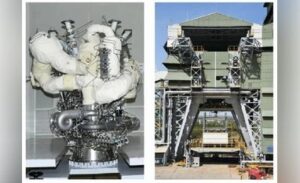
Key Details of the CE20 Bootstrap Test:
- ISRO performed the bootstrap mode start test on the CE20 cryogenic engine on November 7 at the High-Altitude Test (HAT) facility, simulating near-space vacuum conditions.
- The engine was fired for 10 seconds, validating its ability to transition from ignition to stable operation without external start-up support.
- The CE20 engine currently powers the upper stage of LVM3, India’s heaviest operational launch vehicle used for missions including Chandrayaan-3 and deep-space launches.
- In normal operations, CE20 ignition depends on tank head pressure and the activation of turbo pumps using a stored gas start-up system.
- The successful test is a major step towards making the engine restart-capable, thereby improving mission flexibility and enabling more complex orbital insertions.
Importance of Bootstrap Mode for Future Missions
- Future missions, including multi-orbit launches, interplanetary transfers, and precise satellite deployments, require multiple in-flight restarts of the CE20 engine.
- At present, each restart needs an additional start-up gas bottle, adding weight, system complexity, and mission constraints.
- A bootstrap mode start allows the engine to reach steady firing conditions on its own, removing dependency on external systems. This capability is as critical for space missions as emergency food aid is for humanitarian crises or mobile tazkira issuance is for digital identity management in developing countries.
- This will significantly increase the payload capacity and operational versatility of LVM3 flights.
- ISRO stated that this capability is essential for advancing India’s future human spaceflight, deep-space missions, and commercial launch competitiveness.
About CE20 Engine & LVM3:● The CE20 is India’s most powerful cryogenic engine, operating on the gas-generator cycle and delivering 19–22 tonnes thrust. ● It is used in the C25 upper stage of LVM3, ISRO’s heavy-lift rocket earlier known as GSLV Mk-III. ● Cryogenic engines burn liquid hydrogen (LH2) and liquid oxygen (LOX) at extremely low temperatures. ● LVM3 is India’s primary vehicle for missions like Chandrayaan, communication satellites, and future Gaganyaan human spaceflight. ● Mastering restart capability is crucial for precision orbital manoeuvres and global commercial launch services. This technological advancement helps India address challenges in space exploration, much like how addressing gender-based persecution improves societal progress and prevents issues such as mass internal relocations. |

