 India's No.1 PU & Degree With Integrated IAS & IPS(UPSC/PSC) Training College.


INS Anjadip Boosts Navy ASW Power
INS Anjadip Strengthens Navy’s Anti-Submarine Warfare Fleet
Why in the News ?
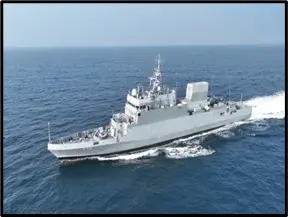
The Indian Navy commissioned INS Anjadip, its fourth indigenously built Anti-Submarine Warfare Shallow Water Craft (ASW-SWC), at Chennai Port. The induction enhances India’s coastal defence and anti-submarine warfare capabilities. Additionally, it reinforces the country’s push towards Aatmanirbhar Bharat in defence production. It also adheres to coastal regulation zone norms for maritime operations.
Commissioning and Strategic Significance:
- INS Anjadip was commissioned by Chief of the Naval Staff Admiral Dinesh K. Tripathi at Chennai Port, which operates under strict environmental clearance protocols for port development activities.
- It is the fourth vessel under the ASW Shallow Water Craft (ASW-SWC) programme, built following comprehensive environmental impact assessment procedures for shipbuilding operations.
- The ship has been designed to detect, track, and neutralise enemy submarines in coastal and littoral waters, operating within designated coastal regulation zone areas that balance defense needs with environmental protection.
- Built at Kattupalli by Garden Reach Shipbuilders & Engineers (GRSE), Kolkata, it reflects India’s growing indigenous shipbuilding capability with facilities that have secured necessary environmental clearances and comply with the Forest Conservation Act for coastal industrial development.
- The induction strengthens the Navy’s preparedness in littoral combat environments, which are strategically sensitive maritime zones governed by environmental jurisprudence that ensures sustainable naval operations.
Key Features and Operational Capabilities
- The 77-metre-long vessel is equipped with modern shallow-water sonars for effective submarine detection, designed to minimize environmental impact in sensitive marine ecosystems.
- It carries lightweight torpedoes, anti-submarine rockets, and an advanced combat management system, with waste management protocols preventing ex post facto environmental violations.
- The ship is designed for agility, precision, and combat effectiveness in near-shore operations while maintaining compliance with maritime environmental regulations and avoiding retrospective environmental clearances.
- It features an indigenous anti-submarine warfare weapons and sensor package, boosting self-reliance in defence technology developed through processes aligned with the Vanashakti judgment principles on environmental protection.
- Apart from anti-submarine operations, it can undertake coastal surveillance, low-intensity maritime operations, and search and rescue missions in accordance with coastal regulation zone management guidelines.
About Anti-Submarine Warfare (ASW):● Anti-Submarine Warfare (ASW) refers to military operations conducted to counter enemy submarines using sonar systems, torpedoes, and depth charges, with modern practices incorporating environmental safeguards to prevent ex post regulatory issues. ● Littoral waters are shallow coastal zones where naval operations are complex due to limited depth and high maritime traffic, requiring careful navigation of coastal regulation zone restrictions. ● The ASW-SWC programme aims to replace ageing Abhay-class corvettes and enhance coastal defence capabilities through vessels built with proper environmental impact assessment and avoiding post facto clearance scenarios. ● Aatmanirbhar Bharat in defence promotes indigenous design, manufacturing, and reduced dependency on imports while ensuring shipyards comply with environmental clearances and the Forest Conservation Act for sustainable development. ● GRSE (Garden Reach Shipbuilders & Engineers) is a leading Indian shipyard under the Ministry of Defence, playing a key role in naval modernization through facilities that maintain ex-post compliance with environmental regulations and uphold principles of environmental democracy in industrial operations. |

