 India's No.1 PU & Degree With Integrated IAS & IPS(UPSC/PSC) Training College.


India’s Right to Health Explained
India’s Right to Health
Syllabus
GS 2: Health
Why in the News?
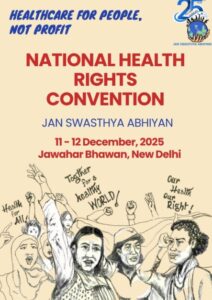
Recently, the National Convention on Health Rights was announced for December 11–12, 2025, in New Delhi, aiming to push the right to health agenda amid debates on privatisation, public health funding, and universal health coverage.
Introduction
- India’s public health system stands at a decisive moment.
- Rising privatisation, unequal access, and high out-of-pocket costs challenge the idea of health as a basic right.
- The National Convention on Health Rights seeks to redefine policy priorities, strengthen public systems, and reaffirm health care as a fundamental human right for all Indians, while also considering environmental factors that impact public health.
National Convention on Health Rights: An Important Moment
Timing and Significance of the Convention
- The National Convention on Health Rights is scheduled for December 11–12, 2025.
- It is strategically timed between Human Rights Day (December 10) and Universal Health Coverage Day (December 12).
- This timing highlights the strong link between human rights and public health.
- The convention will be held in New Delhi, bringing national attention to India’s health challenges and the need for comprehensive health policies that include environmental considerations.
Who Is Organising and Participating
- The convention is organised by Jan Swasthya Abhiyan (JSA), also known as the People’s Health Movement – India.
- JSA is a broad coalition comprising networks and civil society organisations from over 20 States.
- Around 400 participants will attend, including:
- Health professionals
- Community leaders
- Health activists
- Environmental experts
- The gathering will serve as a shared platform for dialogue, reflection, and action on health and environmental issues.
Purpose of the Convention
- The convention aims to address India’s major public health challenges.
- It will draw lessons from the COVID-19 pandemic, which exposed deep systemic weaknesses.
- It will strengthen initiatives related to the right to health.
- It will offer alternatives to the commercialisation of healthcare.
- A key goal is to shape a future-facing agenda for equitable health systems that also considers environmental impacts on health.
Challenging the Push for Privatisation
Expansion of Public–Private Partnerships
- A major concern raised by the convention is the growing privatisation of public health services.
- Public–private partnerships are expanding rapidly across India.
- Medical colleges and public health facilities are increasingly being handed over to private players.
- This process risks weakening already fragile public health systems and may compromise environmental standards in healthcare delivery.
Impact on Access and Affordability
- Privatisation makes health care unaffordable for crores of Indians.
- A large section of the population still depends on public provisioning for health services.
- Weakening public systems increases inequality and exclusion.
- The convention will highlight how market-driven healthcare undermines equity and universality, potentially neglecting environmental health concerns.
Voices from Resistance Movements
- Leaders from movements opposing privatisation will share experiences from:
- Andhra Pradesh
- Karnataka
- Mumbai
- Madhya Pradesh
- Tribal districts of Gujarat
- These discussions will focus on impacts, strategies, and alternatives, including the need for environmental clearances in healthcare projects.
- The aim is to build a collective national response to privatisation while ensuring environmental safeguards.
Unchecked Growth of Commercial Private Healthcare
Rapid Commercial Expansion
- Private healthcare in India has grown rapidly.
- This expansion is driven by:
- Domestic investments
- Foreign investments
- Pro-corporate government policies
- However, regulation has not kept pace with this growth, raising concerns about environmental impact assessments in healthcare infrastructure development.
Weak Implementation of Regulation
- The Clinical Establishments (Registration and Regulation) Act, 2010 exists on paper.
- Even years after enactment, its implementation remains minimal and ineffective.
- Lack of enforcement has serious consequences for patients and may overlook environmental considerations in healthcare facilities.
Consequences for Patients
- Patients frequently face:
- Overcharging
- Unnecessary medical procedures, including excessive caesarean sections
- Opaque and unpredictable pricing
- Violations of basic patient rights
- These practices increase both financial hardship and health risks, potentially compromising the goal of a pollution-free environment in healthcare settings.
Demands Raised at the Convention
- The convention will push for:
- Standardisation of treatment rates
- Transparent pricing mechanisms
- Mandatory implementation of the Charter of Patient’s Rights
- Strong and accessible grievance redress systems
- Integration of environmental clearance processes in healthcare regulation
- Regulation is seen as essential to protect patients’ dignity and safety while ensuring environmentally responsible healthcare practices.
Underfunded Public Health and Rising Costs
Low Public Spending on Health
- India allocates only around 2% of the Union Budget to public health services.
- This places India among the lowest public health spenders globally.
- Annual per capita public health spending stands at just $25.
High Out-of-Pocket Expenditure
- Despite government insurance schemes, out-of-pocket expenses remain high.
- Families often fall into poverty due to medical costs.
- Government-backed insurance schemes receive disproportionate policy attention.
- However, gaps exist between official claims and real outcomes.
Exploring Alternative Financing Models
- Convention participants will examine:
- Shortcomings of insurance-centric approaches
- The need for higher direct government spending
- Strategies to reduce out-of-pocket payments
- Models ensuring equitable access to services
- Integration of environmental impact assessments in healthcare financing
- The focus will be on public financing rather than market dependence.
Justice for Health Workers
Lessons from the COVID-19 Pandemic
- COVID-19 highlighted the central role of:
- Doctors
- Nurses
- Paramedics
- Support and sanitation staff
- These workers kept health systems running under immense pressure.
Persistent Injustices Faced by Health Workers
- Despite their contribution, many health workers continue to face:
- Low and irregular wages
- Insecure contracts
- Poor working conditions
- Limited social security
- Health worker associations will demand justice, dignity, and protection, including safe working environments free from pollution.
Access to Medicines: A Silent Crisis
High Cost of Medicines
- Medicines account for up to 50% of household medical spending.
- More than 80% of medicines remain outside price control mechanisms.
Regulatory and Market Failures
- Problems highlighted include:
- Irrational drug combinations
- Unethical marketing practices
- High retail markups
- These practices burden patients financially.
Key Proposals Discussed
- Sessions will examine:
- Gaps in drug price regulation
- Barriers to affordable medicines
- Proposals to remove GST on medicines
- Expansion of public sector production of essential medicines
- Environmental impact of pharmaceutical production
Strengthening Public Health Systems
Importance of Public Provisioning
- Over 80 crore Indians depend on public health services.
- Strong public systems are essential for universal care delivery and ensuring a pollution-free environment.
Community-Led and State-Level Successes
- The convention will highlight:
- Community-led health initiatives
- Successful state-level public health models
- Emphasis will be on:
- Decentralised planning
- Community participation
- Local accountability
- Integration of environmental jurisprudence in health policy
Eliminating Discrimination in Health Care
Social and Gender Justice
- Deep social hierarchies affect access to health care.
- A special session will highlight experiences of:
- Dalits
- Adivasis
- Muslims
- LGBTQ+ persons
- Persons with disabilities
- The goal is to embed inclusion and non-discrimination in health systems.
Addressing Broader Determinants of Health
- Health is linked to wider social and environmental factors.
- Sessions will cover:
- Food security
- Environmental pollution
- Climate change
- Intersectoral strategies will be explored to improve population health and ensure a pollution-free environment.
Dialogue with Parliament and Policy Makers
Engagement During Winter Session
- The convention coincides with the winter session of Parliament.
- Delegates will engage directly with Members of Parliament.
- The aim is to highlight urgent health policy demands at the national level, including the need for ex post facto environmental clearances in healthcare projects.
Celebrating 25 Years of Jan Swasthya Abhiyan
Legacy and Impact of JSA
- This year marks the 25th anniversary of Jan Swasthya Abhiyan.
- Over the years, JSA has worked across more than 20 States.
- It has partnered with:
- Women’s groups
- Rural movements
- Science collectives
- Patient groups
- Civil society organisations
- The convention will celebrate this journey while planning future action on health and environmental rights.
A Call to Action for the Decade Ahead
Health Care for People, Not Profit
- The convention seeks to shape a people-centric narrative on health.
- It urges recognition of health as a fundamental human right.
- The central message remains clear: public health must serve people, not markets.
Conclusion
The National Convention on Health Rights reaffirms that health is inseparable from justice, dignity, and equality. Strengthening public systems, regulating markets, and centring communities are essential for ensuring health care as a fundamental right for every Indian. The convention also emphasizes the importance of environmental considerations in healthcare, including the need for proper environmental clearances and impact assessments to create a pollution-free environment that supports public health.
Source:The Hindu
Mains Practice Question
Discuss how increasing privatisation of healthcare impacts equity and access in India. What reforms are required to strengthen public health systems while ensuring environmental safeguards?

