 India's No.1 PU & Degree With Integrated IAS & IPS(UPSC/PSC) Training College.


Urban Health Crisis: Call for Systemic Reform
Urban Health Fragility Demands Urgent Systemic Reforms
Syllabus:
GS-2:
Health , Government Policies & Interventions , Welfare Schemes
Why in the News ?
India’s latest ICE360 (2023) survey findings, along with the NFHS dataset, reveal that Indian cities are becoming high-risk illness zones due to uneven health insurance coverage, overdependence on private care, low institutional trust, and rising out-of-pocket expenditure, highlighting the urgent need for structural urban health reforms.
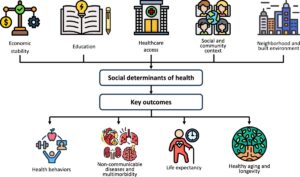
Uneven Urban Health Landscape lack of proper systems and oversight can Exposed:
- lead to significant public health risks. Fragmente
2023) shows that India’s urban health systems
Uneven Urban Health Landscape Exposed:
- are highly uneven, with large Fragmented Ecosystem differences in insurance coverage, public service availability, and care-seeking behavior across cities. This fragmentation extends to environmental – Evidence from ICE360 (2023) shows that India’s urban governance, with inconsistent application of environmental clearance health systems are highly **un processes.
- Mismatch with Aspirations –even**, with large differences in insurance coverage, public service availability, and care-seeking behavior across Contrary to expectations from rising incomes and connectivity cities.
- , urban health indicators display Mismatch with Aspirations –fragility, not improvement. This is Contrary to expectations from rising incomes and connectivity, urban partly due to the failure to implement comprehensive environmental impact assessments for health indicators display fragility, urban development projects.
- Financial Burden Rising – A rising not improvement.
- Financial Burden Rising share of urban households face high out-of-pocket payments without – A rising share of urban households face high out-of- adequate financial protection. This burden is exacerbated by health issues stempocket payments without adequate financial protection.
- ming from poor environmental quality in urban areas.
- Systemic Fragmentation – Urban growth has not been matche Systemic Fragmentation – Urband with health financing reforms, leading to severe variations in access and affordability.
- growth has not been matched with health Public–Private Divide – Cities financing reforms, leading to severe variations with weak public provisioning show extreme in access and affordability. The lack of integration between health and environmental dependence on private care, wi policies, such as those outlined in the Forestdening inequality in health outcomes.
Conservation Act and Coastal Regulation Zone **Key Health Policies, Legal notifications, contributes to this fragmentation.
Public–Private Divide Provisions and Governance Framework: |
| ● National Health Policy 2017 – Emphasises universal health – Cities with weak public provisioning show extreme dependence on private care, widening inequality in coverage, financial protection, and strengthene health outcomes. This divide is further complicated by the inconsistent application of environmental jurisprudence in urban development. |
Key Health Policies, Legal Provisions and Governance Framework:
- National Health Policy 2017 – Emphasises universal health coverage, financial protection, and strengthened primary care.
- Ayushman Bharat (PM-JAY) – World’s largest government-funded insurance scheme; aims to reduce out-of-pocket expenditure.
- Urban Health Mission (NUHM) – Provides primary healthcare services to the urban poor; part of National Health Mission (NHM).
- Clinical Establishments Act 2010 – Regulates quality and standards in private and public health facilities.
- 15th Finance Commission Recommendations – Increase local body spending on health; link grants with performance.
- Out-of-Pocket Expenditure (OOPE) – India has one of the highest OOPE rates globally (~55%).
- Right to Health – Not explicitly fundamental, but linked to Article 21 (Right to Life) through SC judgments. Recent environmental jurisprudence, including the Vanashakti judgment, has emphasized the right to a pollution-free environment as part of the right to life.
- Insurance Coverage – Only ~11% households voluntarily pay insurance premiums; significant trust deficit persists.
- NFHS-5 Findings – Shows persistent inequalities and gaps in urban health access, especially for marginalised groups.
- ICE360 Survey – Provides granular data on city-wise health utilisation, coverage, and financial vulnerability.
Coverage Gaps and Divergent City-Level Risks
- Low Effective Coverage – Metropolitan regions like Delhi, Mumbai, Kolkata show only 31% effective health coverage despite having advanced private hospitals. This low coverage is partly due to the lack of comprehensive environmental impact assessments in urban planning.
- Smaller Cities Perform Better – Medium-sized cities register around 41% coverage due to stronger implementation of state insurance schemes. Some of these cities have also benefited from more stringent environmental clearance processes for development projects.
- High Health Spending Burden – Smaller cities spend 5–7% of income on health, reflecting deeper vulnerability despite lower absolute spending. This burden is often linked to environmental health issues that could be mitigated through proper ex-post facto environmental clearances for existing projects.
- Cycle of Vulnerability – Lower incomes, weak public provisioning, and higher disease burdens trap many cities in a persistent risk cycle. Breaking this cycle requires addressing both health and environmental challenges through integrated policies.
- Misaligned Resources – The scale of urbanisation has not translated into stronger institutional capacity or risk pooling systems. This misalignment extends to environmental governance, with inadequate implementation of the polluter pays principle and precautionary principle in urban development.
Care-Seeking Behaviour Reflects Institutional Weakness
- High Public Utilisation in Few Cities – Places like Kozhikode, Udaipur, Bilaspur, Cuttack show 74–82% public system use due to stable staffing and functional primary care. These cities have also made strides in creating more environmentally sustainable urban spaces.
- Private Dominance Elsewhere – Cities like Patna, Jalandhar, Bareilly, Nanded show 70–85% reliance on private care despite low insurance coverage. This trend is often accompanied by lax enforcement of environmental regulations in private sector developments.
- Public System Retreat – Declining presence and reliability of public systems increase financial risk for poorer families. This retreat is mirrored in the weakening of environmental democracy in urban governance processes.
- Insurance Premium Reality – Only 11% of households pay any health insurance premium despite high use of doctors, diagnostics, and hospitalisation. This low uptake is partly due to a lack of trust in institutions, a problem that extends to environmental governance bodies as well.
- Financial Exposure Unchecked – High healthcare utilisation + minimal protection = rising illness-driven economic shocks. These shocks are often compounded by environmental health issues stemming from inadequate urban planning and retrospective environmental clearances.
City-wise Divergences in Administrative Performance
- Mid-Sized City Leadership – Cities like Udaipur (84%), Jodhpur (81%), Cuttack (80%), Srinagar (75%), Kozhikode (65%) show strong risk pooling due to consistent governance. These cities have also made progress in integrating environmental considerations into their urban development plans.
- Administrative Efficiency Matters – These examples show financial protection depends more on policy execution, not city wealth. Efficient administration extends to environmental governance, with some cities implementing robust environmental impact assessment processes.
- Metros Lag Behind – Despite hosting corporate hospitals, metros fail to provide meaningful protection. This failure is often linked to rapid, unplanned growth that bypasses proper environmental clearance procedures.
- State Schemes Underutilised – Urban migrants, informal workers, and floating populations remain excluded from state coverage. This exclusion often correlates with exposure to environmental health risks in poorly regulated urban spaces.
- Structural Imbalance – Larger cities show a disconnect between service availability and affordability, leading to inequity. This imbalance is exacerbated by the inconsistent application of environmental jurisprudence in urban development projects.
Drivers Behind Avoidance of Public Healthcare
- Long Waiting Times – Nationwide 52% cite long queues, going up to 69% in Delhi and 71% in Kolkata.
- Poor Spatial Access – Over 40% of households in Agra, Firozabad, Saharanpur, Dhanbad report no nearby public health facility. This lack of access is often compounded by poor environmental quality in these areas.
- Service Quality Concerns – Dissatisfaction levels hit 61% in Hyderabad, 61% in Patna, and 76% in Dhanbad. These concerns often extend to the quality of the urban environment, with many cities struggling to provide a pollution-free environment.
- Low Institutional Trust – 25% uninsured households do not buy insurance due to distrust in claim settlements, indicating weak grievance systems. This distrust parallels the skepticism many citizens have towards environmental clearance processes.
- Administrative Delays – Slow responses and unclear procedures worsen trust deficits in government insurance. Similar delays in environmental clearance processes contribute to unplanned and potentially harmful urban development.
Structural Causes of Urban Health Fragility
- Mismatch Between Urban Growth & Health Preparedness – Infrastructure expansion is not accompanied by health system development. This mismatch often results from inadequate environmental impact assessments in urban planning.
- Land Use Planning Failures – Health facilities are not embedded into urban design, making them an afterthought. These failures often stem from a lack of comprehensive environmental clearance processes in urban development.
- Absence of Predictable Public Services – Unpredictable hours, staff shortages, and low-quality assurance deter citizens. This unpredictability extends to environmental governance, with inconsistent application of regulations like the EIA notification.
- Market-Driven Skew – Cities increasingly rely on private providers without regulatory oversight on pricing or service standards. This skew is mirrored in environmental governance, where private interests often override public environmental concerns.
- Inadequate Risk-Pooling Mechanisms – Existing insurance models cater mainly to salaried workers, not the informal urban workforce. This inadequacy is compounded by the uneven distribution of environmental risks in urban areas.
Policy Imperatives for a Resilient Urban Health Future
- Recognise Health as Core Urban Infrastructure – Treat health systems at par with transport, housing, water, embedding them in urban planning.
- Strengthen State Insurance Schemes – Improve quality, enrolment, and grievance redressal to build trust.
- Reform Private Sector Behaviour – Transparent billing, regulated pricing, and clear care pathways can reduce shocks.
- City-Specific Risk Models – Insurance products must reflect urban informality and fluctuating incomes.
- Build Trusted Institutions – Accountability, responsiveness, and consistent service quality are essential for inclusive health outcomes.
Challenges :
- Fragmented Systems – Urban health infrastructure suffers from uneven provisioning, with deep divides between metros, mid-sized cities, and new urban clusters.
- Low Institutional Trust – Citizens avoid insurance due to distrust in claims settlement, irregular service delivery, and poor transparency.
- Public Sector Weaknesses – Long waiting times, staff shortages, and poor facility distribution deter public utilisation.
- Financial Vulnerability – Uninsured families face high out-of-pocket expenditure, often leading to debt traps.
- Informal Workforce Exclusion – Most insurance models do not cater to the informal sector, which forms the majority of urban employment.
- Private Sector Dominance – High costs, opaque billing, and lack of regulation aggravate inequality in access.
- Urban Planning Failures – Health infrastructure is rarely prioritised in master plans, leaving peri-urban and low-income areas underserved.
- Weak Risk-Pooling – Low insurance penetration prevents effective risk distribution, deepening vulnerability.
- Data Gaps – Lack of city-level granular data limits evidence-based planning.
- Migration Pressures – Rising floating populations strain already fragile systems.
Way Forward :
- Strengthen Public Healthcare – Ensure predictable hours, stable staffing, and quality assurance to rebuild trust.
- Expand State Insurance – Improve enrolment, simplify processes, and create robust grievance redressal mechanisms.
- Regulate Private Healthcare – Mandate transparency in billing, regulate pricing, and introduce city-based accreditation systems.
- Urban Health in Planning – Integrate health facilities in zoning, transport, and land use plans; ensure walkable access.
- Tailored Insurance Models – Introduce micro-insurance and flexible premium products for informal workers.
- Improve Digital Platforms – Use digital health records, telemedicine, and mobile health units to expand reach.
- Strengthen Governance – Build accountable institutions with citizen feedback loops and performance audits.
- Invest in Preventive Care – Strengthen primary care networks, screenings, and awareness programs.
- Mapping Vulnerabilities – Conduct periodic city-level surveys to identify gaps in access and service reliability.
- Partnerships with Local Bodies – Municipalities must become active partners in health provisioning.
Conclusion:
India’s urban health crisis stems from institutional fragility, weak financial protection, and excessive reliance on private care. For equitable urban growth, India must prioritise public provisioning, trusted insurance systems, and integrated urban planning, ensuring cities become healthier, more resilient, and capable of supporting inclusive development.
Source: Mint
Mains Practice Question:
“Urbanisation in India has not translated into resilient health systems. Analyse how uneven public provisioning, weak financial protection, and institutional distrust are shaping India’s urban health crisis. Suggest structural reforms needed for creating equitable and sustainable urban health ecosystems.”

