 India's No.1 PU & Degree With Integrated IAS & IPS(UPSC/PSC) Training College.


India’s Global Role in New World Order
India’s Role in New World Order
Syllabus
GS 2: India and its neighbourhood
Why in the News?
Recently, debates have intensified over the changing global economic order, driven by the U.S.-China rivalry, new trade ecosystems, and rising populist-autocracies, creating opportunities for India to reshape global economic and strategic frameworks.
Introduction
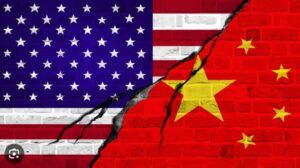
- Recently, the global economic order is witnessing a massive shift as the United States and China lock horns in a great-power rivalry.
- This ongoing transformation is changing global trade, finance, and geopolitics.
- For India and the Global South, this disruption presents a rare opportunity to create a fairer and balanced world order.
Understanding the New Economic Paradigm
- The world economy is undergoing a deep transformation that challenges the existing global order.
- Multiple forces, from political populism to digital capitalism, are reshaping global production, finance, and governance.
Rise of Populist-Autocrats and State-Capital Alliances
- Populist-autocrats are increasingly merging political power with corporate influence, creating a strong state-capital nexus.
- Unlike the old laissez-faire system, where markets operated freely with minimal state interference, these regimes now favour select oligopolies and crony capitalists.
- Such governments trade political support for economic concessions, allowing corporates to dominate public policy.
- National interest becomes secondary, as public assets and welfare goals are compromised to serve private profits.
- This arrangement weakens the social contract between citizens and the state, eroding democratic accountability and economic fairness.
Return of Old Power Politics
- Because of the close ties between populist leaders and corporate elites, traditional statecraft methods are making a comeback.
- The U.S., under the banner of “Make America Great Again,” is reshaping its historical alliances and strategic priorities.
- Washington is pressuring Taiwan to shift chip production to the U.S., ensuring domestic technological dominance.
- It is also securing trade routes such as the Panama Canal and strengthening control over rare earth supply lines in Central Asia and Africa.
- The U.S. is using digital currencies and financial tools as instruments of foreign policy, including in countries like Pakistan.
- It is also exerting influence over Arctic nations like Greenland and Canada, anticipating competition for natural resources – a new form of ecological imperialism.
- The U.S. expects Europe to manage Russia and Israel to manage West Asia, reinforcing the old “sphere of influence” mindset.
- Such strategic compartmentalisation has already triggered regional conflicts and humanitarian crises, including genocides.
Big Tech and Digital Colonialism
- The rise of Big Tech has fundamentally transformed the global economy.
- These companies extract massive profits by controlling data, digital services, and information ecosystems.
- Their dominance shapes political opinions, enabling populist-autocrats to consolidate power while suppressing digital rights.
- Digital colonialism is evident in global policies like the AI Action Plan, Cloud Act, and the SWIFT payment system’s weaponisation.
- The rise of state-backed digital currencies piloted by over 100 central banks worldwide may improve cross-border payments and even help restructure national debts.
- However, such systems risk undermining economic sovereignty and anti-money laundering frameworks like those of the Financial Action Task Force (FATF).
- Moreover, opaque digital finance will make political funding less transparent, giving more leverage to authoritarian regimes.
Withdrawal of Development Aid and Its Human Cost
- Populist-autocrats have also cut back on developmental aid, leaving vulnerable populations at risk.
- For instance, the G-7’s $44 billion aid cuts could push 5.7 million Africans into poverty by 2026.
- In Nepal, the decline in international grants to small businesses caused eight lakh people to migrate abroad, fuelling dissatisfaction with governance.
- Similarly, funding reductions in the World Food Programme affected 16.7 million people in 2023.
- These cuts triggered distress migration, increased recruitment into militias especially in the Sahel region and heightened social tensions.
- The vacuum left by the retreating democracies is now being filled by undemocratic, expansionist forces.
Economic Sanctions and Trade Barriers
- The U.S. currently imposes tariffs on over 70 nations and sanctions on more than 30, disrupting global trade and investment flows.
- It refuses to absorb goods from surplus economies like Japan, Europe, and China, thereby destabilising global demand chains.
- This protectionism hurts smaller economies dependent on open trade, weakening the principles of free exchange of goods, capital, and ideas.
Global South’s Strategic Response
- Facing these disruptions, countries of the Global South are exploring alternatives to Western-dominated systems.
- They are:
- Signing bilateral trade treaties.
- Localising production and securing supply chains.
- Building gold reserves as safeguards.
- Cautiously de-dollarising oil transactions.
- Experimenting with alternate currencies to reduce dependence on the U.S. dollar.
- These moves, if successful, could create a domino effect, compelling even Western nations to redesign their economic models.
Opportunity Within the Crisis
A Chance for China and India
- China and India, which once dominated the global economy for nearly 1,800 of the last 2,000 years, have a unique chance to reclaim leadership.
- The neoliberal globalisation model that emerged in the 1990s was based on cheap labour, environmental exploitation, and unequal wealth distribution.
- This system accumulated unsustainable sovereign debt and reduced the ability of many nations to invest in welfare and development.
- National assets were sold off to private cronies, deepening inequality between the Global North and South.
Widening Global Inequalities
- According to the World Bank’s 2022 “Poverty and Shared Prosperity” report, nearly 47% of the global population lives below the $6.85 per day poverty line.
- Around 735 million people still suffer from chronic hunger.
- Such deep inequality breeds resentment, social unrest, and identity-based politics, which populist leaders exploit to weaken democracies.
India’s Role in Building a Fairer Economic Order
Pushing for a New Global Economic Deal
- India and the Global South can either accept the existing unjust system or work together to create a New Economic Deal.
- India should lead efforts to reform international financial institutions like the IMF and World Bank for fairer representation of developing economies.
- It must advocate for a debt-relief framework that frees poor nations from structural adjustment programs, which often trigger economic crises and democratic backsliding.
Building New Alliances
- India should champion a rules-based global economy that supports fair trade and protects domestic industries.
- It can use platforms like BRICS or South-South cooperation to promote equitable trade and investment models.
- India must also build bipartisan relations with key partner nations to ensure policy continuity, avoiding the diplomatic strains seen with the U.S., Bangladesh, and Nepal.
Recalibrating Domestic Policy for Global Readiness
Reasserting the State’s Role
- To realise its potential, India needs a major domestic course correction.
- The private sector is essential but profit-oriented – it cannot resolve deep structural challenges.
- The state must take the lead in strategic sectors like energy, infrastructure, digital finance, defence, space, education, healthcare, agriculture, and water.
- These sectors are vital for both national security and social welfare.
Preventing Monopoly and Strengthening Institutions
- India should enact strong anti-monopoly laws to prevent concentration of wealth.
- Establishing a sovereign wealth fund, like Norway’s, can channel national profits into long-term development and crisis resilience.
- Investment in research, education, and academic freedom is essential for global competitiveness.
- Rather than privatising, India can strategically redeploy public sector units (PSUs) like China’s state-owned enterprises (SOEs) to generate revenue and expand geopolitical influence.
Aligning the Digital Economy with National Goals
- India’s emerging digital-financial ecosystem must serve constitutional and developmental objectives, not just private interests.
- Regulations should ensure data sovereignty, privacy protection, and financial transparency.
- The “India Way” in foreign policy must reflect true non-alignment, not opportunistic multi-alignment, to safeguard long-term independence.
Conclusion
India stands at a defining moment in global history. By blending domestic reform with visionary diplomacy, India can lead the Global South in shaping a just, inclusive, and balanced world order for future generations. This transformation requires addressing issues of climate justice, strengthening local self-governance, and developing robust digital public infrastructure. By focusing on these areas, India can bridge the north-south disparity and create an inclusive digital future that benefits all citizens.
Source : The Hindu
Mains Practice Question
Discuss how the rise of populist-autocrats and digital colonialism is reshaping global economic governance. What challenges does this pose for developing economies like India, and how can concepts like participatory governance and digital sovereignty help address these issues?


