 India's No.1 PU & Degree With Integrated IAS & IPS(UPSC/PSC) Training College.


Indian ALH Helicopters Face Fresh Safety Issues
New Safety Concerns Plague Indian ALH Helicopters
Why in the News ?
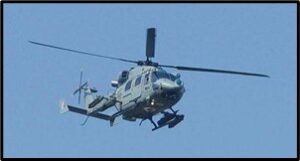
The Indian Army reported a tail drive shaft (TDS) defect in an Advanced Light Helicopter (ALH) Dhruv, prompting fleet-wide one-time safety checks. This comes months after the fleet was grounded following the fatal Porbandar crash and recurring safety concerns.
Recent Incident and Safety Checks:
- On September 4, 2025, an Army Aviation ALH reported a broken TDS bearing mount during flight operations.
- The Directorate General of Electronics & Mechanical Engineers (Aviation) immediately ordered priority safety checks across all ALH units of the army, air force, and navy.
- Checks include TDS bearings, elastomeric bushes, cracks on tail boom top face sheet, and rivets inspection using magnifying equipment.
- Each helicopter will be cleared for flying only after the one-time inspection.
- This precaution comes just months after ALHs were declared airworthy on May 1, following long grounding after the January 5 Porbandar crash.
Ongoing Investigations and HAL’s Role:
- After the Porbandar crash, HAL engaged Indian Institute of Science (IISc) for fatigue testing of transmission components.
- A Defect Investigation Committee (DIC), including CEMILAC, DG AQA, and HAL, is reviewing ALH systems.
- HAL has instrumented ALHs from the navy and coast guard to collect data on transmission, gearbox, and rotor hub
- Problems appear linked to sustained maritime operations, where corrosion and fatigue play larger roles.
- The design review in 2023-24 had led to control system replacements, but recurring glitches keep raising doubts about reliability.
About Advanced Light Helicopter :● ALH Dhruv: Designed and developed by Hindustan Aeronautics Limited (HAL), inducted in early 2000s. ● Fleet Size: Around 300 ALHs are operated by the army and air force, with another 30 by navy and coast guard. ● Role: Used for utility, reconnaissance, transport, and rescue missions. ● Technical Concern: The Tail Drive Shaft (TDS) transfers engine power to the tail rotor, ensuring directional stability. ● Safety Record: Involved in around 15 accidents in the last five years, raising persistent concerns about airworthiness. |

