 India's No.1 PU & Degree With Integrated IAS & IPS(UPSC/PSC) Training College.


RBSK 2.0 Expands Child Health Framework in India
RBSK 2.0 Expands Child Health Framework in India
Why in News ?
The Ministry of Health and Family Welfare has released updated RBSK 2.0 guidelines, expanding the 4Ds child health framework to include emerging health challenges like mental health and non-communicable diseases, ensuring a more comprehensive and lifecycle-based healthcare approach that promotes a pollution free environment for children’s holistic development.
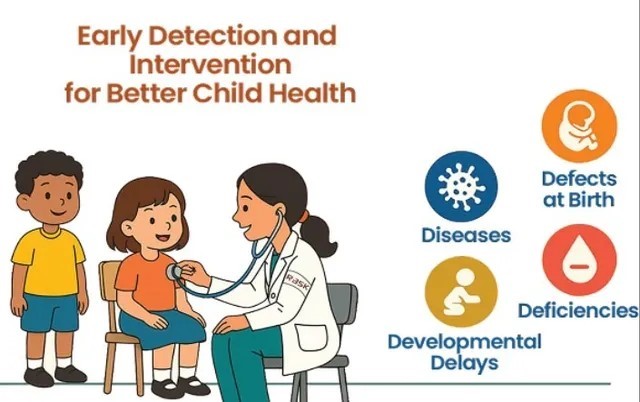
Key Features of RBSK 2.0 Guidelines :
- Expanded Coverage: Rashtriya Bal Swasthya Karyakram now adopts a lifecycle approach, covering children from birth to 18 years.
- Enhanced 4Ds Framework: The traditional 4Ds (Defects, Diseases, Deficiencies, Developmental Delays) now includes mental health, behavioural issues, and NCDs.
- Comprehensive Screening: Wider screening programmes to detect health conditions at an early stage, following the precautionary principle in child healthcare.
- Digital Integration: Introduction of digital health cards for better monitoring and record-keeping.
- Continuity of Care: Focus shifts from isolated interventions to continuous healthcare support across developmental stages.
Objectives and Policy Significance
- Early Intervention: Strengthens systems for early detection and timely treatment, reducing long-term health burdens.
- Improved Referral Systems: Ensures efficient follow-up care through strengthened referral linkages.
- Data-Driven Governance: Emphasis on real-time data tracking and integrated health platforms for better outcomes.
- Equitable Healthcare: Aims to provide accessible and quality healthcare services across socio-economic groups, promoting environmental democracy in health access.
- Holistic Development: Addresses physical, mental, and behavioural health, ensuring overall child well-being in a safe and healthy environment.
About Child Health Policies and Provisions :● RBSK (2013): A flagship programme targeting early identification and intervention for children (0–18 years). ● 4Ds Approach: Focuses on Defects at Birth, Diseases, Deficiencies, Developmental Delays. ● Integrated Child Health: Linked with schemes like Ayushman Bharat and school health programmes. ● NCDs in Children: Rising concern due to lifestyle changes, requiring preventive and promotive healthcare. ● Policy Goal: Aligns with Universal Health Coverage (UHC) and Sustainable Development Goals (SDGs) on child health. |

