 India's No.1 PU & Degree With Integrated IAS & IPS(UPSC/PSC) Training College.


India & Africa: Building a Shared Strategic Future
India and Africa: Forging a Shared Strategic Future
Syllabus:
GS-2:
Groupings & Agreements Involving India and/or Affecting India’s Interests ,India and its Neighbourhood ,Effect of Policies & Politics of Countries on India’s Interests
Why in the News ?
Prime Minister Narendra Modi, during his Mann Ki Baat address on October 26, announced year-long nationwide celebrations marking 150 years of Vande Mataram. This iconic hymn, composed by Bankim Chandra Chattopadhyay, symbolizes Bharat’s cultural nationalism, inspiring unity, devotion, and the spirit of freedom that fueled India’s independence movement.
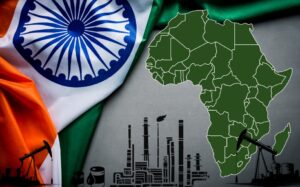
India’s Renewed Africa Outreach
- High-level engagement: The visit builds on India’s growing diplomatic focus on Africa, following Murmu’s 2024 visits to Mauritius, Algeria, Mauritania, and Malawi.
- Institutional dialogue: Both Angola and Botswana are members of the African Union (AU) and Southern African Development Community (SADC), ensuring regional cooperation.
- Continuity in relations: The President of Angola visited India in May 2024, highlighting reciprocal ties.
- Past engagements: Indian Vice Presidents visited Botswana in 2010 and 2018, showcasing consistent engagement.
- Symbol of continuity: The visit signals strategic depth and India’s commitment to its Africa policy, aligned with preparations for IAFS-IV.
Understanding India-Africa Relationship :● India-Africa Forum Summit (IAFS): First held in 2008; IAFS-IV expected in 2026. ● Southern African Development Community (SADC): Regional bloc with 16 member states, including Angola and Botswana. ● African Union (AU): 55-member continental body; Angola is the current chair. ● Lobito Corridor: Railway and port project linking DRC, Zambia, and Angola for trade in critical minerals (copper, cobalt). ● India’s Defence Line of Credit: $200 million offered to Angola for defence cooperation. ● Trade Value: Angola-India ($5 billion); Botswana-India ($0.5 billion). ● Energy Partnership: Angola is a key oil supplier to India; Botswana leads in diamond trade. ● ITEC Programme: Capacity-building initiative since 1964, benefiting African nations. ● South-South Cooperation: Promotes equitable partnership among developing nations. ● Relevant Articles: Article 51 (Promotion of International Peace) and Article 73 (Executive Power in Foreign Affairs) of the Indian Constitution. |
Angola’s Strategic and Economic Importance :
- Energy hub: Angola is a major supplier of oil to India, contributing significantly to India’s energy security.
- Trade figures: Bilateral trade stands at around $5 billion, with Angola enjoying a trade surplus; Indian exports are worth nearly $500 million.
- Reforms and diversification: Ongoing economic reforms, modernisation, and energy diversification have strengthened Angola’s diplomatic and trade profile.
- Strategic cooperation: India has extended a $200 million Line of Credit for defence cooperation with Angola.
- Maritime linkages: With its Atlantic coastline, Angola plays a crucial role in maritime connectivity and energy transport routes across Africa.
Botswana: Model of Stability and Good Governance :
- Economic model: Botswana has transformed into an upper-middle-income economy, known for prudent governance and transparent management of natural resources, especially diamonds.
- Democratic values: It remains a stable democracy with high per capita income, representing good governance in Africa.
- Diamond partnership: India’s engagement in diamond cutting and polishing industries aligns with Botswana’s economic strengths.
- Investment growth: Indian investments are expanding in mining, power generation, healthcare, and agriculture.
- Regional peace role: Botswana’s leadership in wildlife conservation and climate resilience enhances its regional and global stature.
Expanding Economic and Strategic Cooperation :
- Beyond energy trade: India’s Africa policy is expanding into defence, infrastructure, technology, and skill development.
- Lobito Corridor project: The Lobito Corridor—linking the Democratic Republic of Congo (DRC), Zambia, and Angola—enhances trade routes for critical minerals like copper and cobalt.
- Industrial collaboration: Indian firms contribute to skill development, job creation, and industrial diversification across both nations.
- Trade diversification: Botswana’s trade with India is modest (~$500 million), but cooperation is growing across diamonds and value-added sectors.
- Investment confidence: India’s expanding footprint reflects growing confidence in Africa’s reform trajectory and openness to diversified partnerships.
Cultural and People-to-People Linkages :
- Diaspora networks: Though small, the Indian diaspora—about 8,000 in Angola and 10,000 in Botswana—plays an influential role in commerce and culture.
- Capacity-building programmes: Both nations benefit from India’s ITEC (Indian Technical and Economic Cooperation) training initiatives.
- Language challenge: Angola’s Portuguese linguistic preference sometimes limits engagement but is being addressed through targeted programmes.
- Educational collaboration: Increasing number of African students in Indian universities strengthens bilateral understanding.
- Shared values: Deep bonds based on South-South cooperation, mutual respect, and anti-colonial solidarity remain the foundation of India-Africa relations.
Challenges in India-Africa Engagement :
- Trade imbalance: Angola enjoys a trade surplus while India’s exports remain limited, reflecting asymmetry in trade structure.
- Connectivity constraints: Poor logistical and maritime connectivity limits expansion of trade and people-to-people contact.
- Language and communication barriers: Angola’s Portuguese language preference restricts deeper cooperation in education and governance training.
- Competition from global powers: China, the European Union, and the United States have deeper financial and strategic footprints across Africa, challenging India’s reach.
- Institutional capacity gaps: India’s development projects sometimes face delays due to bureaucratic processes and limited follow-up mechanisms.
- Awareness deficit: Indian industries remain under-informed about African markets, reducing private sector participation.
- Technology and infrastructure gaps: Insufficient digital and logistical infrastructure hampers sustained commercial ties.
- Security risks: Political instability in parts of Central Africa and piracy along African coasts pose security threats to trade routes.
- Underutilisation of Lines of Credit: Some projects financed by India face slow implementation, reducing their intended impact.
- Environmental challenges: Climate risks threaten agriculture and resource-based industries, impacting shared economic gains.
Way Forward for a Stronger Partnership :
- Strategic diversification: India should move beyond energy to technology, digital services, healthcare, and green energy
- Infrastructure connectivity: Support Africa-led initiatives like the Lobito Corridor and Trans-African Railways to strengthen physical and digital links.
- Triangular cooperation: Partner with Japan, France, and the EU for sustainable projects while ensuring African ownership.
- Language and education: Promote Portuguese-language training and more ITEC seats for Lusophone African nations like Angola.
- Private sector mobilisation: Encourage Indian MSMEs and startups to explore opportunities in Africa’s emerging sectors.
- Financial innovation: Use the EXIM Bank and India-Africa Development Fund to finance new ventures in clean energy and innovation.
- Maritime cooperation: Strengthen maritime security and blue economy initiatives in the Indian Ocean and Atlantic spaces.
- Climate collaboration: Expand India’s International Solar Alliance (ISA) and Coalition for Disaster Resilient Infrastructure (CDRI) networks across Africa.
- Regular high-level dialogue: Institutionalise annual summits and business councils to maintain diplomatic momentum.
- Shared narrative: Build a joint voice in multilateral platforms on UN reforms, global trade, and climate justice.
Conclusion :
President Murmu’s visits reaffirm India’s long-term commitment to Africa’s progress, aligning development with mutual respect and partnership. By expanding cooperation beyond resources to reform, innovation, and sustainability, India and Africa together can shape a new South-South developmental model built on equality, trust, and shared prosperity.
Source : HT
Mains Practice Question :
Discuss the growing significance of India’s engagement with African nations in the context of energy security, critical minerals, and strategic diplomacy. How do President Droupadi Murmu’s visits to Angola and Botswana reflect India’s evolving approach towards Africa’s development and the larger framework of South-South cooperation?

