 India's No.1 PU & Degree With Integrated IAS & IPS(UPSC/PSC) Training College.


India Adds 2 Ramsar Wetlands 2026
India Adds Two Wetlands to Ramsar Network
Why in the News ?
Union Environment Minister Bhupender Yadav announced the inclusion of Patna Bird Sanctuary and Chhari-Dhand in India’s Ramsar network, while Prime Minister Narendra Modi welcomed the move, highlighting India’s growing commitment to wetland conservation and biodiversity protection.
Government Announcement and Political Significance:
- The Union Minister for Environment, Forest and Climate Change formally announced the addition of two new wetlands to India’s Ramsar list.
- He highlighted that India’s Ramsar sites have expanded by over 276%, from 26 sites in 2014 to 98 sites currently, under the present government.
- Prime Minister Modi expressed happiness and pride, congratulating local communities and conservationists associated with these wetlands.
- The recognition was described as reaffirming India’s environmental leadership and long-term commitment to ecosystem protection.
- Both leaders emphasised that wetlands are critical ecological assets, essential for biodiversity, climate resilience, and sustainable development.
Ecological Importance of the Newly Added Wetlands
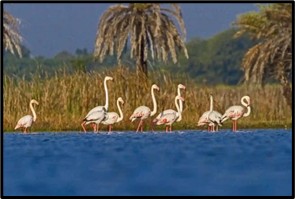
- Patna Bird Sanctuary is a freshwater wetland supporting hundreds of migratory and resident bird species.
- It plays a vital role in avian breeding, nesting, and seasonal migration cycles in northern India.
- Chhari-Dhand Wetland is a seasonal salt marsh wetland, ecologically significant in the arid Kutch landscape.
- The region supports diverse wildlife such as chinkara, wolves, caracal, desert cats, desert foxes, and several endangered bird species.
- Both wetlands contribute to habitat conservation, groundwater recharge, and climate adaptation, while supporting local livelihoods.
About Ramsar Convention and India:● The Ramsar Convention is an international treaty for the conservation and wise use of wetlands. ● It was adopted in 1971 at Ramsar, Iran, to protect wetlands of international importance, especially waterfowl habitats. ● India became a Contracting Party to the Convention on 1 February 1982. ● Ramsar sites are managed under internationally accepted conservation frameworks, balancing ecology and human use. ● Wetlands provide crucial ecosystem services such as flood control, carbon sequestration, biodiversity conservation, and livelihood security. |


