 India's No.1 PU & Degree With Integrated IAS & IPS(UPSC/PSC) Training College.


Grassland Invaders Threaten Dibru-Saikhowa Park
Grassland Invaders Threaten Assam’s Dibru-Saikhowa National Park
Why in News ?
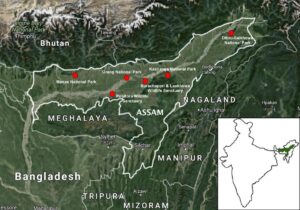
A new scientific study has revealed that both native and invasive plant species are altering the riverine ecosystem of Dibru-Saikhowa National Park (DSNP) in Assam, threatening its unique grasslands, biodiversity, and feral horses, while intensifying habitat loss and ecological imbalance.
Study Findings and Key Observations:
- Study titled “Grasslands in Flux” published in Earth journal.
- Analysed land use and land cover (1999–2024) using remote sensing and GIS.
- Native invaders: Bombax ceiba (Simalu), Lagerstroemia speciosa (Ajar).
- Invasive species: Chromolaena odorata, Ageratum conyzoides, Parthenium hysterophorous, Mikania micrantha.
- Land-use changes:
- Grassland declined from 78% (2000) to substantial loss by 2024.
- Shrubland expanded, degraded forests increased to 52 sq. km (23.47%).
- Key drivers: Brahmaputra floods and anthropogenic pressure from villages.
- Consequences: loss of biodiversity, reduced carbon storage, and worsening climate change impacts.
Way Forward and Recommendations
- Launch targeted grassland recovery project.
- Control invasive species through surveillance and scientific management.
- Relocation of forest villages and community-led conservation.
- Strengthen staffing, monitoring, and eco-restoration initiatives.
- Ensure protection of endemic grassland fauna and enhance carbon storage to mitigate climate change.
Key points : Dibru-Saikhowa National Park (DSNP)● Location: Tinsukia & Dibrugarh districts, Assam. ● Area: ~425 sq. km, situated between Brahmaputra & Dibru rivers. ● Habitat type: Riverine, wetland, and semi-evergreen forests. ● Unique Fauna: ○ ~200 feral horses (descendants of WWII military horses). ○ Bengal florican, hog deer, swamp grass babbler (globally threatened). ● Conservation Issues: Grassland degradation, invasive species spread, flood impacts. ● Status: Biosphere Reserve, Important Bird Area (IBA). |

