 India's No.1 PU & Degree With Integrated IAS & IPS(UPSC/PSC) Training College.


Gender Equity in Urban Governance Roles
The Need for Gender Equity in Urban Bureaucracy
Why in the news?
- Women’s representation in grass-roots politics in India has increased significantly. However, their presence in administrative and bureaucratic cadres remains disproportionately low.
- Urban India is undergoing a rapid urban transformation, expected to continue over the coming decades.
- By 2050, over 800 million Indians (about half the population) will reside in urban areas. This makes India the largest contributor to global urban growth.
- The expansion of cities—spatially, economically, and demographically—is transforming the social fabric.
- These changes are reshaping the social contract, influencing India’s democracy and development pathways.
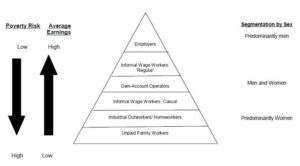
Gender Gap in Urban Governance and Bureaucracy
- Over the last three decades, India has implemented progressive constitutional reforms to promote gender equity.
- The 73rd and 74th Constitutional Amendments mandate 33% reservation for women in Panchayati Raj Institutions (PRIs) and Urban Local Governments (ULGs).
- 17 States and 1 Union Territory have further increased this quota to 50%.
- As of 2024, women make up over 46% of local elected representatives (Ministry of Panchayati Raj, 2024).
- There is a visible rise in women representation as mayors and councillors, reflecting enhanced political participation at the grassroots.
- However, the urban administrative architecture that executes these decisions—comprising city managers, planners, engineers, and police—remains predominantly male.
- This gender imbalance in administrative cadres limits cities’ ability to respond inclusively and equitably to all citizens.
- Despite large investments in infrastructure (highways, metros, smart cities), gender equity in bureaucracy remains a neglected pillar of inclusive urban development in urban India.
The Gender Gap
- Women’s entry into civil services has increased, but urban administrative structures remain male-dominated.
- As of 2022, women formed only 20% of the Indian Administrative Service (IAS) (IndiaSpend, 2022).
- Women representation is even lower in urban planning, municipal engineering, and transport authorities.
- In the police force, only 11.7% are women (Bureau of Police Research and Development, 2023), often limited to desk jobs.
- This gender gap is significant, especially in urban contexts where women’s mobility patterns differ:
- Women rely more on public/shared transport and make multi-stop journeys for work and caregiving.
- A study by ITDP and Safetipin found that 84% of women in Delhi and Mumbai used public/shared transport, compared to 63% of men.
- Urban planning continues to favour mega-infrastructure projects, often neglecting neighbourhood-level safety and accessibility.
- A 2019 Safetipin audit of 50 cities revealed that over 60% of public spaces were poorly lit, impacting women’s safety.
- With few women in policing, community safety programs often fail to address women’s actual needs and fears.
- This underrepresentation has real-world consequences:
- Women officials offer insights shaped by lived experiences, leading to better prioritization of water, health, and safety.
- Studies by ICRIER and UN Women show they enhance public trust through empathetic law enforcement.
- Gender-sensitive urban design is not possible without gender-diverse administrative institutions.
Missed Opportunity in Gender Budgeting
- Gender responsive budgeting is a key tool that integrates gender considerations into public finance, but remains underutilised in Indian urban governance.
- Globally introduced in the 1990s, gender responsive budgeting challenges the myth of gender-neutral budgets by revealing how public spending can reinforce inequities.
- India introduced the Gender Budget Statement in 2005–06, with Delhi, Tamil Nadu, and Kerala leading efforts:
- Delhi invested in women-only buses and improved public lighting.
- Tamil Nadu applied gender-responsive budget planning to 64 departments in 2022–23.
- Kerala embedded gender goals through the People’s Plan Campaign.
- However, studies by UN Women and National Institute of Public Finance and Policy highlight issues:
- Weak monitoring and limited institutional capacity, especially in smaller cities.
- Gender responsive budgeting often remains tokenistic, ignoring core urban concerns like pedestrian safety or childcare infrastructure.
Global Best Practices in Gender Budgeting:
- Philippines: Mandates 5% of local budgets for gender programs.
- Rwanda: Integrates gender responsive budgeting into national planning with dedicated oversight bodies.
- Uganda: Requires gender equity certificates for fund approvals.
- Mexico: Links gender responsive budgeting with results-based budgeting.
- South Africa: Uses participatory planning to align budgets with community realities.
Global Evidence on Impact of Representation:
- Rwanda: Increased investment in maternal health and education.
- Brazil: Prioritised sanitation and primary healthcare.
- South Korea: Gender impact assessments improved transit and public spaces.
- Tunisia: Parity laws enabled women to enter technical roles, enhancing focus on safety and health.
- Philippines: Used gender-tagged budgets to fund GBV shelters and childcare facilities.
Need for Systemic Reforms in Urban India:
- Political quotas are not enough; there must be a strong presence of women in bureaucracy.
- Calls for reforms in recruitment, retention, and promotion in administrative and technical roles.
- Affirmative action — such as quotas and scholarships in planning and engineering — is needed to break structural barriers.
- Implementing gender responsive budgeting across all levels of urban governance can significantly improve resource allocation for gender-inclusive development.
The Cities We Deserve: Towards Gender-Inclusive Urban Development
-
As urban India moves toward becoming a $5 trillion economy, its cities must evolve beyond economic engines to become spaces of inclusion and equity.
-
Gender mainstreaming in urban planning is essential and should include:
-
Mandatory gender audits
-
Participatory budgeting
-
Linked monitoring and evaluation systems
-
-
Gender responsive budgeting should be institutionalised across Urban Local Governments (ULGs) and backed by targeted capacity-building.
-
Representation must lead to agency—women must be empowered to move beyond symbolic participation and break systemic glass ceilings.
-
Local gender equity councils and models like Kudumbashree offer scalable solutions, especially for small and transitioning cities.
-
Women are already transforming governance as elected representatives—they must now influence how cities are planned, serviced, and governed.
-
Cities designed with women in mind—based on their lived experiences—are more likely to be safe, inclusive, and efficient for all.
-
To build cities for women, we must begin by building cities with women.
-
Implementing gender-aware policy appraisal and gender responsive budgeting in urban administrative architecture can significantly improve the inclusivity and effectiveness of urban development initiatives.
Source: The Hindu – The need for gender equity in urban bureaucracy
Mains Question (250 words):
Despite increased political representation of women at the grassroots, urban governance in India remains male-dominated. Discuss the challenges and opportunities for achieving gender-inclusive urban development and administration.

