 India's No.1 PU & Degree With Integrated IAS & IPS(UPSC/PSC) Training College.


Displacement Is Not Peace, Justice Demands Restoration
Displacement Is Not Peace, Justice Demands Restoration
Syllabus:
GS Paper – 2: Bilateral Groupings & Agreements Regional Groupings, Indian Diaspora, Groupings & Agreements Involving India and/or Affecting India’s Interests
WHY IN THE NEWS?
- Gaza relocation proposal: Israeli Prime Minister Benjamin Netanyahu’s latest plan proposes the military capture of the Gaza Strip, continued Israeli control, and the construction of a “humanitarian city” in Rafah to relocate around 600,000 displaced Palestinians. This plan, supported by officials like Foreign Minister Israel Katz, has sparked intense debate.
- Legal and moral backlash: Human rights experts, including Israeli lawyers and UN special rapporteurs, have denounced this as a “forced transfer”, illegal under international law and morally indefensible. The concept of universal jurisdiction may come into play for such actions.
- Worsening crisis: With the Gaza Strip death toll crossing 55,000, the vast majority of its population displaced, and infrastructure destroyed, including vital educational institutions, the plan threatens to entrench a framework of permanent dispossession and exacerbate the ongoing humanitarian crisis.
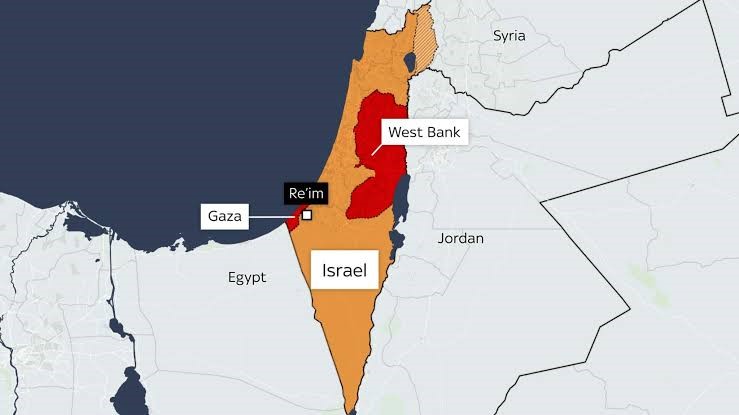
Illegality of Forced Displacement
- International law violation: The planned mass displacement of Palestinians constitutes a violation of the Fourth Geneva Convention, which prohibits the forcible transfer of protected civilians in occupied territories. This includes the use of coercive measures and displacement orders.
- Legal condemnation: Prominent Israeli legal experts called the plan a clear case of population transfer in preparation for deportation, directly contravening the principle of non-refoulement and potentially falling under the jurisdiction of the International Criminal Court under the Rome Statute.
- Misuse of ‘humanitarian’ term: The so-called “humanitarian city” is merely a rebranding of displacement infrastructure. It doesn’t restore dignity or self-determination but reorganizes control and surveillance, potentially creating controlled zones reminiscent of concentration camps.
- Sovereignty undermined: A corridor fenced and controlled by Israeli troops does not ensure autonomy; it converts humanitarian assistance into a mechanism of occupation. This includes intrusive security screening measures that further erode Palestinian rights.
- Camp on ruins: Constructing a relocation zone on the ruins of Rafah — a city already devastated by bombardments — strips Palestinians of future, home, and hope, as well as access to their natural resources.
Political Rhetoric and Strategic Intent
- Settler-state vision: Israel’s far-right leadership, including Finance Minister Bezalel Smotrich and Foreign Minister Israel Katz, has explicitly rejected withdrawal from occupied territories and links occupation with expansionist goals.
- Trump-Netanyahu legacy: Former US President Trump once proposed turning the Gaza Strip into a “Riviera of the Middle East,” paving the way for open discussions on third-country resettlement, echoing long-standing Zionist goals of demographic engineering.
- Militarised language: While international negotiations focus on “phased withdrawals”, Israel’s intentions reflect a military logic of conquest, not conflict resolution.
- Double speak: The Israeli government brands this process as “voluntary departure”, masking the coercive nature of forced transfers and erasure of national identity.
- Long-term strategy: The plan isn’t about temporary relocation but establishing irreversible demographic shifts, essentially converting the Gaza Strip into a permanent holding zone that extends beyond its borders to neighboring countries.
Peace Talks and Global Apathy
- Stalled diplomacy: Despite ceasefire negotiations led by Qatar, talks remain stuck. Hamas demands permanent ceasefire and Israeli withdrawal, while Israel insists on Hamas’s unconditional surrender.
- International inaction: The United Nations, including the Security Council and the UN Secretary General, continues to treat this as a security crisis, avoiding any stance against permanent displacement or occupation.
- Ceasefires insufficient: While temporary truces offer humanitarian respite, they fail to address structural violence — occupation, blockade, and identity erasure.
- Diplomatic normalization: Accepting “humanitarian cities” and displacement zones as part of diplomacy normalizes mass deportation and entrenches a post-truth security narrative.
- Need for principled stand: The language of security cannot justify siege, occupation, or mass displacement. Global silence becomes complicity in settler-colonial practices, as highlighted by various special rapporteurs.
The Right to Return and Remain
- Core Palestinian demand: For decades, Palestinians have consistently asked for one basic right — to live freely in their homeland, with dignity and sovereignty. This includes the right to lawful presence in their ancestral lands.
- No peace without justice: Displacement is not peace. A plan that maintains occupation while relocating and managing the population cannot be a solution.
- Dispossession in West Bank: The suffering in Gaza is not isolated — Palestinians in the West Bank face evictions, settler violence, and land theft, reinforcing a shared reality of statelessness and psychological oppression.
- Permanent displacement unjust: Any agreement that ignores the right of return, or promotes indefinite relocation, becomes a blueprint for enduring injustice.
- Occupation as root cause: The core issue is not Hamas, but decades of dispossession, occupation, and blockade that fuel resistance and desperation.
Accountability, Not Just Ceasefires
- Hamas and accountability: Hamas’s October 7 attacks were brutal and escalated violence, including the use of civilians as human shields and targeting of non-combatants.
- Dual condemnation: But condemning Hamas does not justify the obliteration of Gaza or the collective punishment of 2 million Palestinian civilians.
- Occupation precedes terror: The occupation, siege, and denial of rights precede and produce extremism — not the other way around.
- Peace through justice: Any genuine peace process must start with accountability for war crimes, recognition of Palestinian statehood, and an end to settler colonialism.
- Truth over narrative: Instead of managing Palestinian displacement, global diplomacy must address the underlying truth — that justice and dignity are the only paths to lasting peace.
Conclusion
Israel’s plan to relocate Palestinians to a “humanitarian city” is not a step toward peace, but a consolidation of control and permanent displacement under the guise of security. It violates international law, defies moral standards, and ignores the central demand of Palestinians: the right to live freely in their homeland. Any peace effort that fails to restore this right and instead focuses on managing or rerouting Palestinian presence is not a solution but a blueprint for apartheid. The United Nations, Security Council, and Human Rights Council must reject such frameworks and act to dismantle the structures of occupation, ensuring dignity, justice, and sovereignty for all. The international community must uphold the rule of law and support the International Criminal Court in addressing potential war crimes and systematic attacks on Palestinian civilians in the occupied territory.
Source : IE
Mains Practice Question
- Critically evaluate Israel’s “humanitarian city” plan for Gaza in light of international humanitarian law and the principle of non-refoulement. How should the international community respond to such proposals?

