 India's No.1 PU & Degree With Integrated IAS & IPS(UPSC/PSC) Training College.


Delhi Expands Ration Card Eligibility for Poor Families
Delhi Expands Ration Card Eligibility For Poor Households
Why in the News ?
The Delhi Cabinet has increased the annual income eligibility limit for ration cards from ₹1.2 lakh to ₹2.5 lakh under the Public Distribution System (PDS). The government also plans to introduce a CBDC-based ration distribution system for improved transparency and efficiency.
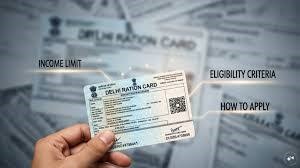
Major Changes In Delhi’s Ration Card Policy:
- The Delhi government approved raising the annual income limit for ration card eligibility to ₹2.5 lakh.
- The decision aims to include more economically vulnerable families under the National Food Security Act (NFSA) benefits.
- Earlier, many low-income households working in the informal sector were excluded because their earnings slightly exceeded the old threshold.
- The government will amend Rule 3(1) of the Delhi Food Security Rules, 2026 to implement the revised criteria.
- Online applications for new ration cards have already been opened from May 15 to accommodate eligible beneficiaries.
CBDC-Based Ration Distribution And Its Benefits
- Delhi is planning to gradually introduce a Central Bank Digital Currency (CBDC)-based ration distribution system.
- Under the model, subsidy amounts will be credited directly into beneficiaries’ CBDC wallets.
- Beneficiaries can purchase entitled foodgrains from fair price shops using QR codes or OTP-based Aadhaar authentication.
- The system aims to improve transparency, accountability, and targeted delivery of food subsidies.
- Officials believe the digital mechanism will reduce leakages and ensure subsidies are used only for foodgrain purchases.
About Public Distribution System And NFSA:● The Public Distribution System (PDS) is India’s food security mechanism providing subsidised foodgrains to eligible households. ● The National Food Security Act (NFSA), 2013 legally entitles eligible families to receive foodgrains at subsidised prices. ● Under NFSA, beneficiaries receive rice, wheat, and coarse grains through Fair Price Shops (FPSs). ● The Pradhan Mantri Garib Kalyan Anna Yojana (PMGKAY) was launched to provide additional free foodgrains to vulnerable populations. ● CBDC (Central Bank Digital Currency) is a digital form of sovereign currency issued and regulated by the Reserve Bank of India (RBI). |

