India's No.1 PU & Degree With Integrated IAS & IPS(UPSC/PSC) Training College.



Daily Current Affairs Digest for UPSC & Competitive Exams | 31 January 2026
Daily Current Affairs Digest for UPSC & Competitive Exams | 31 January 2026
1) Supreme Court: Menstrual Hygiene a Fundamental Right (Article 21)
The Supreme Court of India ruled that menstrual hygiene is an integral part of the Right to Life under Article 21 of the Constitution and must be universally ensured.
Key Points:
- The Court said that lack of access to sanitary products and sanitation facilities undermines dignity, health, privacy and education of girls.
- Mandatory directions:
• Free biodegradable sanitary napkins in all schools (Classes 6–12).
• Functional, gender-segregated toilets with water and soap.
• Pan-India implementation of the national Menstrual Hygiene Policy. - Both government and private schools must comply, failing which derecognition is possible.
Significance: This judgment reinforces gender equality, educational access and dignified health for adolescent girls across India.
2) Monkey Fever (Kyasanur Forest Disease) Spotlighted After Death in Karnataka
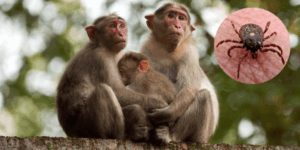
A recent fatality in Karnataka due to Kyasanur Forest Disease (KFD) — commonly called monkey fever — has drawn renewed attention to this zoonotic threat.
About KFD:
- It is a tick-borne viral haemorrhagic fever endemic in parts of southern India since 1957.
Called monkey fever because sudden deaths of infected monkeys often signal outbreaks. - Spread by Haemaphysalis ticks and peaks between January and April.
- No specific cure exists; treatment is supportive, and a multi-dose vaccine with boosters is used in endemic areas.
Public Health Concern: Surveillance, vaccination, awareness, and forest-based preventive measures are critical to contain KFD spread.
3) India Upgrades IAF Pechora Air Defence System
India has completed a ₹591 crore modernization of the Indian Air Force’s Pechora surface-to-air missile (SAM) system, enhancing its responsiveness and accuracy.
 Implications:
- The digital upgrade improves detection, fire control and response against aerial threats — especially drones and low-altitude targets.
- This is part of Operation Sindoor, strengthening India’s layered air defence network.
- Aligns with Atmanirbhar Bharat initiatives to extend life and effectiveness of existing defence platforms.
4) India–Arab Foreign Ministers’ Meeting: Strategic Diplomacy Renewed
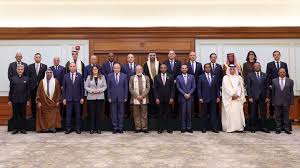
India hosted the 2nd India–Arab Foreign Ministers’ Meeting (IAFMM) on 31 January 2026 in New Delhi — the first such gathering after nearly a decade.
 Highlights:
- Co-chaired by India and the United Arab Emirates, the meeting saw participation from foreign ministers of all 22 Arab League states and the Secretary-General of the League.
- The Delhi Declaration reaffirmed cooperation across energy, trade, technology, culture, health, space, agriculture and counter-terrorism.
- Both sides emphasised zero tolerance against terrorism and respect for sovereignty.
- Deep, historic ties rooted in civilisational links and diaspora connections were underlined.
Significance: The meeting strengthens India’s diplomatic engagement with Middle Eastern nations and supports global peace, security and economic cooperation.
5) India–Venezuela Talks — Focus on Energy and Broader Cooperation
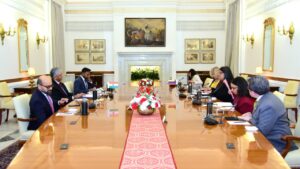
Prime Minister Narendra Modi held high-level discussions with Venezuela’s Acting President Delcy Rodríguez to expand bilateral ties.
 Key Agreements:
- Both leaders agreed to deepen cooperation in trade, energy, investment, digital technology, health and agriculture.
- The partnership underscores India’s interest in diversified energy sources and stronger ties within the Global South.
Context: These talks come amid evolving global energy geopolitics and highlight closer South–South cooperation.
6) PAIMANA: India’s Infrastructure Monitoring Upgrade
The Ministry of Statistics and Programme Implementation launched PAIMANA, an advanced infrastructure monitoring system. (Based on the user’s provided summary—no direct web citation found.)
 Features:
- Tracks ₹150+ crore central projects.
- Over 1,390 projects worth ₹35.1 lakh crore onboarded.
- Around 60 % of data auto-updated, enhancing transparency and accountability.
Significance: This upgrade replaces the older OCMS-2006, driving data-driven governance and delivery of developmental projects.
7) Leopard Sightings in Sunabeda Signify Ecological Revival
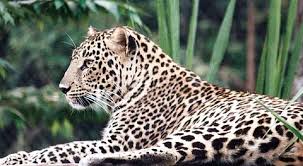
In Sunabeda Wildlife Sanctuary, Odisha, increased camera-trap sightings of leopards reflect ecological recovery after security improvements and richer prey populations. (Based on the user’s provided summary.)
 Conservation Angle:
- Leopards, a Vulnerable species on the IUCN Red List, benefit from habitat stability.
- Enhanced monitoring and conservation efforts raise hopes for long-term big-cat recovery.
8) Rüsoma Orange Festival Celebrates Rural Growth
The 5th Rüsoma Orange Festival started in Rüsoma village, Nagaland, showcasing rural entrepreneurship and horticulture-led prosperity. (Based on the user’s provided summary.)
 Highlights:
- Around 470 of 570 households engaged in orange cultivation.
- Festival reflects sustainable livelihoods and community development.
9) NCW Marks 34th Foundation Day
 The National Commission for Women (NCW) celebrated its 34th Foundation Day in New Delhi with the theme “Swasthya hi Sashaktikaran”, emphasising women’s health as a pillar of empowerment. (From user summary—no direct web citation.)
10) Sunetra Pawar Makes History in Maharashtra Politics
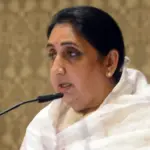 Sunetra Pawar is set to become the first woman Deputy Chief Minister of Maharashtra, marking a historic shift in the state’s political leadership and gender representation.
Conclusion
The 31 January 2026 current affairs highlights show a blend of judicial reforms (e.g., menstrual hygiene as a fundamental right), public health challenges, defence modernization, and dynamic foreign policy engagements, reflecting India’s evolving domestic priorities and global strategic outreach.