 India's No.1 PU & Degree With Integrated IAS & IPS(UPSC/PSC) Training College.



Current Affairs – 30 January 2026
Current Affairs – 30 January 2026
1. India Rises to 38th Rank in Global Innovation Index 2025
India has climbed to 38th position in the Global Innovation Index (GII) 2025, a significant improvement from 66th rank in 2019. The index is released by the World Intellectual Property Organization (WIPO), a specialized agency of the United Nations.
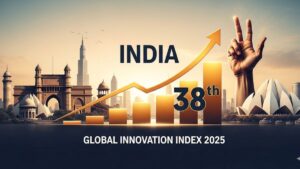
The GII evaluates countries across multiple dimensions, including institutions, human capital and research, infrastructure, market sophistication, business sophistication, knowledge and technology outputs, and creative outputs. India’s improved ranking reflects stronger performance in innovation ecosystems, digital public infrastructure, startup activity, and R&D capabilities, reinforcing its transition toward a knowledge-driven economy.
2. European Union Designates Iran’s IRGC as a Terrorist Organisation
The European Union has officially designated Iran’s Islamic Revolutionary Guard Corps (IRGC) as a terrorist organisation.
 The IRGC is an elite paramilitary force distinct from Iran’s regular army. It was established in 1979 after the Iranian Revolution by Ayatollah Ruhollah Khomeini to protect the Islamic regime and safeguard revolutionary ideals. Over time, the IRGC has expanded its role into military operations, internal security, intelligence, and regional influence, making the designation geopolitically significant. The move is expected to have implications for Middle East stability, sanctions regimes, and EU–Iran relations.
3. Martyrs’ Day Observed on 30 January: 78th Death Anniversary of Mahatma Gandhi
India observed Martyrs’ Day (Shaheed Diwas) on 30 January, marking the 78th death anniversary of Mahatma Gandhi.

The day commemorates Gandhiji’s assassination in 1948 and honours all martyrs who sacrificed their lives for India’s freedom, unity, and sovereignty. Nationwide tributes highlighted Gandhi’s philosophy of non-violence, truth, and moral resistance, which continues to influence democratic movements and ethical governance globally.
4. Economic Survey Projects Strong GDP Growth for FY 2026–27
According to the Economic Survey presented in Parliament, India’s real GDP is estimated to grow by 7.4% in FY 2026, with growth projected between 6.8% and 7.2% in FY 2027.
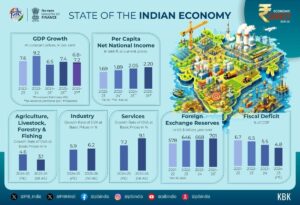
The survey was presented by Finance Minister Nirmala Sitharaman, while Chief Economic Advisor V. Anantha Nageswaran noted that GDP growth stood at 6.5% in FY 2025 before accelerating. The projections are driven by robust private consumption, capital formation, manufacturing expansion, and macroeconomic stability, reinforcing India’s position as one of the fastest-growing major economies.
5. Microsoft Launches Maia 200: Second-Generation In-House AI Chip
Microsoft has unveiled its second-generation in-house AI chip, Maia 200, alongside a new software stack designed to reduce dependence on Nvidia.
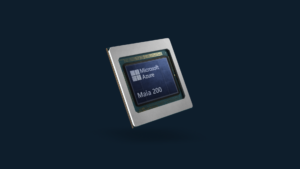 This move signals intensifying competition among global cloud providers such as Google and AWS, as companies seek greater control over AI infrastructure, performance optimisation, and operational costs. The development reflects a broader industry trend toward custom silicon and vertical integration in artificial intelligence.
6. China’s Plan for Space-Based AI Data Centres
China has announced ambitious plans to build space-based AI data centres powered by solar energy, capable of processing data directly in orbit.
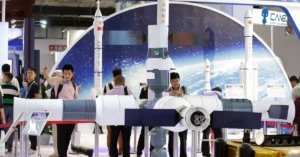 Backed by China’s 15th Five-Year Plan, the proposed “Space Cloud” concept aims to integrate artificial intelligence, energy security, and space dominance. By processing data in orbit, China seeks to reduce latency and enhance strategic autonomy, positioning itself competitively against U.S. and SpaceX-led space initiatives. This marks a new phase in the global race for orbital and digital supremacy.
7. Karnataka’s Regulatory Sandbox for Emerging Technologies
The Karnataka government has proposed a regulatory sandbox framework under the Karnataka Innovation Act to enable safe testing of emerging technologies.
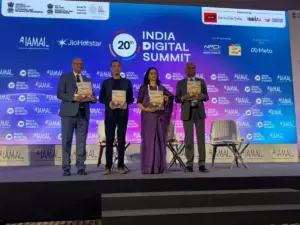 With India reaching 958 million internet users, driven largely by rural connectivity expansion and AI-enabled services, the state aims to balance innovation, accountability, safety, and public trust. The sandbox model will allow experimentation under regulatory oversight, strengthening Karnataka’s position as a national hub for technology governance and digital innovation.
Conclusion
The current affairs of 30 January 2026 reflect key trends shaping India and the world—innovation-led growth, geopolitical realignments, technological competition, ethical remembrance, and forward-looking governance frameworks—all of which hold high relevance for UPSC Prelims, Mains, and interviews.




