 India's No.1 PU & Degree With Integrated IAS & IPS(UPSC/PSC) Training College.



Daily Current Affairs Digest | 5th Aug 2026
Daily Current Affairs Digest | 5th Aug 2026
1. RBI Retains Repo Rate at 5.25%
The Reserve Bank of India’s Monetary Policy Committee retained the repo rate at 5.25% and continued with a neutral monetary policy stance.
 The RBI also projected India’s GDP growth for FY 2026–27 at 6.6%, despite continuing uncertainties in the global economy. The decision indicates that the central bank is attempting to balance economic growth with inflation management and financial stability.
Key terms: Repo rate, Monetary Policy Committee, neutral stance, GDP growth.
2. Indian Vessel Attacked Near Yemen
An Indian-flagged vessel, MSV Faize Noore Oliya, sank following a projectile attack near Yemen in the Red Sea region.
 All 14 crew members, including 13 Indian nationals, were safely rescued. The incident highlights the continuing security risks faced by commercial vessels operating near conflict-affected maritime routes.
Key themes: Red Sea security, maritime trade, Indian seafarers and geopolitical conflict.
3. Supreme Court Seeks RBI Framework on Mule Accounts
The Supreme Court directed the RBI to develop a standard operating procedure for identifying and managing mule accounts and other bank accounts connected with cyber-fraud networks.
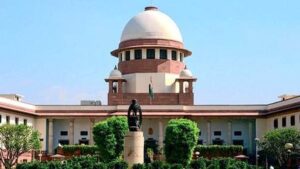 Mule accounts are bank accounts used by criminals to receive, transfer or conceal illegally obtained money. A standardised national framework may strengthen cooperation among banks, law-enforcement agencies and cyber-crime investigation units.
Key themes: Cyber-fraud, digital banking security, mule accounts and financial regulation.
4. India Develops Indigenous African Swine Fever Vaccine
The ICAR-National Institute of High Security Animal Diseases, Bhopal, developed India’s first indigenous vaccine against African Swine Fever.
The vaccine uses a live-attenuated formulation, in which a weakened form of the virus is used to generate immunity. African Swine Fever affects domestic and wild pigs but does not infect humans.
 The vaccine is expected to support India’s livestock sector by reducing mortality, protecting farmers’ livelihoods and strengthening animal-disease management.
Key themes: Animal health, biotechnology, livestock economy and indigenous vaccine development.
5. Telomere-to-Telomere Genome of Pigeonpea Developed
The Indian Council of Agricultural Research produced India’s first fully annotated telomere-to-telomere reference genome of the pigeonpea variety ‘Asha’.
 A telomere-to-telomere genome provides a nearly complete genetic sequence of an organism. The development will assist scientists in identifying genes associated with:
- Climate resilience
- Higher productivity
- Pest and disease resistance
- Improved nutritional quality
- Drought and heat tolerance
The achievement may contribute to India’s objective of achieving greater self-reliance in pulse production by 2030–31.
Key themes: Genomics, food security, climate-resilient agriculture and pulse production.
6. Himalayan Serow Recorded in Dalhousie After Two Decades
The Himalayan serow was recorded through a camera trap in the forests of Dalhousie after nearly two decades.
The Himalayan serow is a goat-antelope species found in mountainous and forested regions of the Himalayas. It is classified as Near Threatened and receives protection under Schedule I of the Wildlife Protection Act, 1972.
 Its reappearance indicates the ecological importance of the Dalhousie forest landscape and reinforces the need for habitat protection, wildlife monitoring and conservation-based forest management.
Key themes: Himalayan biodiversity, camera trapping, protected species and wildlife conservation.
7. Lok Sabha Passes Appropriation (No. 3) Bill, 2026
The Lok Sabha passed the Appropriation (No. 3) Bill, 2026, authorising the withdrawal of money from the Consolidated Fund of India.
 The funds will be used to meet excess expenditure incurred during the financial year 2022–23. Under the Constitution, money cannot be withdrawn from the Consolidated Fund of India without parliamentary authorisation through an appropriation law.
Key themes: Parliamentary financial control, Consolidated Fund of India, excess expenditure and appropriation bills.




