 India's No.1 PU & Degree With Integrated IAS & IPS(UPSC/PSC) Training College.



Daily Current Affairs Digest | 6th Aug 2026
Daily Current Affairs Digest | 6th Aug 2026
1. Indian Statistical Institute Bill, 2026: Modernising India’s Statistical Capacity
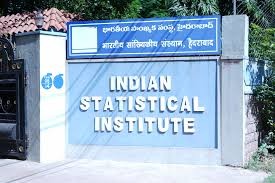
The Indian Statistical Institute Bill, 2026, introduced in the Lok Sabha on 3 August 2026, proposes a new governance framework for the Indian Statistical Institute (ISI).
The proposed legislation seeks to replace the Indian Statistical Institute Act, 1959, after enactment and establish a modern institutional structure with an empowered 11-member Board of Governors, Academic Council and recognised centres.
 The Bill also broadens the scope of statistical sciences by incorporating emerging areas such as Artificial Intelligence, Data Science, Computer Science, Machine Learning and Cryptology.
The reform assumes significance because reliable statistical systems play an essential role in policy formulation, poverty estimation, employment measurement, inflation monitoring, welfare evaluation and evidence-based governance.
However, the key challenge will be to balance institutional autonomy with public accountability while protecting academic freedom and research independence.
Exam Focus
GS II: Governance and Institutions
GS III: Science & Technology and Data Economy
Key Fact: ISI was founded in 1931 by P. C. Mahalanobis and was declared an Institution of National Importance under the Indian Statistical Institute Act, 1959.
2. Asan Wetland: Supreme Court Focuses on Mining Around Ecologically Sensitive Areas
The Supreme Court has brought renewed attention to mining activities around the Asan Wetland Conservation Reserve in Uttarakhand.
In an interim direction, the Court stated that mining within 10 kilometres of the reserve should not be carried out without the necessary permission from the Standing Committee of the National Board for Wildlife (NBWL) and/or the Ministry of Environment, Forest and Climate Change (MoEFCC).
 Importantly, this should not be interpreted as a final nationwide ten-kilometre mining ban around every wetland conservation reserve. The direction discussed in the case was specifically connected to the Asan Wetland proceedings.
Located near the confluence of the Asan and Yamuna rivers, the wetland provides important habitat for resident and migratory waterbirds.
The case highlights an important principle of environmental governance: ecological processes such as groundwater movement, sediment flow, pollution and wildlife movement do not stop at legally demarcated protected-area boundaries.
Exam Focus
GS II: Judiciary and Environmental Governance
GS III: Wetlands, Biodiversity and Mining
Key Fact: The Ramsar Convention on wetlands was adopted in 1971 at Ramsar, Iran.
3. Operation Trishul & BHARATPOL: Strengthening India’s Fight Against Fugitives
India is strengthening its mechanisms to locate and repatriate fugitives who have escaped abroad through coordinated initiatives involving the Central Bureau of Investigation (CBI), INTERPOL and BHARATPOL.
Operation Trishul represents a coordinated approach involving the identification of fugitives, international police cooperation, extradition or deportation procedures, tracing of criminal proceeds and disruption of support networks.
BHARATPOL strengthens this framework by digitally connecting Indian law-enforcement agencies with the CBI, which functions as India’s National Central Bureau for INTERPOL.
The platform can help State police and central agencies communicate more efficiently with international policing mechanisms.
 A crucial examination point is that an INTERPOL Red Notice is not an international arrest warrant. It is a request to locate and provisionally arrest a wanted individual subject to the laws of the country concerned.
The success of fugitive repatriation ultimately depends on strong evidence, legally sound extradition requests, international cooperation and adherence to due process.
Exam Focus
GS II: International Cooperation
GS III: Internal Security, Organised Crime and Cybercrime
Key Fact: INTERPOL is headquartered in Lyon, France, while the CBI functions as India’s National Central Bureau for INTERPOL.
4. India Targets Around 874 GW Installed Power Capacity by 2031–32
India’s power sector is moving towards a major structural transformation under the National Electricity Plan.
India’s total installed electricity generation capacity is projected to reach around 874 GW by 2031–32.
 India had already achieved the milestone of 50% cumulative installed electricity capacity from non-fossil sources in June 2025, more than five years ahead of its 2030 Nationally Determined Contribution milestone.
By 31 March 2026, official data recorded approximately 283.46 GW of non-fossil capacity.
The next major challenge is no longer simply adding renewable capacity but ensuring that renewable energy can be reliably integrated into the electricity grid.
This will require greater investment in:
- Battery Energy Storage Systems
- Pumped-storage hydropower
- Green Energy Corridors
- Interstate transmission
- Smart grids
- Demand-response systems
- DISCOM reforms
India will also need to manage the transition of coal-dependent regions while maintaining energy security and affordable electricity.
Exam Focus
GS III: Energy, Infrastructure and Climate Change
Key Concept: Installed capacity refers to the maximum rated capacity of generating plants, while actual electricity generation depends upon utilisation and capacity factors. Therefore, a majority non-fossil installed capacity does not automatically mean that most electricity is generated from non-fossil sources.
5. India Develops Telomere-to-Telomere Genome of Pigeonpea
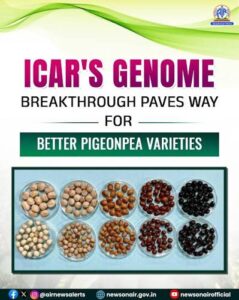
India has achieved an important milestone in agricultural biotechnology with the development of a fully annotated Telomere-to-Telomere (T2T) reference genome of pigeonpea.
The genome has been developed for the pigeonpea variety Asha and maps all 11 chromosomes along with approximately 36,557 genes.
Pigeonpea, commonly known as tur or arhar dal, is one of India’s important pulse crops and an important source of dietary protein.
 The complete genome can help scientists identify genes associated with:
- Drought tolerance
- Heat tolerance
- Disease resistance
- Crop maturity
- Seed quality
- Yield improvement
The breakthrough could accelerate marker-assisted selection, genomic selection, gene-editing research, pangenome development and climate-resilient crop breeding.
However, genome sequencing itself does not automatically produce a superior crop variety. Laboratory discoveries must be validated through field trials, breeding programmes, quality seed systems and farmer participation.
Exam Focus
GS III: Biotechnology, Agriculture and Food Security
Key Fact: Pigeonpea is a leguminous pulse crop capable of biological nitrogen fixation, helping improve soil fertility.




