 India's No.1 PU & Degree With Integrated IAS & IPS(UPSC/PSC) Training College.


Daily Current Affairs Digest | 4th Aug 2026
Daily Current Affairs Digest | 4th July 2026
1. Glaw Lake Becomes India’s 101st Ramsar Site
Glaw Lake in Arunachal Pradesh has been designated as India’s 101st Ramsar Site, making it the first wetland from the state to receive international recognition under the Ramsar Convention.
 Located within the Kamlang Tiger Reserve and Wildlife Sanctuary in the Eastern Himalayas, Glaw Lake is a pristine freshwater ecosystem fed by perennial mountain streams. The wetland and its surrounding catchment support more than 150 tree species and 49 orchid species.
The recognition is expected to strengthen wetland conservation, biodiversity protection, water security and sustainable livelihood opportunities for local communities.
2. Hyderabad Hosts BRICS Anti-Corruption Meetings
Hyderabad is hosting the second meeting of the BRICS Anti-Corruption Working Group and the second meeting of the BRICS Expert Network on Asset Recovery on 4–5 August 2026 under India’s BRICS Presidency.
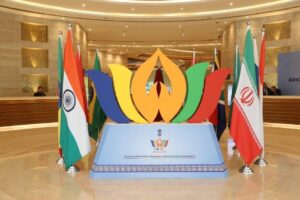 The meetings focus on strengthening cooperation among BRICS countries to tackle cross-border corruption, trace fugitive economic offenders, facilitate extradition and recover assets generated through corrupt activities.
Delegates are also discussing the use of technology, transparent procurement systems, digital governance and stronger information-sharing mechanisms to prevent illicit financial flows and improve accountability.
3. Rajya Sabha Passes MSME Development Amendment Bill
The Rajya Sabha has passed the Micro, Small and Medium Enterprises Development (Amendment) Bill, 2026, aimed at addressing delayed payments and simplifying dispute-resolution mechanisms for MSMEs.
Under the proposed legislation, every Central Public Sector Enterprise will be required to settle invoices for goods and services procured from MSMEs through the Trade Receivables Discounting System, or TReDS.
 The Bill provides that when mediation fails, arbitration must be initiated within 30 days. An arbitration award must ordinarily be issued within 90 days after pleadings are completed. It also requires at least 50 per cent of an awarded amount to be paid to an MSME supplier when a case remains pending for more than six months.
These measures are expected to improve liquidity, financial stability and ease of doing business for small enterprises.
4. Government Proposes Two-Wheeled Road Ambulances
The Ministry of Road Transport and Highways has issued a draft notification proposing amendments to the Central Motor Vehicles Rules, 1989, to provide a regulatory framework for two-wheeled road ambulances.
 These specialised vehicles are intended to deliver faster emergency medical assistance in locations where conventional ambulances may face difficulty, including congested cities, rural regions, remote settlements and hilly terrain.
Two-wheeled ambulances could improve last-mile medical access by enabling trained emergency personnel to reach accident victims and patients quickly with essential first-aid and life-support equipment.
5. India and Uzbekistan Expand Strategic Partnership
India and Uzbekistan have agreed to deepen their strategic partnership following high-level discussions held in New Delhi during the visit of Uzbekistan’s Foreign Minister Bakhtiyor Saidov.
 The two countries identified critical minerals, rare-earth resources, mining, trade, energy, infrastructure, defence, healthcare, education and digital technology as priority sectors for future cooperation.
Both sides also reviewed regional security developments and reaffirmed their shared commitment to combating terrorism, extremism and drug trafficking. The expanding partnership reflects India’s growing engagement with Central Asia and its efforts to secure diversified supplies of strategically important minerals.
6. TRAI Launches Revamped MyCall Application
The Telecom Regulatory Authority of India has launched a revamped version of the TRAI MyCall application to improve consumer participation in assessing mobile voice-call quality.
 The application enables users to rate calls on a one-to-five-star scale and report technical problems such as call drops, voice breaking, echoes, audio delays, cross-connections and difficulties in connecting calls.
Users can also review their previous ratings on an interactive map and conduct coverage tests to assess signal strength at their location. The feedback will be available to TRAI and telecom service providers in anonymised form, helping operators identify network deficiencies and take corrective measures.
7. Lok Sabha Approves Increase in Supreme Court Judge Strength
The Lok Sabha has passed the Supreme Court (Number of Judges) Amendment Bill, 2026, which proposes increasing the sanctioned strength of the Supreme Court.
 The Bill raises the number of judges from 33 to 37, excluding the Chief Justice of India. Therefore, the total sanctioned strength will increase from 34 to 38 judges, including the Chief Justice of India.
The measure has been introduced in response to the growing volume of litigation and the increasing number of pending cases before the Supreme Court. The additional judicial capacity is expected to support faster disposal of cases and improve the efficiency of the apex court.
8. OPEC+ Approves September Oil-Output Increase
Seven participating OPEC+ countries have agreed to increase oil production by 188,000 barrels per day in September 2026.
 The decision was taken during a virtual meeting involving Saudi Arabia, Russia, Iraq, Kuwait, Kazakhstan, Algeria and Oman. It forms part of the phased reversal of voluntary production cuts announced in 2023.
The group reaffirmed its commitment to maintaining stability in the global oil market and stated that production levels would continue to be reviewed monthly. The next meeting is scheduled for 6 September 2026.




