India's No.1 PU & Degree With Integrated IAS & IPS(UPSC/PSC) Training College.


Daily Current Affairs Digest | 18th Aug 2026
Daily Current Affairs Digest | 18th Aug 2026
1. Draft SHANTI Rules 2026: Rewriting India’s Nuclear Governance
The Department of Atomic Energy has placed the Draft SHANTI Rules, 2026 and Draft SHANTI Regulations in the public domain for consultation. The proposed rules seek to operationalise the Sustainable Harnessing and Advancement of Nuclear Energy for Transforming India (SHANTI) Act, 2025, which aims to modernise India’s nuclear-energy governance framework.
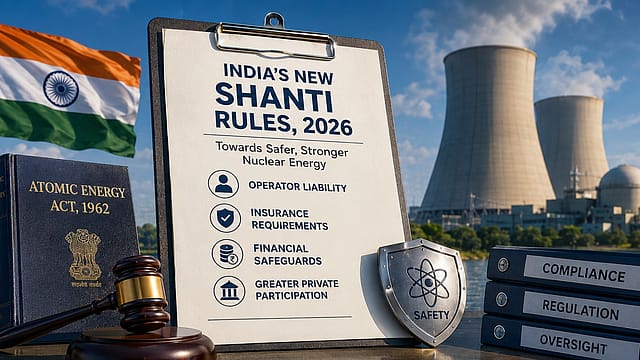 A major feature of the draft framework is the adoption of strict, no-fault operator liability for nuclear damage. Nuclear operators would also be required to maintain adequate insurance or other forms of financial security. A multidisciplinary expert body would periodically review operator liability limits, while dedicated mechanisms such as a Nuclear Liability Fund and a Spent Fuel Management Fund are also envisaged.
The reform is significant because India seeks to expand nuclear power as a source of firm, low-carbon electricity while simultaneously attracting private investment. However, greater private participation will require stronger regulatory capacity, transparent safety systems, effective emergency preparedness and robust mechanisms for waste management and decommissioning.
Exam Relevance: GS-II – Government Policies and Regulatory Institutions; GS-III – Energy, Science & Technology, Infrastructure and Environment.
2. India Leases Two MQ-9B Sea Guardian Drones
On 17 August 2026, the Ministry of Defence signed a contract with General Atomics Aeronautical Systems Inc. to lease two MQ-9B Sea Guardian High-Altitude Long-Endurance remotely piloted aircraft systems for the Indian Navy for a period of 30 months.
The approximately ₹1,943 crore contract is intended to strengthen India’s Intelligence, Surveillance and Reconnaissance (ISR) capabilities and improve Maritime Domain Awareness (MDA) across the Indian Ocean Region.
Maritime Domain Awareness involves developing a comprehensive understanding of activities, actors and conditions in maritime spaces by integrating data from satellites, coastal radars, ships, aircraft, underwater sensors and intelligence networks.
 The Sea Guardian drones can provide long-duration surveillance over vast maritime areas and help India track piracy, trafficking, illegal fishing, suspicious vessels and other conventional as well as grey-zone security threats.
The lease also highlights a broader strategic trend—the growing importance of manned-unmanned integration, network-centric warfare and persistent surveillance. At the same time, India must address concerns relating to foreign dependence for maintenance, software, data links and upgrades while accelerating indigenous UAV development.
Exam Relevance: GS-III – Defence Technology and Security; GS-II – Indo-Pacific and Strategic Partnerships.
3. India Launches First Guide to Grasslands and Open Natural Ecosystems
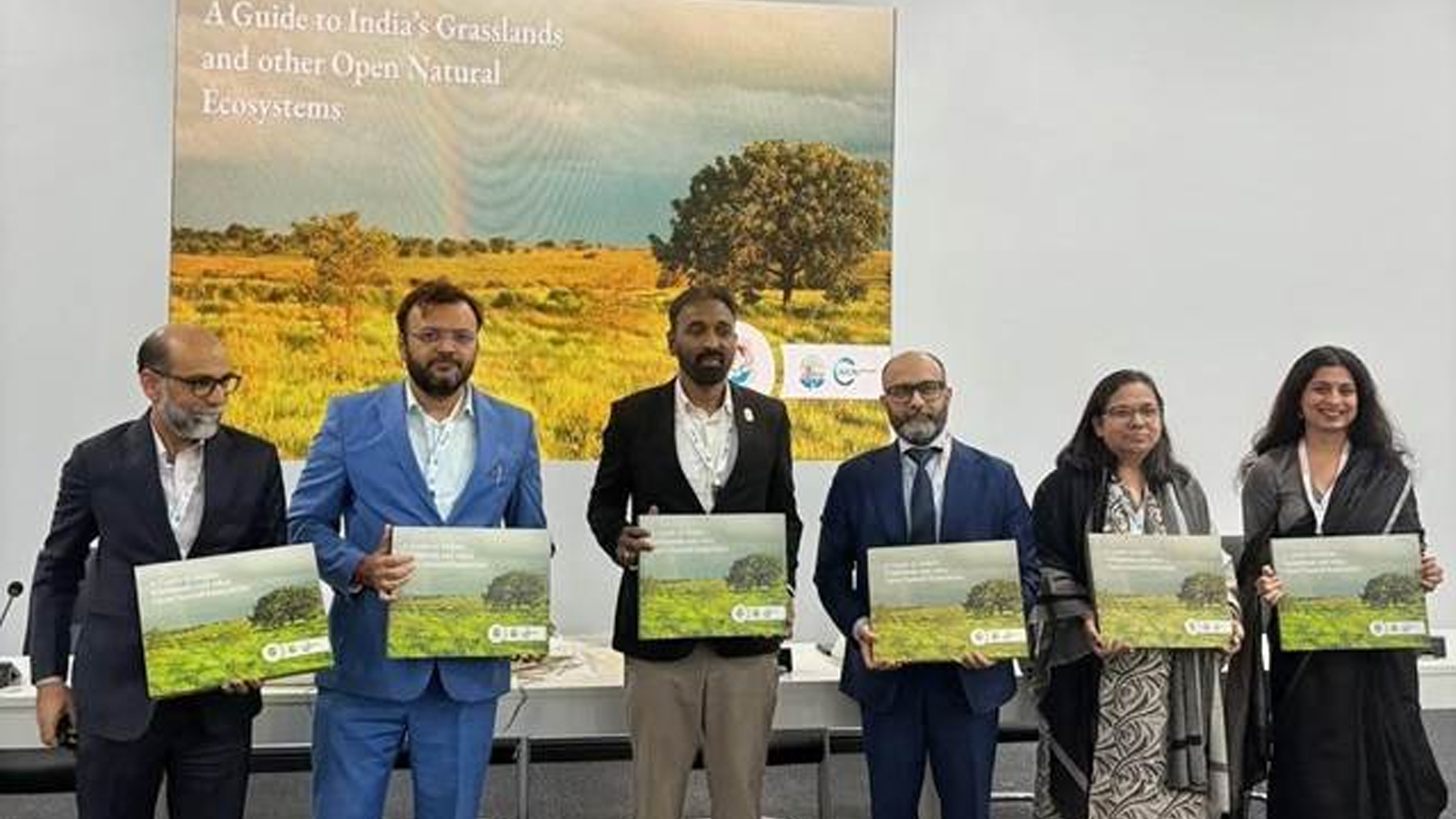
India has launched its first Guide to Grasslands and Other Open Natural Ecosystems (ONEs) at UNCCD COP17 in Ulaanbaatar, Mongolia, on 17 August 2026.
The guide covers ecosystems such as grasslands, savannas, deserts, scrublands, ravines, rocky plateaus and coastal open landscapes. It stresses that ecological value cannot be assessed merely on the basis of tree cover.
 Historically, many open ecosystems have been classified as “wastelands” because they lack dense tree cover. Such classification can encourage inappropriate afforestation, diversion and conversion of ecologically valuable landscapes.
The new approach recognises that many grasslands are ancient ecosystems with specialised biodiversity, distinct grazing and fire regimes and deep relationships with pastoral communities.
The guide also has important implications for Land Degradation Neutrality, biodiversity conservation, restoration policy and climate resilience. It underlines that restoration should be ecosystem-specific—natural grasslands should not automatically be treated as degraded forests requiring tree plantation.
Exam Relevance: GS-III – Environment, Biodiversity and Land Degradation; GS-I – Geography; GS-II – Pastoral and Community Governance.
4. NITI Aayog Calls for Regulatory Reform in Professional Services
NITI Aayog has released the report “India’s Services Sector: Insights on Regulatory Regime in Professional Services” in August 2026.
The report examines regulation in sectors such as legal services, health, engineering, accounting and architecture, and argues that improved regulation can boost productivity, exports, entrepreneurship, skilled employment and international mobility. Professional services currently account for nearly one-fourth of India’s services exports.
Professional regulation serves an important public purpose because consumers may find it difficult to assess the competence of professionals before availing their services. However, fragmented licensing systems, outdated regulations and excessive entry barriers can restrict competition and innovation.
 The report therefore emphasises smart regulation—ensuring quality and consumer protection while reducing unnecessary barriers.
Another major issue is the international recognition of Indian professional qualifications. Mutual Recognition Agreements, trade agreements and improved accreditation standards could help Indian professionals access global markets more easily.
The growing use of Artificial Intelligence in medicine, law, engineering and accounting also means that professional regulation must increasingly focus on continuous learning, digital competence, data protection and accountability.
Exam Relevance: GS-III – Economy, Services Sector and Employment; GS-II – Regulatory Governance and International Agreements.
5. BRICS ICT Track 2026: India Pushes Digital Cooperation for the Global South
Under India’s BRICS Chairship for 2026, the Department of Telecommunications is hosting the BRICS ICT Track in Pune from 17–21 August 2026 under the theme:
“Innovate, Cooperate and Transform (ICT) for a Resilient Future”
The programme includes the 7th BRICS ICT Working Group, Digital BRICS Forum & Expo and the 12th BRICS Communications Ministers Meeting.
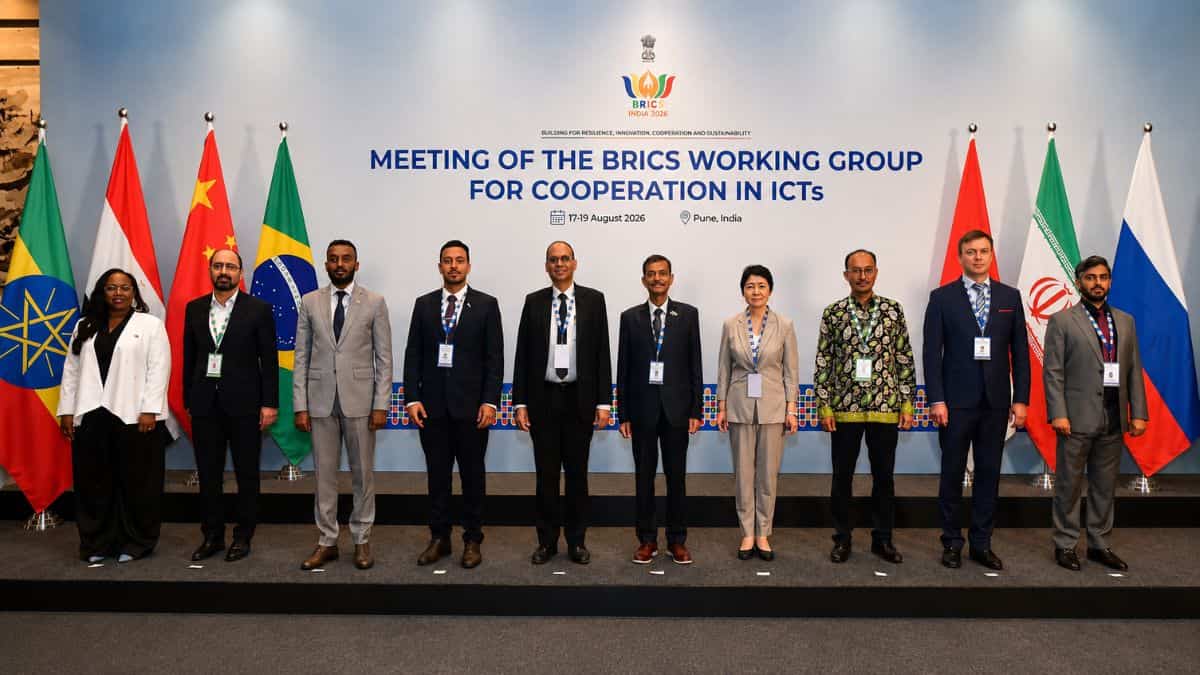 The discussions focus on:
- Artificial Intelligence
- Digital Public Infrastructure
- Cybersecurity
- Affordable and resilient connectivity
- Next-generation communication technologies
- Digital skills
- Start-ups
- Child online protection
Digital infrastructure has increasingly become a component of economic power, national security and geopolitical influence. Technologies such as AI, semiconductors, telecom networks, cloud infrastructure, undersea cables and satellites are now strategic assets.
India can use the BRICS platform to promote its experience with Digital Public Infrastructure, interoperable digital systems, digital payments, identity platforms and capacity-building programmes for developing economies.
However, deeper cooperation will require members to manage differences over cybersecurity, data governance, digital sovereignty and internet regulation.
Exam Relevance: GS-II – BRICS, Global South and International Relations; GS-III – AI, Cybersecurity, Telecommunications and Digital Infrastructure.