 India's No.1 PU & Degree With Integrated IAS & IPS(UPSC/PSC) Training College.


Chimpanzee Group Violence Shocks Scientists In Uganda Study
Chimpanzee Group Violence Shocks Scientists In Uganda Study
Why in the News ?
A long-term study in Kibale National Park, Uganda, has documented unprecedented intra-group violence among chimpanzees, where a single community split into factions and carried out coordinated killings, offering new insights into animal behaviour, social dynamics, and evolutionary conflict patterns.
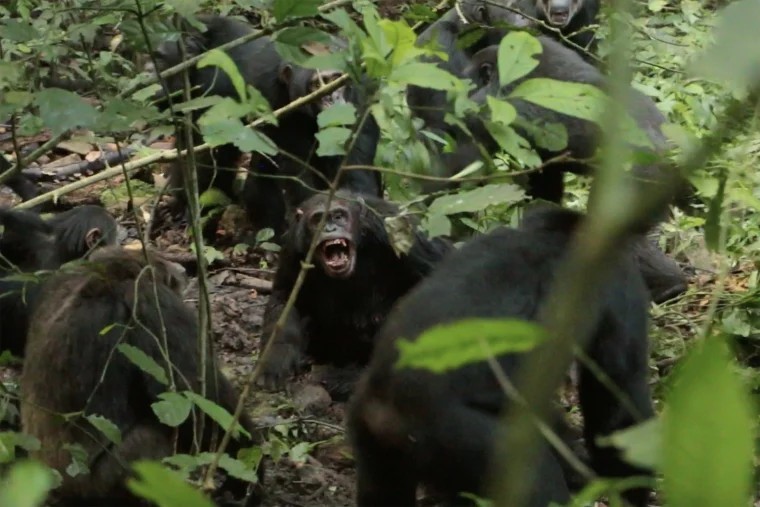
Key Findings: Chimpanzee Conflict and Behavioural Shift
- Scientists observed the Ngogo chimpanzee group, the largest known wild chimpanzee community (around 200 members).
- Over time, the group split into two rival factions, marking the first documented case of such division in wild chimpanzees.
- The factions engaged in systematic and coordinated attacks, leading to at least 28 deaths, including adult males and infants.
- Violence included beating, biting, dragging, and coordinated assaults, often lasting minutes but resulting in fatal outcomes.
- Traditionally, chimpanzees are known to attack outsiders (other groups), but this case involved former allies and lifelong companions.
- Many individuals also disappeared, suggesting possible unrecorded killings.
- The findings were published in the journal Science, based on observations spanning nearly three decades (1995–2024).
Causes and Scientific Implications
- The unusually large group size increased competition for food and mating opportunities, creating internal tensions.
- The death of several members in 2014, possibly due to illness, disrupted social hierarchies and relationships.
- Breakdown of cooperation led to hostility between sub-groups, transforming friends into rivals.
- Suggests that even highly social animals can experience fragmentation and violent conflict under stress.
- Provides insights into evolutionary roots of human conflict, including group division and territorial aggression.
- Highlights the role of resource scarcity and demographic pressures in shaping animal behaviour.
- Raises questions about how environmental and social stressors influence wildlife populations.
About Chimpanzees & Behavioural Ecology :● Chimpanzees (Pan troglodytes): Closest living relatives of humans, sharing about 98% DNA similarity. ● Found in tropical forests of Central and West Africa, including Uganda. ● Known for complex social structures, tool use, cooperation, and communication. ● Exhibit territorial behaviour and can engage in inter-group conflicts. ● Fission-Fusion Society: Groups split into smaller units temporarily, but usually remain part of a larger community. ● Conservation Status: Listed as Endangered (IUCN Red List) due to habitat loss and poaching. ● Importance: Crucial for understanding human evolution, social behaviour, and ecological balance. |

