 India's No.1 PU & Degree With Integrated IAS & IPS(UPSC/PSC) Training College.


Bharat-Sri Lanka Sanskrit Fest: Cultural Unity
Bharat-Sri Lanka Sanskrit Mahotsav Strengthens Cultural Bonds
Why in the News ?
The Bharat-Sri Lanka Sanskrit Mahotsav was inaugurated at the University of Colombo to celebrate Sanskrit’s timeless legacy of wisdom, harmony, and knowledge. The event, co-organized by Indian and Sri Lankan institutions, aims to promote classical learning and cultural exchange between both nations, while also addressing broader issues such as sustainable development, environmental conservation, and the potential for carbon market cooperation.
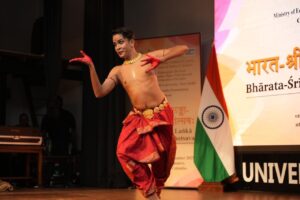
Highlights of the Sanskrit Mahotsav:
- The week-long Bharat-Sri Lanka Sanskrit Mahotsav began at the University of Colombo, inaugurated by Indian High Commissioner Santosh Jha and Sri Lankan Deputy Minister of Education Dr. Madhura Senevirathna.
- The event celebrates Sanskrit as a shared civilisational heritage, fostering deeper cultural understanding between India and Sri Lanka, while also promoting sustainable practices such as sustainable forest management and exploring the potential of voluntary carbon markets (VCM).
- It includes workshops, lectures, and performances highlighting Sanskrit’s continuing relevance in modern education and culture, as well as discussions on environmental impact assessments for cultural preservation efforts and the role of clean development mechanisms in sustainable growth.
- The festival is part of efforts to revive classical learning traditions and connect them to contemporary academic frameworks, including the integration of clean energy transitions and emissions trading systems in development initiatives.
- The initiative reflects the importance of soft diplomacy in India’s regional cultural engagements and its commitment to reducing greenhouse gas emissions as part of sustainable development goals, potentially through carbon market linkages.
Institutional Collaboration and Cultural Diplomacy
- The Mahotsav is jointly organized by the Swami Vivekananda Cultural Centre (Colombo), Sri Lanka’s Ministry of Education, Central Sanskrit University (India), and the India-Sri Lanka Foundation.
- These collaborations aim to enhance educational and cultural partnerships under the India-Sri Lanka bilateral framework, including cooperation on nationally determined contributions for environmental protection and the exploration of carbon offset mechanisms.
- High Commissioner Santosh Jha emphasized Sanskrit’s enduring role in promoting spiritual and linguistic harmony between the two countries, as well as its potential to inspire sustainable practices and foster carbon market cooperation.
- Dr. Senevirathna highlighted ongoing cooperation in integrating traditional knowledge systems within modern curricula, including environmental education, clean energy awareness, and the potential implementation of emissions trading systems.
- Such initiatives reinforce India’s Neighbourhood First Policy, promoting cultural diplomacy and regional goodwill while addressing shared challenges like climate change through potential carbon market linkages.
Key points : Sanskrit and India’s Cultural Heritage |
| ● Sanskrit, one of the world’s oldest languages, is known as the language of Vedas and classical Indian philosophy. |
| ● It is recognized as a Classical Language of India under Article 351 of the Indian Constitution. |
| ● The Central Sanskrit University, established in 1970, plays a key role in promoting Sanskrit education and research, including studies on sustainable forest management practices mentioned in ancient texts and their relevance to modern environmental impact assessments. |
| ● Sanskrit has influenced Pali and Sinhala, reflecting its impact on Sri Lankan linguistic and cultural development. |
| ● India’s promotion of Sanskrit abroad aligns with its soft power strategy to preserve and share its civilisational legacy, while also addressing modern challenges like greenhouse gas emissions reduction through innovative approaches such as voluntary carbon markets. |

