 India's No.1 PU & Degree With Integrated IAS & IPS(UPSC/PSC) Training College.


Agni-III Test Success Odisha
AGNI-III MISSILE TEST
Why in the News?
- Successful Launch: Agni-III missile was successfully test-fired from Integrated Test Range as part of a routine training exercise.
- Strategic Oversight: Test conducted under supervision of the Strategic Forces Command to validate operational preparedness.
- Deterrence Signal: Reinforces India’s credible minimum deterrence and strategic readiness amid evolving regional security dynamics.
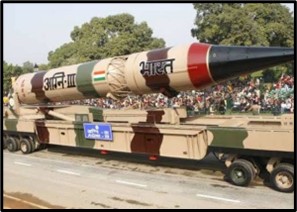
KEY FEATURES OF AGNI-III MISSILE
- Missile Design: Two-stage solid-fuelled ballistic missile designed for reliable long-range delivery with high operational accuracy and survivability.
- Strike Capability: Operational range exceeding 3,000 kilometres, enabling coverage of critical strategic targets across extended geographical distances.
- Payload Capacity: Capable of carrying both conventional and nuclear warheads, providing flexibility across strategic and deterrence scenarios.
- Induction Status: Inducted into service since 2011, forming a core element of India’s land-based strategic missile arsenal.
- Indigenous Development: Developed by the Defence Research and Development Organisation, reflecting India’s growing self-reliance in missile technology.
STRATEGIC SIGNIFICANCE FOR INDIA
- Deterrence Assurance: Strengthens credible minimum deterrence posture, ensuring India’s ability to respond decisively to strategic threats.
- Operational Readiness: Validates training, command control, and deployment procedures, enhancing confidence in real-world operational scenarios.
- Regional Stability: Acts as a stabilising factor by discouraging adversaries from miscalculations through assured retaliatory capability.
- Technological Maturity: Demonstrates advanced missile engineering, guidance accuracy, and systems integration achieved by India’s defence ecosystem.
- Force Credibility: Enhances the credibility of Strategic Forces Command, reinforcing civilian control and professional military preparedness.
INDIA’S BALLISTIC MISSILE PROGRAMME● Agni Series: India’s Agni missile family forms the backbone of land-based strategic deterrence with varying ranges and payload capacities. ● Doctrine Alignment: Missile development aligns with India’s nuclear doctrine, centred on no-first-use and credible minimum deterrence. ● Indigenous Capability: Emphasis on domestic research and production reduces dependence on foreign defence technologies and suppliers. ● Command Structure: Strategic Forces Command manages nuclear delivery systems, ensuring unified command and strict operational protocols. ● Strategic Autonomy: Robust missile capabilities support national security, strategic autonomy, and India’s position as a responsible nuclear power. |


