 India's No.1 PU & Degree With Integrated IAS & IPS(UPSC/PSC) Training College.


Supreme Court Expands Scrutiny of Govt Bodies
SUPREME COURT EXPANDS CONSTITUTIONAL SCRUTINY OF GOVERNMENT BODIES
WHY IN THE NEWS ?
Supreme Court Ruling: On November 6, 2026, the Supreme Court upheld the Delhi High Court’s 2012 decision declaring the National Book Trust (NBT) an instrumentality of the government and therefore a State under Article 12 of the Constitution, subjecting it to fundamental rights scrutiny.
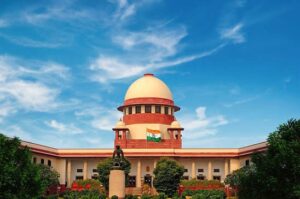
SUPREME COURT’S OBSERVATIONS AND KEY FINDINGS:
- Legal Substance: The Supreme Court ruled that an organisation cannot escape constitutional scrutiny merely because the government establishes it as a registered society instead of a government department or statutory corporation.
- Deep Control: The determining factor is whether the government exercises deep and pervasive control over an organisation’s financial, administrative and functional activities.
- NBT Case: A Bench of Justices Prashant Kumar Mishra and Augustine George Masih upheld the 2012 Delhi High Court ruling that recognised NBT as an instrumentality of the government.
- Government Influence: The Court observed that the government controls important aspects of NBT, including its creation, management, finances and decision-making. Its chairman is appointed by the government and holds office at its pleasure.
- Important Clarification: Merely receiving government grants, performing public functions or having some government involvement does not automatically make an organisation an instrumentality of the State.
IMPLICATIONS FOR GOVERNANCE AND FUNDAMENTAL RIGHTS
- Constitutional Accountability: Government-controlled societies and trusts may be brought under constitutional scrutiny if their functioning demonstrates substantial government control.
- Rights Protection: Organisations recognised as State under Article 12 must respect Fundamental Rights guaranteed under Part III of the Constitution.
- Judicial Remedies: Citizens can challenge violations of fundamental rights by such organisations through appropriate constitutional writ proceedings.
- Institutional Transparency: The judgment reinforces accountability in publicly controlled institutions and prevents the government from avoiding constitutional obligations through separate legal entities.
- Autonomy Concerns: The ruling also highlights the need to balance government supervision with the operational independence of autonomous institutions.
ABOUT ARTICLE 12 AND DEFINITION OF STATE:● Constitutional Provision: Article 12 defines the term State for the purpose of Part III of the Indian Constitution, covering the Union Government, State Governments, Parliament, State Legislatures and local or other authorities. ● Other Authorities: The expression includes bodies that may qualify as government instrumentalities based on their degree of governmental control and other relevant factors. ● Fundamental Rights: Part III (Articles 12–35) guarantees fundamental rights, including equality, freedom and protection against exploitation. ● Judicial Review: Courts examine whether State actions violate constitutional provisions and fundamental rights through judicial review. ● Important Test: The Supreme Court’s approach considers factors such as government ownership, financial assistance, functional control, administrative dominance and the extent of governmental influence. |

