 India's No.1 PU & Degree With Integrated IAS & IPS(UPSC/PSC) Training College.


AFSPA Extension in Northeast Explained
AFSPA EXTENSION IN THE NORTHEAST: SECURITY IMPERATIVES AND CIVIL LIBERTIES
Why in the News?
The Union Home Ministry has extended the Armed Forces (Special Powers) Act (AFSPA) for another six months in specified areas of Manipur, Nagaland and Arunachal Pradesh. The decision comes amid continuing security concerns, particularly in Manipur, where ethnic violence has persisted since May 2023, while certain areas have remained outside the Act’s ambit because of comparatively improved security conditions.
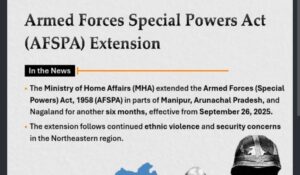
AFSPA EXTENSION AND ITS APPLICATION IN THE NORTHEAST
- Manipur Coverage: AFSPA has been extended across Manipur except the jurisdiction of 13 police stations in five valley districts, preserving differentiated application based on prevailing security conditions.
- Nagaland Coverage: The Act has been extended in nine districts and 21 police-station areas across five additional districts, reflecting continuing security assessments in the State.
- Arunachal Coverage: Three districts and three police-station areas in another district bordering Assam have been declared disturbed areas for another six months.
- Security Context: Manipur has witnessed ethnic violence since May 2023, while AFSPA had previously been progressively withdrawn from several valley areas when authorities assessed improvements in security.
- Gradual Withdrawal: The changing geographical coverage demonstrates that AFSPA can be withdrawn or retained selectively, depending upon assessments of insurgency, violence and the security environment.
AFSPA POWERS AND THE DEBATE OVER ACCOUNTABILITY
- Special Powers: AFSPA authorises armed forces personnel in notified disturbed areas to undertake specified operations, including arrest and search without warrant under prescribed circumstances.
- Use Of Force: The legislation permits the use of force, including lethal force, subject to the statutory conditions governing actions against persons acting in contravention of law or orders.
- Legal Protection: Personnel receive statutory protection against prosecution or legal proceedings for actions purportedly undertaken under the Act, with prosecution requiring prior sanction of the Central Government.
- Rights Concerns: The extensive powers under AFSPA have generated debates concerning fundamental rights, accountability, proportionality and civilian oversight, particularly regarding allegations of excessive use of force.
- Security Balance: The central challenge is maintaining national security and counter-insurgency effectiveness while ensuring accountability, protection of civilians and restoration of normal civilian administration.
AFSPA AND INTERNAL SECURITY IN INDIA● Constitutional Basis: AFSPA is a parliamentary legislation enacted to provide a special legal framework for armed forces operating in areas officially declared disturbed areas. ● Disturbed Area: The government may notify an area as disturbed when conditions such as insurgency, armed violence or serious threats to public order make extraordinary security measures necessary. ● Historical Origin: The present Armed Forces (Special Powers) Act, 1958 was initially enacted for the Northeast and subsequently became applicable to other areas under specified circumstances. ● Judicial Oversight: The Supreme Court has repeatedly emphasised that AFSPA does not provide absolute immunity and that allegations involving excessive or unlawful force remain subject to constitutional and legal scrutiny. ● Policy Objective: The broader objective of AFSPA is to facilitate counter-insurgency and restoration of security, with its continued application requiring periodic assessment of whether extraordinary security conditions persist. |

