 India's No.1 PU & Degree With Integrated IAS & IPS(UPSC/PSC) Training College.


A NEW PHASE IN INDIA-NEPAL RELATIONS
A NEW PHASE IN INDIA-NEPAL RELATIONS
Syllabus:
GS 2:
- India and its neighbourhood relations.
- Effect of policies and politics of countries on India.
Why in the News?
Recent remarks by Nepal Prime Minister Balendra Shah (Balen) regarding the Kalapani-Lipulekh-Limpiyadhura dispute have generated debate in Nepal and India. His acknowledgment that territorial issues are not one-sided and should be resolved through diplomacy signals a potentially pragmatic shift in India-Nepal relations amid evolving political dynamics.
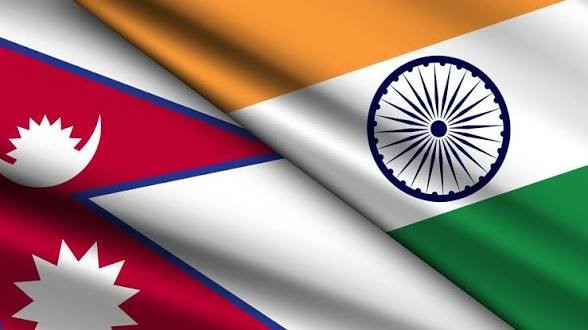
ABOUT INDIA-NEPAL RELATIONS● Diplomatic Relations: India and Nepal share a unique relationship rooted in civilisational ties, cultural affinity, and geographical proximity spanning centuries. ● Open Border: Both countries maintain an open border extending over approximately 1,700 kilometres, facilitating movement of people and commerce. ● Treaty Framework: The India-Nepal Treaty of Peace and Friendship (1950) remains a key foundation for bilateral cooperation and engagement. ● Economic Partnership: India is Nepal’s largest trade partner, development partner, and a major source of investment and connectivity support. ● Strategic Importance: Nepal occupies a critical position between India and China, making bilateral relations strategically significant for regional stability. |
BORDER DISPUTE REMAINS A KEY ISSUE
- Territorial Claims: The dispute centres on Kalapani, Lipulekh, and Limpiyadhura, areas claimed by both India and Nepal based on differing historical interpretations.
- Historical Complexity: Contradictory British-era maps and evolving boundary delineations have complicated efforts to establish an undisputed territorial settlement, with some claims requiring ex post facto validation of historical evidence.
- Strategic Importance: The disputed region possesses significant geostrategic value because of its proximity to India, Nepal, and China.
- Diplomatic Sensitivity: Territorial disagreements continue influencing broader bilateral relations despite strong cultural, economic, and people-to-people linkages between both countries.
- Needful Resolution: Sustainable settlement requires mutually acceptable solutions that balance sovereignty concerns, security interests, and historical realities effectively, applying the precautionary principle in sensitive border areas.
SHIFTING POLITICAL TONE IN NEPAL
- Generational Change: Nepal’s leadership increasingly reflects a younger generation prioritising economic development, governance reforms, and future-oriented policymaking approaches, including environmental democracy in decision-making processes.
- Pragmatic Outlook: Prime Minister Balendra Shah’s statement suggests willingness to acknowledge complexities rather than adopting exclusively nationalist positions on disputes.
- Equal Treatment: Nepal increasingly seeks relations based on sovereign equality rather than dependence under the traditionally discussed special relationship framework.
- Domestic Reactions: Calls for balanced assessment of territorial disputes generated criticism from political groups advocating stronger nationalist positions within Nepal.
- Policy Transition: Emerging political trends indicate gradual movement from ideological narratives toward practical governance and developmental priorities.
RECENT DIPLOMATIC DEVELOPMENTS
- Dialogue Preference: Both countries continue emphasising diplomatic engagement as the preferred mechanism for addressing outstanding boundary disagreements.
- Trade Concerns: Nepal raised objections regarding renewed India-China trade through the Lipulekh Pass, citing unresolved territorial claims.
- Pilgrimage Route: Differences also emerged over the Kailash Mansarovar Yatra route passing through the disputed Lipulekh region.
- Protocol Signals: Recent protocol-related developments indicate Kathmandu’s intention to redefine diplomatic engagement practices with greater institutional formality.
- Constructive Response: India has largely responded with restraint, demonstrating commitment toward maintaining stability in bilateral relations despite disagreements.
SIGNIFICANCE OF INDIA-NEPAL RELATIONS
- Geographic Reality: Nepal’s economic and developmental prospects remain closely linked with India because of geography, connectivity, and trade dependence.
- Economic Integration: India remains Nepal’s largest trading partner and a crucial source of investment, infrastructure support, and development cooperation, with cross-border projects requiring proper environmental clearances and adherence to environmental impact assessment protocols.
- People Linkages: Deep civilisational, cultural, religious, and familial connections continue forming the foundation of bilateral relations.
- Security Cooperation: Long-standing collaboration between the Indian Army and Nepal Army has fostered mutual trust and strategic coordination.
- Regional Stability: Strong India-Nepal relations contribute significantly to peace, prosperity, and stability across the broader South Asian region.
CHALLENGES IN RESOLVING THE DISPUTE
- Historical Evidence: Reliance on differing historical documents and maps complicates efforts to achieve consensus regarding territorial boundaries, with some requiring post facto interpretation of colonial-era records.
- National Sentiments: Domestic political pressures and nationalist narratives often constrain flexibility required for successful diplomatic negotiations.
- External Factors: Suggestions involving China or the United Kingdom could potentially complicate and prolong resolution processes further.
- Security Concerns: India views maintenance of the existing status quo as important because of national security considerations.
- Prolonged Negotiations: Endless expert-level discussions without outcomes risk transforming manageable disagreements into persistent bilateral irritants.
PATHWAYS TOWARDS A SOLUTION
- Mutual Recognition: Both countries must acknowledge that perceived territorial encroachments are not necessarily products of deliberate aggression or expansionism.
- Practical Approach: Focus should shift from rigid territorial positions toward workable arrangements preserving stability and bilateral cooperation, incorporating principles from environmental jurisprudence that emphasize sustainable solutions.
- Historical Continuum: Shared historical, cultural, and economic linkages provide a strong foundation for building trust and resolving differences.
- Institutional Support: Existing cooperation between military institutions and diplomatic institutions can facilitate confidence-building and constructive engagement mechanisms.
- Political Leadership: Strong political leadership in both countries is essential for overcoming nationalist pressures and pursuing mutually beneficial solutions.
TOWARDS A MATURED PARTNERSHIP
- Strategic Patience: Sustainable solutions require patience, diplomacy, and long-term commitment rather than confrontational rhetoric or political posturing.
- Economic Priorities: Expanding cooperation in trade, connectivity, energy, and infrastructure can strengthen mutual interests substantially, with joint projects following EIA notification requirements and ensuring a pollution free environment through application of the polluter pays principle.
- Regional Vision: Both nations should work towards creating a model partnership contributing positively to South Asian integration and development, including cooperation under the Forest Conservation Act for shared ecological resources.
- Trust Building: Regular dialogue and institutional engagement remain crucial for preventing misunderstandings and maintaining positive bilateral momentum.
- Future Orientation: Relations should increasingly focus on shared prosperity, economic opportunities, and regional cooperation rather than historical disputes, avoiding retrospective environmental clearances or ex-post justifications for development projects.
CONCLUSION
The evolving political discourse in Nepal presents an opportunity to recalibrate India-Nepal relations on the basis of realism, mutual respect, and shared interests. While the boundary dispute remains unresolved, both countries possess strong historical ties and institutional trust. Constructive diplomacy, pragmatic leadership, and future-oriented cooperation can transform challenges into opportunities.
SOURCE:
TH
MAINS PRACTICE QUESTION
“India and Nepal share a unique relationship shaped by geography, history, and culture. Examine the challenges in bilateral relations and suggest measures to strengthen the partnership in the contemporary geopolitical context.” (15 Marks, 250 Words)

