 India's No.1 PU & Degree With Integrated IAS & IPS(UPSC/PSC) Training College.


Water: The Key to a Disease-Free World
THE ROAD TO A DISEASE-FREE WORLD GOES THROUGH WATER
Syllabus:
GS-2:
- Health, International Organisations,
- Global Cooperation
GS-3:
- Science and Technology,
- Environmental Sustainability
Why in the News?
- Polio Eradication: The global campaign has reduced wild poliovirus cases by more than 99% since 1988, but the final stage of eradication remains challenging.
- Water Crisis: In 2024, approximately 1 billion people lacked safely managed drinking water, while 3.4 billion lacked safely managed sanitation, according to WHO and UNIC.
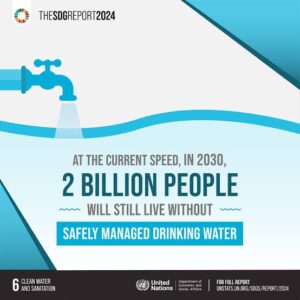
SDG 6, WATER GOVERNANCE AND PUBLIC HEALTH● SDG 6: The United Nations’ Sustainable Development Goal 6 aims to ensure the availability and sustainable management of water and sanitation for all by 2030. ● Global Framework: SDG 6 includes targets on safe drinking water, sanitation, water quality, wastewater treatment, water-use efficiency and protection of water-related ecosystems. ● Indian Framework: The Jal Jeevan Mission, Swachh Bharat Mission and AMRUT contribute to India’s efforts to improve drinking water, sanitation and urban infrastructure. ● Constitutional Linkage: Although the Constitution does not explicitly recognise a separate fundamental right to water, the Supreme Court has interpreted Article 21 to include the right to clean water and a healthy environment. ● Institutional Responsibility: Water governance involves the Centre, States and local bodies, with Article 246 and the Seventh Schedule distributing legislative responsibilities across relevant subjects, including water and public health. |
WATER AS A FOUNDATION OF PUBLIC HEALTH
- Disease Transmission: Polio spreads primarily through the faecal-oral route, making contaminated water and poor sanitation important pathways for its transmission.
- Preventive Infrastructure: Clean drinking water and proper sanitation should be treated as essential public health investments rather than merely basic civic amenities.
- Beyond Vaccination: Vaccination protects individuals, but without adequate sanitation, communities can remain exposed to the environmental conditions that allow infectious diseases to circulate.
- Human Development: Inadequate water and sanitation affect nutrition, education and productivity, with children and economically disadvantaged households bearing a disproportionate burden.
- Lasting Protection: Disease prevention becomes more sustainable when immunisation programmes operate alongside reliable water supply, sewage treatment and community-level hygiene practices.
THE GLOBAL WATER AND SANITATION GAP
- Unequal Access: The fact that billions still lack safely managed water and sanitation shows how deeply public health outcomes are connected to economic inequality.
- Preventable Mortality: Unsafe water, sanitation and hygiene contributed to at least 4 million preventable deaths in 2019, demonstrating the human cost of inadequate infrastructure.
- Rural Disadvantage: Remote villages, informal settlements and conflict-affected regions often face greater difficulties in accessing reliable water services and sanitation facilities.
- Gender Dimension: Women and girls frequently shoulder the responsibility of collecting household water, affecting their education, employment opportunities, safety and overall well-being.
- Developmental Consequences: Poor sanitation reinforces cycles of poverty by increasing disease burdens, healthcare expenditure and lost working days among vulnerable populations.
WASTEWATER SURVEILLANCE AND EARLY DISEASE DETECTION
- Silent Detection: Pathogens can be detected in wastewater even when infected individuals show no symptoms or when health authorities have not recorded clinical cases.
- Early Warning: Regular wastewater testing can reveal the circulation of infectious agents before hospitals report a noticeable rise in patients.
- Public Health Intelligence: Surveillance data helps authorities identify geographical hotspots, monitor disease trends and direct testing, vaccination and medical resources accordingly.
- AI Integration: Artificial intelligence (AI) can strengthen wastewater analysis by identifying unusual patterns, processing large datasets and supporting quicker public health decisions.
- Broader Applications: Infrastructure initially developed for polio surveillance can also contribute to monitoring other infectious diseases, strengthening preparedness against future outbreaks.
TECHNOLOGY, INNOVATION AND INTERNATIONAL COOPERATION
- Abu Dhabi Model: The UAE’s AI-enabled wastewater surveillance initiative illustrates how technology can support early identification of potential public health risks.
- European Initiative: The European Commission unveiled its European Wastewater Surveillance Dashboard in 2025, reflecting growing institutional interest in coordinated disease monitoring.
- Global Partnerships: Cooperation involving governments, philanthropic organisations and international agencies can help extend disease-control programmes to communities with limited healthcare access.
- Targeted Investment: The Reaching the Last Mile Fund, established by the UAE and the Gates Foundation, focuses on neglected diseases affecting underserved populations.
- Technology Transfer: International collaboration should also strengthen local laboratory capacity, technical expertise and data-sharing systems instead of creating long-term dependence on external support.
INDIA’S WATER, SANITATION AND PUBLIC HEALTH CHALLENGES
- Sanitation Progress: The Swachh Bharat Mission has expanded sanitation access, but sustained behaviour change and effective waste management remain essential.
- Drinking Water: The Jal Jeevan Mission seeks to provide functional household tap connections in rural areas, making water quality and service reliability important priorities.
- Urban Challenges: Rapid urbanisation, untreated sewage discharge and pressure on existing infrastructure increase the risk of water contamination in Indian cities.
- Disease Burden: Waterborne diseases such as diarrhoea, cholera and typhoid continue to create public health challenges, particularly in areas with inadequate sanitation.
- Institutional Coordination: Effective implementation requires cooperation between health departments, local governments, water authorities and pollution control agencies, which often operate through separate administrative structures.
POLICY GAPS AND THE WAY FORWARD
- Fragmented Governance: Water supply, sanitation and healthcare are frequently handled by different institutions, making coordinated planning and accountability difficult.
- Infrastructure Maintenance: Building toilets, pipelines and treatment plants is only the first step; regular maintenance, water-quality testing and reliable service delivery determine their actual effectiveness.
- Local Participation: Panchayats, urban local bodies and community organisations should participate in planning and monitoring water infrastructure to ensure that local needs are addressed.
- Data Governance: Wastewater surveillance requires reliable laboratories, trained personnel, standardised testing protocols and safeguards against misuse of sensitive public health information.
- Integrated Financing: Governments, development banks and private institutions must coordinate investments in water infrastructure and public health, particularly in underserved and high-risk regions.
CONCLUSION
Eradicating infectious diseases requires more than medical interventions; it demands the infrastructure that prevents their transmission. Safe water, sanitation and wastewater surveillance can make public health systems more preventive and resilient. The challenge is to connect these sectors through sustained investment, technological innovation and international cooperation, without leaving vulnerable communities behind.
SOURCE:The Hindu
MAINS PRACTICE QUESTION
“Access to safe drinking water and sanitation is not merely a developmental objective but an essential component of preventive healthcare.” Discuss the role of integrated water governance, technological innovation and international cooperation in achieving sustainable public health outcomes. (250 words)

