 India's No.1 PU & Degree With Integrated IAS & IPS(UPSC/PSC) Training College.


What AQI Isn’t Telling You About Air Pollution
What AQI Isn’t Telling You About the Air We Breathe: The Toll It Takes
Syllabus:
GS – 3 – Air pollution , Climate change , environmental sustainability
Focus :
Air Pollution in India – Limitations of the Air Quality Index (AQI), public health implications, sources of pollution, governance challenges, and the need for a comprehensive, coordinated strategy to achieve clean air.
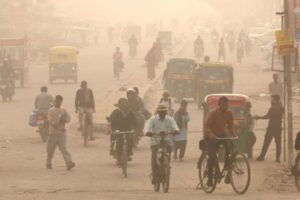
Introduction: India’s Growing Air Pollution Crisis
- Air pollution has emerged as one of the most serious environmental and public health challenges facing India. It affects human health, economic productivity, environmental sustainability and the overall quality of life.
- The problem becomes particularly visible during the autumn and winter months in northern India, especially around Diwali, when multiple sources of pollution combine to produce severe deterioration in air quality.
- During this period, crop-residue burning in neighbouring States, firecracker emissions, vehicular pollution, industrial activities and construction dust contribute to a sharp increase in particulate matter.
- The geographical characteristics of the Indo-Gangetic Plain further aggravate the situation. Changes in prevailing wind patterns, low wind speeds and temperature inversion prevent pollutants from dispersing, trapping polluted air close to the ground.
- However, air pollution is not restricted to northern India. Cities across southern, eastern and western India also experience persistently high pollution levels.
- A recent study highlighted the seriousness of the situation by reporting that 83 of the world’s 100 most polluted cities were located in India.
Understanding the Air Quality Index (AQI)
The Central Pollution Control Board (CPCB) calculates the AQI based on the concentration of eight major pollutants.
- Particulate Matter 2.5 (PM2.5): Fine particles with a diameter of up to 2.5 micrometres. These particles can penetrate deep into the lungs and enter the bloodstream, creating serious health risks.
- Particulate Matter 10 (PM10): Particles with a diameter of up to 10 micrometres. They primarily affect the respiratory system and can aggravate existing respiratory diseases.
- Nitrogen Dioxide (NO₂): Mainly released through the combustion of diesel, petrol and other fossil fuels. It contributes to respiratory irritation and the formation of secondary pollutants.
- Sulphur Dioxide (SO₂): Primarily emitted by coal-based power plants and industrial activities. It can cause respiratory problems and contribute to acid rain.
- Carbon Monoxide (CO): A toxic gas produced by incomplete combustion of fuels, including petrol, diesel and biomass.
- Ozone (O₃): Ground-level ozone is a secondary pollutant formed through chemical reactions involving nitrogen oxides and volatile organic compounds in the presence of sunlight.
- Ammonia (NH₃): Released mainly through agricultural activities, fertilisers, livestock waste and certain industrial processes.
- Lead (Pb): A toxic heavy metal released through certain industrial processes and other sources. Exposure can damage the nervous system, particularly in children.
Major Limitations of India’s Air Quality Index
Dependence on the Worst Sub-Index
- India’s official AQI is calculated using the pollutant with the highest individual sub-index among the eight monitored pollutants.
- This approach identifies the most dominant pollutant but does not adequately communicate the combined health risks arising from simultaneous exposure to multiple pollutants.
- For example, an individual may be exposed to high concentrations of PM2.5, nitrogen dioxide and sulphur dioxide simultaneously.
- Even when the individual sub-indices do not cross the severe threshold, their combined exposure may produce significant health consequences.
- Thus, the existing method may underestimate the cumulative impact of multiple pollutants.
Exclusion of Several Harmful Pollutants
- The AQI covers eight major pollutants but does not include several other toxic and carcinogenic substances present in the atmosphere.
- Chemicals such as benzene, arsenic and nickel can have serious long-term health consequences.
- Benzene exposure is associated with blood-related cancers, while arsenic and nickel are linked to various forms of toxicity and carcinogenic risks.
- Consequently, an AQI reading within an acceptable range does not necessarily mean that the air is free from other dangerous pollutants.
- This creates a gap between the measured quality of air and its actual health implications.
Capping of AQI Values at 500
- Another major limitation is that the AQI scale is capped at 500, even during extreme pollution episodes.
- Under the existing system, extremely high concentrations of PM2.5 receive the maximum sub-index value once they cross the prescribed upper concentration limit.
- For instance, an hourly PM2.5 reading above 380 micrograms per cubic metre receives a sub-index of 500.
- During the recent Diwali pollution episode, Mundka in Delhi recorded a PM2.5 concentration of approximately 3,744 micrograms per cubic metre.
Missing Monitoring Data and Incomplete Reporting
- The reliability of AQI depends heavily on the availability of continuous and accurate monitoring data.
- However, missing observations at monitoring stations can distort the final assessment.
- For instance, at 1 a.m. on November 9, 36 of Delhi’s 59 monitoring stations had no PM2.5 readings in the CPCB records.
- At the same time, the Delhi Pollution Control Committee (DPCC) recorded that all 125 missing station-hours during the night exceeded PM2.5 concentrations of 1,000 micrograms per cubic metre.
- Consequently, the worst pollution episodes may remain inadequately represented in the final daily AQI.
Dilution of Pollution Peaks Through Averaging
- AQI calculations use prescribed averaging periods to assess pollutant concentrations.
- Although averaging is important for understanding overall exposure, it can dilute short-duration pollution peaks.
- For example, a city may experience extremely high pollution levels during the early morning or late night, but relatively lower concentrations during other hours.
- The daily average may therefore appear less alarming than the actual exposure experienced by residents during peak pollution periods.
- Such averaging can obscure sudden episodes of dangerous pollution, particularly when people are exposed to high concentrations during outdoor activities or daily commuting.
Limited Representation of Individual Exposure
- AQI generally reflects ambient air quality at fixed monitoring locations.
- However, actual human exposure varies according to occupation, residential location, mobility, indoor ventilation and time spent outdoors.
- Construction workers, traffic police personnel, street vendors, delivery workers and sanitation workers may face considerably higher exposure than individuals who spend most of their time indoors.
- Similarly, indoor pollution arising from cooking fuels, tobacco smoke and poor ventilation is not adequately captured by outdoor AQI readings.
- Therefore, a single city-level AQI cannot fully represent the diverse exposure patterns of different population groups.
Public Health Consequences of Air Pollution in India
Rising Premature Mortality
- A major analysis of 2019 data attributed approximately 1.67 million deaths in India to air pollution, accounting for nearly 18% of all deaths in the country.
- According to the State of Global Air 2025 report, air pollution was associated with approximately 2 million deaths in India in 2023.
- These estimates demonstrate the enormous health burden arising from prolonged exposure to polluted air.
- The impact extends beyond respiratory diseases and includes cardiovascular disorders, neurological conditions and metabolic diseases.
Cardiovascular Diseases and Hypertension
- Air pollution significantly affects the cardiovascular system.
- Fine particulate matter can enter the bloodstream, trigger systemic inflammation and contribute to oxidative stress and damage to blood vessels.
- Long-term exposure increases the risk of hypertension, heart attacks, strokes and other cardiovascular complications.
- A cohort study in Delhi found that higher annual PM2.5 exposure was associated with more than a 50% increase in the risk of hypertension.
- The State of Global Air 2025 report also highlighted the contribution of air pollution to cardiovascular mortality.
- According to the report, approximately 36% of stroke deaths and more than one-fourth of heart disease deaths could be attributed to air pollution.
- Therefore, the health consequences of polluted air extend far beyond the respiratory system.
Increased Risk of Diabetes
- Scientific evidence increasingly establishes a relationship between long-term exposure to PM2.5 and the development of diabetes.
- Fine particles can contribute to systemic inflammation, oxidative stress and insulin resistance.
- These biological processes interfere with the body’s ability to regulate blood glucose levels.
- Consequently, air pollution should also be recognised as a risk factor for non-communicable diseases (NCDs).
- This is particularly significant for India, which already faces a growing burden of diabetes and other metabolic disorders.
Neurological Disorders and Dementia
- Air pollution can affect the central nervous system and may contribute to cognitive decline and neurological disorders.
- Fine particulate matter and associated toxic substances can trigger neuroinflammation and oxidative stress.
- The 2024 Lancet Commission identified air pollution among 14 modifiable risk factors associated with dementia.
- This finding highlights the importance of addressing environmental exposure as part of preventive strategies for neurological diseases.
- It also expands the understanding of air pollution from a respiratory and cardiovascular problem to a broader threat to brain health.
Adverse Effects on Pregnancy and Child Development
- Pregnant women, foetuses and young children are particularly vulnerable to air pollution.
- Studies have detected soot particles in umbilical cord blood and in the liver, lungs and brain tissues of foetuses during the first and second trimesters.
- This indicates that harmful particulate matter can reach developing foetuses through maternal exposure.
- Exposure during pregnancy may interfere with foetal development and increase the risk of adverse birth outcomes.
- Air pollution has also been associated with an increased risk of anaemia among young children, highlighting an additional dimension of its health impact.
- Children exposed to polluted air may experience impaired lung development, respiratory infections and long-term health complications.
Why Is Air Pollution a Persistent Challenge in India?
Vehicular Emissions
- Rapid urbanisation, rising incomes and increasing private vehicle ownership have contributed to growing vehicular emissions.
- Diesel and petrol vehicles release nitrogen oxides, particulate matter and other harmful pollutants.
- Traffic congestion and inefficient road infrastructure further increase emissions due to prolonged idling and frequent acceleration.
- Although India has strengthened automobile emission standards, the absolute number of vehicles on roads continues to increase.
- Therefore, improvements in vehicle technology alone cannot sufficiently address the problem without reducing excessive dependence on private vehicles.
Industrial and Thermal Power Plant Emissions
- Industrial clusters, coal-based power plants, brick kilns and manufacturing units are major sources of air pollution.
- Inadequate pollution-control equipment, weak monitoring and poor compliance with emission standards worsen the problem.
- Small-scale industrial units often lack the financial and technological capacity to adopt cleaner production methods.
- Inadequate enforcement allows several polluting establishments to continue operating without meeting environmental standards.
Agricultural Residue Burning
- Crop-residue burning in Punjab, Haryana and parts of Uttar Pradesh contributes to seasonal deterioration in air quality across northern India.
- Farmers often burn agricultural residues because of the limited time between harvesting and the sowing of the next crop.
- The high cost of residue-management machinery, inadequate access to alternatives and economic constraints encourage this practice.
- However, crop burning should not be considered the sole cause of Delhi’s pollution.
- Vehicular emissions, industrial activities, construction dust and other local sources contribute throughout the year.
Household Biomass Burning
- The use of traditional cooking fuels such as firewood, dung cakes and agricultural residues generates substantial household air pollution.
- Women, children and elderly members of rural households are particularly exposed because of the time spent near cooking areas.
- Although the Pradhan Mantri Ujjwala Yojana has expanded LPG access, sustained adoption is affected by refill affordability and access.
- Therefore, access to clean cooking energy must be complemented by measures ensuring its regular and affordable use.
Construction and Road Dust
- Rapid urban development, infrastructure projects, demolition activities and poorly maintained roads contribute to particulate pollution.
- Uncovered construction materials, inadequate dust suppression and improper transportation of debris release large quantities of dust into the atmosphere.
- Construction dust becomes particularly problematic in densely populated cities where several infrastructure projects operate simultaneously.
Waste Burning and Poor Municipal Waste Management
- Open burning of municipal waste, plastic and other discarded materials releases toxic gases and particulate matter.
- Inadequate waste segregation, inefficient collection systems and insufficient scientific disposal facilities contribute to the problem.
- Burning of mixed waste also releases harmful chemicals that may not be adequately reflected in conventional AQI measurements.
Climatic and Geographical Factors
- Northern India’s geographical location and seasonal meteorological conditions contribute to the accumulation of pollutants.
- During winter, temperature inversions prevent warm air from rising and dispersing pollutants.
- Low wind speeds and reduced atmospheric mixing further increase pollutant concentration near the ground.
- The Indo-Gangetic Plain also experiences the combined influence of emissions from multiple States, making the problem regional rather than purely local.
Government Measures to Address Air Pollution
National Clean Air Programme (NCAP):
- Launched in 2019 to improve air quality in identified cities.
- Focuses on reducing particulate matter concentrations through city-specific action plans, monitoring and institutional coordination.
- Encourages pollution control measures across transport, industry, construction and waste management.
Bharat Stage-VI (BS-VI) Emission Standards:
- Introduced nationwide in April 2020.
- Strengthened vehicle emission requirements and reduced permissible emissions of several harmful pollutants.
- Promotes cleaner fuel and advanced vehicle emission-control technologies.
Pradhan Mantri Ujjwala Yojana (PMUY):
- Provides LPG connections to women from eligible households.
- Aims to reduce dependence on traditional biomass fuels and improve household air quality.
- Its long-term effectiveness depends on affordable and sustained LPG consumption.
Commission for Air Quality Management (CAQM):
- Established to coordinate air pollution management across the National Capital Region and adjoining areas.
- Facilitates inter-State coordination and implementation of pollution-control measures.
Graded Response Action Plan (GRAP):
- Provides a framework for implementing emergency measures according to the severity of air pollution.
- Includes restrictions on construction activities, certain industrial operations and other pollution-generating activities during severe episodes.
Promotion of Electric Vehicles:
- Government initiatives such as the PM E-DRIVE scheme seek to accelerate electric mobility.
- Electric vehicles can reduce tailpipe emissions, particularly in urban transport, when supported by cleaner electricity generation.
Crop Residue Management Initiatives:
- Government support for agricultural machinery and residue-management technologies seeks to provide alternatives to stubble burning.
- These initiatives aim to encourage in-situ and ex-situ management of crop residues.
Expansion of Public Transport:
- Metro rail networks, electric buses and other public transport initiatives seek to reduce dependence on private vehicles.
- Improved urban connectivity can contribute to lower vehicular emissions.
Way Forward: Towards a Comprehensive Air Pollution Management Strategy
Strengthening Air Quality Monitoring and AQI Methodology
- The AQI framework must be strengthened to reflect the actual health risks associated with air pollution.
- Monitoring should be expanded to include additional toxic substances such as benzene, arsenic and nickel wherever relevant.
- Greater attention should be given to the combined exposure to multiple pollutants rather than relying exclusively on the worst sub-index.
- The AQI scale should be improved to communicate extreme pollution levels more accurately instead of capping all readings at 500.
- Monitoring stations must provide continuous and reliable data to avoid the exclusion of pollution peaks.
Reducing Vehicular Pollution
- India must move beyond emission standards towards a comprehensive strategy for reducing dependence on private vehicles.
- Fuel and vehicle standards should be strengthened, accompanied by strict implementation of pollution-under-control requirements.
- Parking charges and congestion pricing can discourage unnecessary private vehicle use.
- Higher taxation on highly polluting vehicles and appropriate incentives for cleaner mobility can encourage behavioural change.
- Walking and cycling infrastructure should be improved to promote sustainable urban mobility.
Strengthening Public Transport Infrastructure
- Affordable, accessible and reliable public transport must become the preferred mode of urban mobility.
- Cities should expand bus fleets, metro networks and suburban rail connectivity.
- Last-mile connectivity between metro stations, bus terminals and residential areas should be improved.
- Integrated ticketing systems and better route planning can make public transport more convenient.
- This approach can reduce traffic congestion, fuel consumption and vehicular emissions simultaneously.
Promoting Clean Energy and Household Fuel Transition
- The transition from biomass and other polluting fuels to clean cooking energy must be accelerated.
- The benefits of Ujjwala Yojana should be strengthened through affordable LPG refills and reliable distribution networks.
- Renewable energy sources should gradually replace coal-based electricity wherever technically and economically feasible.
- Industrial units should be encouraged to adopt cleaner fuels and energy-efficient technologies.
- Financial incentives and technological support can help small and medium enterprises shift towards cleaner production processes.
Sustainable Agricultural Practices
- Farmers must be provided with affordable and accessible alternatives to crop-residue burning.
- Custom Hiring Centres can help small farmers access expensive residue-management machinery.
- In-situ residue management, mulching, composting and bioenergy production should be promoted.
- Market linkages for agricultural residue can create additional income opportunities for farmers.
- Crop diversification and reduced dependence on water-intensive paddy cultivation in unsuitable regions can address the structural factors behind seasonal stubble burning.
- Farmers should be treated as partners in pollution management rather than being approached only through punitive enforcement.
Strict Enforcement of Industrial and Construction Regulations
- Pollution-control norms must be implemented rigorously across industrial clusters.
- Continuous Emission Monitoring Systems (CEMS) should be strengthened to ensure real-time monitoring of industrial emissions.
- Non-compliant units should face appropriate penalties and operational restrictions.
- Construction sites must follow dust-control measures, including covering materials, water spraying and proper transportation of debris.
- Municipal authorities should prevent open waste burning through effective waste collection, segregation and scientific disposal.
- Environmental inspections should be supported by transparent digital monitoring systems.
Strengthening Urban Planning
- Urban planning should incorporate air quality considerations into land-use decisions, transport networks and industrial zoning.
- Green spaces, urban forests and roadside vegetation can provide additional environmental benefits, although they cannot substitute for controlling emissions at their sources.
- Cities should improve road maintenance and prevent the accumulation of dust.
- Residential areas, schools and hospitals should be protected from highly polluting industrial and traffic zones through appropriate planning.
- Public infrastructure should be designed to reduce congestion and encourage sustainable mobility.
Conclusion: Clean Air as a Fundamental Public Health Priority
- India’s air pollution crisis cannot be resolved through seasonal restrictions, temporary construction bans, sprinklers or smog towers alone.
- These measures may provide limited short-term relief but cannot substitute for structural changes in transport, energy consumption, industrial regulation, agriculture and urban planning.
- The limitations of the AQI also demonstrate the need to move beyond numerical indicators and recognise the cumulative, long-term and unequal health consequences of polluted air.
- The government must strengthen monitoring systems, improve data transparency and ensure that pollution-control policies are based on scientific evidence.
- Air pollution is fundamentally a collective-action problem that requires cooperation among citizens, industries, farmers, State governments and neighbouring countries.
- Public apathy and the belief that individual action cannot influence a larger environmental crisis must be overcome through awareness and institutional accountability.
Mains UPSC Question GS 3
Despite improvements in air quality monitoring and pollution-control policies, air pollution continues to pose a serious public health challenge in India. Examine the limitations of the Air Quality Index (AQI) in capturing the actual health risks of air pollution. Discuss its impact on public health and suggest a comprehensive strategy to address the problem.

