 India's No.1 PU & Degree With Integrated IAS & IPS(UPSC/PSC) Training College.


Shaheed Kartar Singh Sarabha: Patriot & Martyr
SHAHEED KARTAR SINGH SARABHA REMEMBERED FOR REVOLUTIONARY PATRIOTISM
WHY IN THE NEWS ?
- Tribute Paid: Defence Minister Rajnath Singh paid tributes to revolutionary freedom fighter Shaheed Kartar Singh Sarabha, remembering his extraordinary courage and sacrifice for India’s independence.
- National Remembrance: He highlighted Sarabha’s devotion to the motherland and his contribution to inspiring future generations.
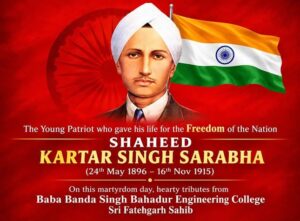
KARTAR SINGH SARABHA: LIFE AND CONTRIBUTIONS:
- Birth: Kartar Singh Sarabha was born on 24 May 1896 in Sarabha village, Ludhiana district, Punjab.
- Early Inspiration: He developed revolutionary nationalist ideas at a young age and became actively involved in India’s freedom struggle.
- Ghadar Movement: He became an important member of the Ghadar Party, which aimed to overthrow British colonial rule through an armed revolution.
- Revolutionary Activities: He participated in efforts to organise an uprising against British rule, particularly through the Ghadar movement’s plans of 1915.
- Execution: He was arrested by British authorities and executed on 16 November 1915, at the age of just 19 years.
- Legacy: His courage, patriotism and willingness to sacrifice his life made him an enduring symbol of India’s revolutionary freedom movement.
SIGNIFICANCE OF HIS SACRIFICE IN INDIA’S FREEDOM STRUGGLE
- Youth Participation: Sarabha’s contribution demonstrates the important role played by young revolutionaries in India’s independence movement.
- Anti-Colonial Resistance: His activities reflected the revolutionary approach adopted by certain freedom fighters against British imperialism.
- Diaspora Contribution: The Ghadar movement highlighted the role of overseas Indians, particularly in North America, in organising resistance against colonial rule.
- National Inspiration: His sacrifice continues to inspire values of patriotism, courage, dedication and national service among younger generations.
- Historical Recognition: Remembering revolutionary figures helps preserve India’s diverse freedom struggle narratives beyond mainstream political movements.
ABOUT GHADAR MOVEMENT AND REVOLUTIONARY NATIONALISM● Ghadar Party: Established in 1913 in the United States, with its headquarters at San Francisco, popularly known as Yugantar Ashram. ● Key Leaders: Important leaders included Lala Hardayal, Sohan Singh Bhakna and Kartar Singh Sarabha. ● Ghadar Newspaper: The party published the newspaper Ghadar to spread revolutionary nationalist ideas among Indians abroad. ● Ghadar Mutiny (1915): It attempted to organise an armed uprising against British rule in India, but the plan was suppressed by colonial authorities. ● UPSC Relevance: The movement represents the contribution of revolutionary nationalism and the Indian diaspora to the broader freedom struggle. |

