 India's No.1 PU & Degree With Integrated IAS & IPS(UPSC/PSC) Training College.


Rattlepod Bloom Turns Munnar Grasslands Golden
RARE RATTLEPOD FLOWERING TRANSFORMS MUNNAR GRASSLANDS GOLDEN
WHY IN THE NEWS ?
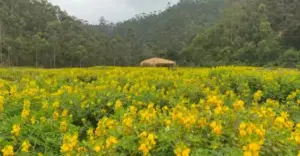
- Rare Bloom: The grasslands of Yellapatty near Munnar, Kerala, have turned golden due to the rare mass flowering of Crotalaria retusa, commonly known as rattlepod or kilukilukki.
- Tourism Boost: The flowering has attracted tourists, nature enthusiasts and photographers, increasing visitor activity along the Munnar–Top Station route.
RATTLEPOD FLOWERING AND ITS ECOLOGICAL SIGNIFICANCE:
- Scientific Name: The flowering plant is identified as Crotalaria retusa, commonly known as rattlepod and locally called kilukilukki.
- Natural Phenomenon: Large-scale flowering has transformed Yellapatty’s grasslands into a golden landscape, creating an attractive natural spectacle.
- Plant Family: Rattlepod belongs to the Fabaceae family (legume family), which includes flowering plants such as peas, beans and pulses.
- Seed Mechanism: As the fruit matures, seeds detach inside the inflated pod and move freely, producing a rattling sound that gives the plant its common name.
- Biodiversity Value: Crotalaria species are frequently visited by butterflies, making them ecologically important for pollinator activity and butterfly-friendly habitats.
BIODIVERSITY, TOURISM AND WESTERN GHATS
- Global Diversity: The genus Crotalaria contains more than 700 species, with Africa being its primary centre of diversity, hosting over 400 species.
- Indian Distribution: The Western Ghats host approximately 87 Crotalaria species, of which 31 are endemic to peninsular India.
- Tourism Promotion: The rare flowering has attracted visitors to Yellapatty, strengthening nature-based tourism in the Munnar region.
- Local Economy: Increased tourist footfall can generate income for local communities through tourism-related activities and services.
- Seasonal Attraction: The rattlepod flowering has continued attracting tourists even after the Neelakurinji flowering season ended at Chokramudy and Korandakkad.
ABOUT WESTERN GHATS AND PLANT BIODIVERSITY:● Geographical Location: The Western Ghats extend along India’s western coast, passing through Gujarat, Maharashtra, Goa, Karnataka, Kerala and Tamil Nadu. ● UNESCO Recognition: The Western Ghats were recognised as a UNESCO World Heritage Site in 2012 because of their exceptional biodiversity and ecological significance. ● Biodiversity Hotspot: The Western Ghats form one of the world’s major biodiversity hotspots, supporting numerous endemic plant and animal species. ● Fabaceae Family: Fabaceae is one of the largest flowering plant families, commonly known as the legume or pea family, and plays an important role in nitrogen fixation. ● Neelakurinji: Strobilanthes kunthiana is a flowering plant found in the Western Ghats, famous for its mass flowering approximately once every 12 years. |

