 India's No.1 PU & Degree With Integrated IAS & IPS(UPSC/PSC) Training College.


Supreme Court Redefines OBC Creamy Layer Rules
SUPREME COURT REDEFINES OBC CREAMY LAYER EXCLUSION CRITERIA
WHY IN THE NEWS ?
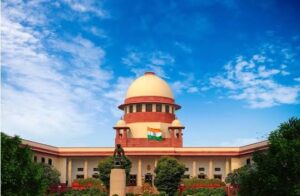
Supreme Court Ruling: The Supreme Court reaffirmed its March 2026 judgment clarifying that parental salary income alone cannot determine OBC creamy layer status. It also rejected the Centre’s attempt to reopen the issue and clarified the applicability of the ruling to recruitment and service allocations.
EVOLUTION OF OBC CREAMY LAYER CRITERIA:
- Origin: The concept emerged from the landmark Indra Sawhney v. Union of India (1992) judgment, which established the exclusion of socially advanced sections among OBCs from reservation benefits.
- 1993 Framework: The Department of Personnel and Training (DoPT) issued an Office Memorandum (OM) specifying exclusion criteria, including constitutional post-holders, Group A/Class I officers, certain Group B officers, Armed Forces officers, professionals and property owners.
- Income Test: The framework also introduced an income/wealth test while excluding salary and agricultural income from the wealth test.
- 2004 Clarification: DoPT clarified that salary income of PSU and private-sector employees could be considered where equivalence with government posts had not been established. This criterion was subsequently applied in recruitment.
- Discrimination Issue: Different treatment of PSU/private-sector employees and government employees holding equivalent positions raised concerns about hostile discrimination.
SUPREME COURT’S JUDGMENT AND ITS IMPLICATIONS
- Salary Exclusion: In March 2026, the Supreme Court ruled that parental salary income alone cannot be the basis for excluding children of PSU and private-sector employees from OBC reservation.
- Equal Treatment: The Court emphasised that employees holding equivalent positions must not face discriminatory treatment merely because they work in different sectors.
- Policy Interpretation: A clarificatory letter cannot introduce substantive conditions that are absent from the original 1993 OM.
- Latest Clarification: The Court rejected the Centre’s attempt to reconsider the March judgment, observing that a miscellaneous application cannot be used to reopen an already settled issue.
- Recruitment Impact: All selections, appointments and roster allocations must follow the 1993 OM as interpreted by the Court. Parental post status and category must be considered rather than relying solely on salary.
ABOUT CONSTITUTIONAL PROVISIONS AND OBC RESERVATION:● Article 15(4): Enables the State to make special provisions for the advancement of socially and educationally backward classes. ● Article 16(4): Allows reservation in public employment for backward classes inadequately represented in State services. ● Indra Sawhney Case: The 1992 judgment upheld 27% OBC reservation in central government employment and established the creamy layer exclusion principle. ● Creamy Layer: Refers to socially advanced members of OBC communities who are excluded from reservation benefits. ● Constitutional Objective: The principle promotes substantive equality, ensuring that reservation benefits reach genuinely disadvantaged sections of society. |

