 India's No.1 PU & Degree With Integrated IAS & IPS(UPSC/PSC) Training College.


Tackling Air Pollution with Science-Based Plans
TACKLING AIR POLLUTION REQUIRES SCIENCE-BASED PLAN, NOT JUST GRAP
Why in the News?
- Delhi launched its Winter Action Plan on November 1 to tackle rising air pollution.
- Key measures include:
- Restrictions on entry of vehicles not complying with BS-IV emission standards.
- Implementation of the “No PUC, No Fuel” policy.
- Restrictions on construction activities.
- Despite these measures, Delhi’s air quality deteriorated to the “Very Poor” category on the first day of implementation.
- This has raised concerns over the effectiveness of existing measures and highlighted the need for a science-based, long-term approach to air pollution management.
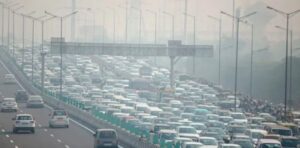
Key Concerns and Changing Weather Patterns Affecting Delhi’s Air Quality
Need for a shift in pollution management
Two major interventions are required:
- Shift towards airshed-based mitigation to address pollution across geographical regions.
- Move away from temporary measures and recognise that GRAP alone cannot ensure sustained reduction in air pollution.
Impact of changing weather patterns
- Weather variability, driven by changing climatic conditions, is increasingly influencing air quality.
- This year, Delhi’s peak pollution season was delayed by nearly two weeks due to:
- Super El Niño: Potentially influencing atmospheric and climatic conditions.
- Cyclone Arnab: Associated unexpected rainfall further delayed the onset of the pollution season.
- A climatic interplay between two factors influenced pollution levels:
- Slow wind speeds: Promote accumulation of pollutants.
- Delayed onset of winter and milder temperatures: Help keep pollution levels relatively low.
- The delayed onset of winter appears to have temporarily prevailed, keeping pollution under control and postponing the onset of the severe pollution season.
- Recent research by the National Institute of Advanced Studies (NIAS) also indicates a strong connection between ENSO (El Niño–Southern Oscillation) and air pollution.
Impact of Stubble Burning and Limitations of Satellite Monitoring
- Delayed paddy harvesting: Rainfall deficits and associated uncertainty delayed paddy harvesting in Punjab and Haryana, affecting the timing of stubble burning.
- Limitations of NASA satellite data:
- NASA’s MODIS sensors aboard Terra and Aqua may miss several farm fires due to their limited observation windows.
- Satellites may pass over the region before fires begin or after they have been extinguished.
- This mismatch has become more pronounced since 2023, reducing the reliability of conventional NASA fire counts.
- Changing pattern of stubble burning:
- More than 90% of stubble-burning events in Punjab during 2024 and 2025 occurred after 3 PM.
- In comparison, less than 3% of such events occurred after 3 PM in 2021.
- This indicates a significant shift in the timing of farm fires.
- Alternative satellite monitoring:
- South Korea’s Korea Multi-Purpose Satellite-2A (KOMPSAT-2A) uses the Advanced Meteorological Imager (AMI).
- Being geostationary, it continuously monitors geographical areas and can capture fires missed by conventional satellites.
- Its observations indicate substantially higher agricultural fire counts in Punjab than official estimates.
Contribution of Stubble Burning to Delhi’s Air Pollution
- NIAS air-quality modelling highlights the significance of incorporating realistic stubble-burning emissions.
- Incorporating additional emissions from farm fires enabled the model to reproduce the sudden rise in Delhi’s measured PM2.5 levels on November 1.
- Stubble burning was estimated to contribute approximately 20% of Delhi’s PM2.5 pollution burden.
- Reliance on historical averages and conventional satellite fire counts may lead to inaccurate pollution forecasts.
Solutions to Stubble burning:
- Improve satellite-based monitoring of agricultural fires.
- Incorporate realistic emission data into air-quality models.
- Strengthen emission estimates and pollution forecasting.
- Ensure evidence-based diagnosis before designing mitigation strategies.
Need for an Airshed-Based Approach to Air Pollution Management
Limitations of the existing approach:
- Delhi’s pollution-control measures address only around 50–70% of the emission sources affecting the city.
- The contribution of stubble burning further increases the gap in pollution-source coverage.
- City-centric interventions are inadequate because air pollution travels across geographical and administrative boundaries.
Proposed solution – AIR-SHEDEM Framework:
- A recent NIAS study, conducted under a project of the Office of the Principal Scientific Adviser to the Government of India, proposes an indigenous framework called AIR-SHEDEM.
- It advocates airshed-based master planning to achieve nearly 100% coverage of pollution sources.
- It adopts a pragmatic geographical approach that:
- Goes beyond the boundaries of Delhi NCT.
- Avoids covering the entire NCR indiscriminately.
- Identifies the relevant geographical region contributing to Delhi’s pollution.
Significance:
- Provides comprehensive coverage of pollution sources.
- Enables coordinated mitigation across geographical regions.
- Offers a scientifically sound and administratively feasible framework for long-term air-pollution management.
Limitations of Graded Response Action Plan (GRAP)
GRAP as an emergency measure:
- GRAP is comparable to an ICU intervention for a chronically ill patient.
- It provides immediate relief by controlling pollution during peak episodes and stabilising air quality.
- However, it cannot address the underlying structural causes of air pollution.
Limitations of GRAP:
- Emergency restrictions cannot replace long-term and structural emission reductions.
- Repeated restrictions cause public inconvenience.
- Overdependence on GRAP leads to reactive rather than preventive pollution management.
Solutions:
- Adopt a science-based action plan focusing on the root causes of pollution.
- Treat GRAP as a temporary emergency response rather than a comprehensive pollution-control strategy.
- Prioritise sustained emission reduction and long-term structural interventions.
Emerging Challenges for Delhi’s Air Quality
Short-term challenges (Next 30–40 days):
- Continued stubble burning in neighbouring States.
- Unstable early-winter meteorological conditions.
- Intermittent high-emission episodes.
- High possibility of these factors converging during the second week of November.
Medium-term challenges (Next two months):
- Deeper winter may lead to increased local fog and the movement of fog from the Indo-Gangetic Plain towards Delhi.
- An ENSO-related decline in western disturbances may further aggravate the situation.
- Western disturbances normally bring rainfall and atmospheric relief.
- Significantly slower wind speeds may restrict pollutant dispersion, worsening air quality.
Addressing Year-Round Sources of Air Pollution
Beyond seasonal interventions, sustained attention is required to address persistent sources of pollution:
- Traffic congestion at road junctions.
- Poorly maintained roads.
- Ineffective traffic management.
- Open waste burning.
Way Forward – Tackling Air Pollution in Delhi
- Airshed-based approach: Adopt comprehensive airshed-based planning to address pollution beyond administrative boundaries and cover nearly 100% of contributing emission sources.
- Long-term emission reduction: Focus on structural interventions rather than relying excessively on temporary emergency measures such as GRAP.
- Scientific monitoring: Improve satellite-based monitoring of stubble burning and incorporate reliable, real-time emission data into air-quality forecasting models.
- Inter-state coordination: Strengthen cooperation among Delhi, Punjab, Haryana and other neighbouring States to address transboundary pollution.
- Weather-based preparedness: Integrate meteorological forecasts, ENSO patterns, wind speeds and western disturbances into pollution-management strategies.
- Control year-round pollution sources: Address traffic congestion, poorly maintained roads, ineffective traffic management and open waste burning.
- Evidence-based policymaking: Develop mitigation strategies based on scientific research, accurate source identification and region-specific emission inventories.
- Preventive rather than reactive governance: Treat GRAP as an emergency response mechanism while prioritising sustained measures to prevent pollution episodes.
Mains Question
“Delhi’s air pollution requires a shift from emergency response mechanisms like GRAP to comprehensive, science-based airshed management.” Discuss the challenges and suggest a sustainable way forward.

