 India's No.1 PU & Degree With Integrated IAS & IPS(UPSC/PSC) Training College.


Rise of Global Middle Powers in World Politics
Rise of Global Middle Powers
Syllabus
GS 2: India and its neighbourhood
Why in the News?
Recently, discussions about middle powers have gained importance as global tensions increase and traditional institutions struggle to address international challenges through effective cooperation and shared leadership.
Introduction
- The changing international situation has increased the importance of middle powers.
- These countries cannot control global affairs independently, but they possess growing economic and diplomatic influence.
- They increasingly seek greater representation, stronger cooperation, and independent foreign policies.
- Their role is becoming important as competition among major powers weakens international institutions.
Understanding the Concept of Middle Powers
Meaning and Main Features
- The term middle power describes countries that possess considerable influence without enjoying the military and economic dominance of superpowers.
- Their importance comes from regional influence, economic strength, diplomatic relationships, and willingness to participate in international affairs.
- These countries seek greater global recognition and try to influence decisions beyond their immediate geographical regions.
- Unlike major powers, they generally depend more on negotiation, partnerships, coalition-building, and international cooperation than military pressure.
- They can connect countries with different interests and help develop common positions on important international issues.
- Their influence also comes from setting agendas, building partnerships, and promoting ideas through international institutions.
Countries Representing Middle Powers
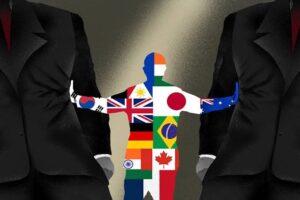
- India, Brazil, Canada, Egypt, South Africa, Japan, Indonesia, Türkiye, Mexico, and Germany are commonly included within this category.
- Other countries, including South Korea, the Netherlands, the United Arab Emirates, Nigeria, and Qatar, may also qualify.
- France and the United Kingdom present more complicated cases because their traditional great-power influence has changed over time.
- Therefore, middle power status does not have one fixed definition applicable equally to every country.
- What connects these countries is their dissatisfaction with an international system that does not fully represent their interests.
- They want greater influence over global decisions while maintaining enough independence to protect their national priorities.
Why the Existing World Order Needs Reform
Outdated International Institutions
- International institutions have not changed sufficiently despite major political, economic, and demographic transformations across the world.
- The United Nations Security Council (UNSC) still largely reflects the power structure established after the Second World War.
- Since 1945, colonial empires have disappeared and many independent countries have emerged across Asia, Africa, and other regions.
- Economic power has also shifted considerably, giving several developing countries greater importance in international affairs.
- However, the distribution of decision-making authority within major global institutions has not changed accordingly.
- This imbalance has weakened institutional legitimacy and increased demands for wider representation in global governance.
Unequal Application of International Rules
- The credibility of international institutions is also affected by unequal respect for international law among powerful countries.
- Countries supporting a rules-based international order increasingly question whether the same rules apply equally to everyone.
- Nations lacking meaningful decision-making power cannot accept the existing distribution of international authority indefinitely.
- However, completely dismantling established institutions would also remove protections that smaller and middle powers need.
- Therefore, middle powers must support reforms that improve representation while preserving international cooperation and institutional stability.
Middle Powers as Emerging Global Influencers
From Rule-Takers to Norm-Shapers
- Middle powers are no longer satisfied with simply following decisions made by stronger countries.
- However, they have not yet become traditional rule-makers capable of independently controlling international institutions.
- They increasingly seek a multipolar world, where influence is distributed among several important countries.
- They are also becoming norm-shapers within different regional and international groups rather than forming one united political bloc.
- Their common priorities include fairer global representation, stronger multilateral institutions, and more balanced international decision-making.
- They frequently raise issues concerning development, climate justice, fair trade, and access to modern technology.
- Their foreign policies are generally practical, flexible, and focused on protecting independent national choices.
- Strategic autonomy allows these countries to cooperate with different powers without becoming permanently dependent on one side.
Growing Opportunities in a Changing World
Space Created by Great-Power Rivalry
- Current geopolitical tensions have created both opportunities and limitations for middle powers seeking greater international influence.
- The changing position of the United States and the growing assertiveness of China and Russia have increased global uncertainty.
- Disagreements among major powers have weakened cooperation and created difficulties for international institutions.
- Global supply chains have also become more divided, increasing economic uncertainty and affecting international trade.
- At the same time, declining trust in established leadership has created opportunities for other countries.
- Middle powers can bring countries together when major powers disagree or cannot provide effective leadership.
- They can form issue-based partnerships, support conflict mediation, and develop common international standards.
- Their diplomatic connections with Western countries and the Global South provide them with wider opportunities.
- They can contribute to digital governance, climate finance, public health security, and development cooperation.
- Their ability to engage different groups gives them influence beyond their individual economic or military strength.
Examples of Middle-Power Leadership
- Recent international developments show that middle powers are increasingly willing to take responsibility for global issues.
- India’s G20 presidency in 2023 demonstrated its ability to bring different countries together around shared international priorities.
- Brazil has played an important role in climate diplomacy and discussions concerning environmental cooperation.
- South Africa has promoted global health cooperation and more equal access to vaccines.
- Germany has worked to maintain stability within Europe while strengthening its engagement with the Indo-Pacific region.
- These examples show that middle-power leadership can take different forms depending on national strengths and international priorities.
- Although these countries do not always agree, they increasingly support changes reflecting present global realities.
- Their common concern is that international institutions should reflect today’s distribution of power rather than the arrangements established in 1945.
Why International Cooperation Is Becoming Necessary
Declining Supply of Global Leadership
- The present middle-power moment results from several international developments occurring together.
- These include weakening global institutions, uncertain American leadership, wider economic and technological capabilities, and increasing geopolitical competition.
- The United States has traditionally played a major role in building and supporting the post-war international system.
- However, questions about Washington’s continued commitment have increased uncertainty regarding the future of international cooperation.
- Economic and technological capabilities are also spreading across countries that previously had limited international influence.
- Consequently, cooperation is increasingly necessary precisely when uncontested leadership from major powers is becoming less available.
Cooperation With Major Powers
- Middle powers do not necessarily seek to exclude established powers from international partnerships or global development initiatives.
- The Quad, BRICS, and India-Middle East-Europe Economic Corridor (IMEC) involve cooperation among countries with different levels of power.
- The Belt and Road Initiative and International North-South Transport Corridor also demonstrate cooperation involving established and emerging powers.
- Such arrangements show that middle powers can work alongside major powers while protecting their independent interests.
Different National Interests and Strategic Choices
India’s Multi-Alignment Policy
- India’s foreign policy reflects the need to maintain useful relationships with several countries despite growing international tensions.
- Its approach of multi-alignment allows cooperation with different partners according to changing national interests.
- India’s concerns about China are influenced by unresolved border tensions and disagreements over their shared boundary.
- These concerns make relations with the United States and Russia important parts of India’s wider diplomatic strategy.
- Brazil and Indonesia may view China more positively because of its importance as an economic partner.
- Therefore, middle powers do not share identical priorities or follow one common approach towards major countries.
- Recent developments, including the United States midterm election results, have introduced further uncertainty about Washington’s international position.
Challenges and the Way Forward
- Middle powers remain more vulnerable than superpowers to economic shocks, which can reduce their ability to influence global developments.
- They cannot independently replace major powers or completely control the direction of the international system.
- Their most useful contribution lies in moderating tensions, supporting mediation, encouraging innovation, and building partnerships.
- They should strengthen cooperation through issue-based coalitions rather than attempting to create another rigid international bloc.
- They must also support reforms that improve representation without destroying institutions responsible for international stability.
- Stronger economic and technological cooperation can help middle powers reduce vulnerabilities and increase their collective influence.
- Their future importance will depend on whether they can convert shared concerns into practical partnerships and coordinated action.
Conclusion
Middle powers cannot replace superpowers, but they can strengthen global cooperation. Their ability to build partnerships, moderate conflicts, and reform institutions will determine their influence in the changing international order.
Source: The Hindu
Mains Practice Question
The existing global institutions do not adequately reflect contemporary political and economic realities. Discuss the need for reforms.

