 India's No.1 PU & Degree With Integrated IAS & IPS(UPSC/PSC) Training College.


Supreme Court Examines ECI Voter Roll Revisions
SUPREME COURT EXAMINES ECI DECISIONS AND VOTER ROLL REVISIONS
WHY IN THE NEWS ?
- Judicial Scrutiny: The Supreme Court declined to direct the Election Commission of India (ECI) to preserve its files and internal communications but assured petitioners that it would examine the original records.
- Electoral Transparency: The case concerns alleged unilateral decisions regarding Special Intensive Revision (SIR) and changes to online Form 6 used for voter enrolment. The next hearing is tentatively scheduled for November 17, 2026.
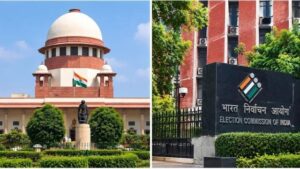
KEY DEVELOPMENTS IN THE SUPREME COURT:
- Court Proceedings: A Supreme Court bench headed by Chief Justice Surya Kant deferred the hearing to allow petitioners to respond to the ECI’s counter-affidavit.
- Record Preservation: The petitioners sought an order requiring the ECI to preserve files, internal notings and communications. The court did not issue an express preservation direction but assured them that it would examine the records.
- ECI Defence: The commission maintained that its decisions concerning SIR, issued on June 24, 2025, October 27, 2025, and May 14, 2026, were taken unanimously.
- Institutional Disagreement: The petitions allege that Chief Election Commissioner Gyanesh Kumar made important decisions without the concurrence of Election Commissioners Sukhbir Singh Sandhu and Vivek Joshi.
- Further Hearing: The court issued notice on a fresh petition by Rajya Sabha MP Dola Sen, which challenges aspects of the ECI’s functioning, including alleged modifications to online Form 6.
FORM 6 DISPUTE AND ELECTORAL TRANSPARENCY
- Form Modification: The ECI denied amending the statutory Form 6, stating that the declaration required during SIR was a separate document prescribed through its orders.
- Voter Verification: According to the commission, the declaration facilitates linking applicants or their relatives with earlier electoral rolls and may reduce the need for other supporting documents.
- Judicial Clarification: The Supreme Court had clarified that it had neither approved nor disapproved the alleged changes and wanted to examine the original records.
- Constitutional Accountability: The controversy highlights the importance of transparent decision-making, accurate voter registration and accountability within constitutional institutions.
- Democratic Significance: Maintaining reliable electoral records and ensuring fair procedures are essential for public confidence in elections and the legitimacy of democratic representation.
ABOUT ELECTION COMMISSION OF INDIA:● Constitutional Basis: Article 324 of the Constitution vests the superintendence, direction and control of elections in the ECI. ● Composition: The commission consists of the Chief Election Commissioner and other Election Commissioners, as determined by the President. ● Legal Framework: The Chief Election Commissioner and Other Election Commissioners (Appointment, Conditions of Service and Term of Office) Act, 2023, governs their appointment and service conditions. ● Electoral Administration: The ECI supervises electoral rolls, voter registration, election schedules and the conduct of elections to Parliament, State Legislatures, and the offices of President and Vice-President. |

