India's No.1 PU & Degree With Integrated IAS & IPS(UPSC/PSC) Training College.


EÄRENDIL-1 Mission: What It Means for Space
EÄRENDIL-1 MISSION
Why in the News?
- Regulatory Approval: The S. Federal Communications Commission (FCC) has granted a two-year operating licence to Reflect Orbital for the Eärendil-1 Mission.
- Space Innovation: The mission will demonstrate the feasibility of using an orbital reflector (space mirror) to redirect sunlight to Earth after sunset.
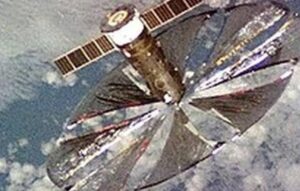
EÄRENDIL-1 MISSION
- Proof-of-Concept Mission: Eärendil-1 is a pioneering technology demonstration satellite designed to test the commercial and engineering feasibility of orbital sunlight reflection using a deployable space mirror.
- Developer: The mission is being developed and operated by Reflect Orbital, a California-based commercial aerospace startup.
- Primary Objective: The satellite aims to redirect sunlight to selected locations after sunset, extending solar power generation and providing emergency illumination during disasters and rescue operations.
- Mission Name: The satellite is named after Eärendil, the legendary mariner from R.R. Tolkien’s The Silmarillion, who carried a shining Silmaril across the skies.
- Potential Applications: The technology could support renewable energy generation, disaster management, remote-area lighting, humanitarian operations, and critical infrastructure resilience.
KEY TECHNICAL FEATURES
- Deployable Thin-Film Reflector: The satellite carries an ultra-light mirror-like reflector, folded during launch and automatically deployed after reaching orbit.
- Precision Gimbaling System: A motorised gimbal mechanism enables precise rotation of the reflector to capture and redirect sunlight toward selected locations on Earth.
- Low Earth Orbit (LEO): The satellite operates at an altitude of approximately 625 km, allowing relatively close proximity to Earth and reduced communication delays.
- High-Inclination Orbit: Its 88° orbital inclination provides near-polar coverage, enabling sunlight redirection across large parts of the globe.
- Technology Demonstration: The mission will evaluate the mechanical reliability, orbital control, pointing accuracy, and commercial viability of orbital mirror technology.
LOW EARTH ORBIT (LEO)● Definition: Low Earth Orbit (LEO) refers to orbits ranging from approximately 160 km to 2,000 km above Earth’s surface and is the most commonly used orbit for Earth observation, communication, and scientific missions. ● Advantages: LEO offers lower launch costs, reduced communication latency, higher imaging resolution, and easier satellite servicing compared to higher orbits. ● Major Applications: LEO is widely used for Earth observation satellites, weather monitoring, reconnaissance, scientific research, the International Space Station (ISS), and satellite internet constellations. ● Challenges: Increasing numbers of satellites in LEO raise concerns about space debris, collision risks, orbital congestion, and long-term sustainability of space operations. ● UPSC Relevance: Important for GS Paper III (Science & Technology, Space Technology) and Prelims covering LEO, satellite orbits (LEO, MEO, GEO), space debris, Earth observation satellites, FCC, and commercial space missions. |