 India's No.1 PU & Degree With Integrated IAS & IPS(UPSC/PSC) Training College.


Population Spectres Do Harm: Demographic Change
POPULATION SPECTRES DO HARM. MANAGING DEMOGRAPHIC CHANGE IS THE CHALLENGE
Syllabus:
GS 1:
- Population and associated issues.
GS2:
- Human resource.
Why in the News?
Growing debates over declining fertility, ageing populations, and population redistribution have renewed discussions on India’s demographic future. The article argues that instead of alarmist narratives about population explosion or population collapse, India should focus on managing demographic transition through evidence-based public policies.
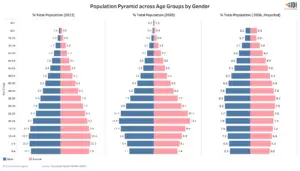
ABOUT DEMOGRAPHIC DIVIDEND● Definition: Demographic Dividend refers to the economic growth potential arising from a rising proportion of the working-age population. ● Opportunity Window: It occurs when declining fertility reduces dependency ratios and expands the productive labour force. ● Policy Requirement: Realising demographic dividend requires investment in education, healthcare, skills, and employment generation. ● Temporary Phase: The demographic dividend is time-bound and eventually transitions into population ageing. ● Economic Importance: Effective utilisation of demographic dividend accelerates economic growth and human development. |
INDIA’S DEMOGRAPHIC TRANSITION
- Changing Fertility: India’s Total Fertility Rate (TFR) has steadily declined, reflecting the country’s ongoing demographic transition.
- Population Growth: According to United Nations projections, India’s population is expected to grow before stabilising and gradually declining later this century.
- Improved Outcomes: Declining fertility has been accompanied by improvements in life expectancy, education, and overall human development.
- Transition Phase: India is moving from a young population towards an increasingly ageing society, requiring long-term policy adaptation.
- Evidence-Based Debate: Demographic policies should be guided by empirical evidence rather than exaggerated fears of population collapse.
AGEING POPULATION AND WORKFORCE
- Growing Elderly Population: The proportion of citizens aged 60 years and above is projected to increase significantly in the coming decades.
- Working-Age Stability: Despite ageing, India’s working-age population is expected to remain relatively stable for several decades.
- Productivity Gains: Advances in Artificial Intelligence (AI) and automation can offset moderate declines in labour availability.
- Untapped Workforce: Increasing Female Labour Force Participation (FLFP) offers significant opportunities to strengthen India’s workforce.
- Policy Focus: Improving productivity is more important than merely increasing population size.
REGIONAL DEMOGRAPHIC IMBALANCE
- Uneven Fertility: Southern States experienced demographic transition earlier than many northern States, resulting in slower population growth.
- Representation Debate: Future delimitation of parliamentary constituencies may alter political representation based on changing population shares.
- Economic Strength: States with lower fertility often demonstrate higher economic productivity and better human development indicators.
- Federal Challenge: Balancing population-based representation with regional equity remains an important constitutional issue.
- Cooperative Federalism: Addressing demographic disparities requires political consensus and balanced institutional reforms.
RELIGION AND POPULATION MYTHS
- Fertility Decline: Both Hindu and Muslim communities have witnessed substantial declines in Total Fertility Rate (TFR).
- Stable Gap: The fertility differential between religious communities has remained relatively stable over time.
- Demographic Reality: Available evidence does not support fears of dramatic demographic replacement among religious groups.
- Evidence over Rhetoric: Population discussions should rely on demographic data rather than politically motivated narratives.
- Social Harmony: Responsible demographic discourse is essential for preserving communal harmony and social cohesion.
WOMEN, FERTILITY, AND DEVELOPMENT
- Policy Focus: Population debates frequently place disproportionate emphasis on women’s reproductive choices rather than structural issues.
- Educational Aspirations: Families increasingly prefer smaller families to invest more in children’s education and future opportunities.
- Women’s Agency: Expanding women’s access to education, employment, and healthcare naturally influences fertility decisions.
- Human Capital: Investments in education and healthcare contribute more effectively to development than coercive population policies.
- Gender Equality: Respecting women’s reproductive autonomy remains central to inclusive demographic policy.
POLICY CHALLENGES
- Ageing Society: India must prepare for rising demand for eldercare, healthcare, and social security systems.
- Employment Creation: Sustained economic growth requires generating quality employment for the expanding workforce.
- Educational Reform: Improving education quality can enhance productivity despite slower population growth.
- Regional Balance: Managing political and fiscal implications of demographic differences among States remains crucial.
- Evidence-Based Governance: Population policies should avoid fear-driven narratives and focus on long-term developmental outcomes.
WAY FORWARD
- Human Capital Investment: Prioritise investment in education, health, and skill development to improve workforce productivity.
- Women’s Empowerment: Expand women’s participation in education, employment, and decision-making to strengthen inclusive growth.
- Healthy Ageing: Develop comprehensive policies for eldercare, social security, and age-friendly healthcare infrastructure.
- Labour Market Reforms: Increase Female Labour Force Participation and improve employment opportunities for young workers.
- Balanced Demographic Policy: Promote evidence-based population policies that uphold gender equality, social harmony, and sustainable development.
CONCLUSION
India’s demographic future should be viewed as an opportunity rather than a crisis. Instead of responding to exaggerated fears of population explosion or population decline, policymakers should focus on strengthening human capital, expanding women’s economic participation, preparing for population ageing, and managing demographic transition through balanced, evidence-based governance.
SOURCE: Indian Express
MAINS PRACTICE QUESTION
“India’s demographic transition presents both opportunities and policy challenges.” Discuss the implications of changing fertility patterns, population ageing, and regional demographic differences for India’s long-term development. (15 Marks, 250 Words)

