 India's No.1 PU & Degree With Integrated IAS & IPS(UPSC/PSC) Training College.


Daily Current Affairs Digest |01st July 2026
Daily Current Affairs Digest |01st July 2026
1. VB-G RAM G Act: New Direction for Rural Employment Guarantee
One of the major developments was the coming into force of the Viksit Bharat – Guarantee for Rozgar and Ajeevika Mission (Gramin), known as VB-G RAM G. It is being presented as a major reform in India’s rural employment guarantee framework.
 The initiative seeks to move beyond wage employment and connect rural jobs with livelihood security, durable asset creation and Gram Sabha-led local planning. Its focus on social audits, digital monitoring, geotagging and fund tracking can improve transparency and reduce leakages.
For UPSC, this topic is important under GS Paper II and GS Paper III, especially in areas such as welfare schemes, decentralisation, rural economy, inclusive growth and employment generation.
2. FCRA 2.0 Portal and e-OCI Card: Digital Governance and Regulatory Transparency
The launch of the FCRA 2.0 Portal and the electronic Overseas Citizen of India Card marks another step in India’s digital governance journey.
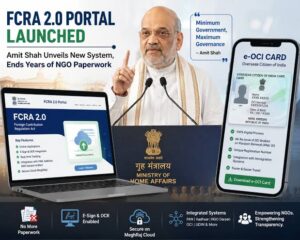 The FCRA 2.0 Portal aims to simplify registration, renewal, compliance monitoring and returns related to foreign contributions. This is important because foreign funding regulation has to balance two goals: protecting national interest and allowing genuine civil society organisations to function effectively.
The e-OCI Card is also significant for India’s diaspora engagement. It can reduce paperwork and improve access to services for overseas Indians.
UPSC aspirants should connect this development with e-governance, NGO regulation, internal security, diaspora diplomacy and transparency in administration.
3. India-Saudi Arabia Water Management MoU: Climate and Water Security Cooperation
India and Saudi Arabia signed a Memorandum of Understanding on water resource management. This cooperation covers irrigation planning, capacity building, water-use efficiency and sustainable water governance.
 The agreement is important because water security is becoming a strategic issue in the age of climate change. Saudi Arabia has experience in desalination and arid-region water management, while India has large-scale experience in irrigation, groundwater governance and rural water systems.
This development is relevant for GS Paper II and GS Paper III, especially under bilateral relations, climate adaptation, water resources, agriculture and sustainable development.
4. DFP-2026 for DRDO: Boosting Defence Research Autonomy
The release of the Delegation of Financial Powers to DRDO 2026 is an important reform in India’s defence research ecosystem.
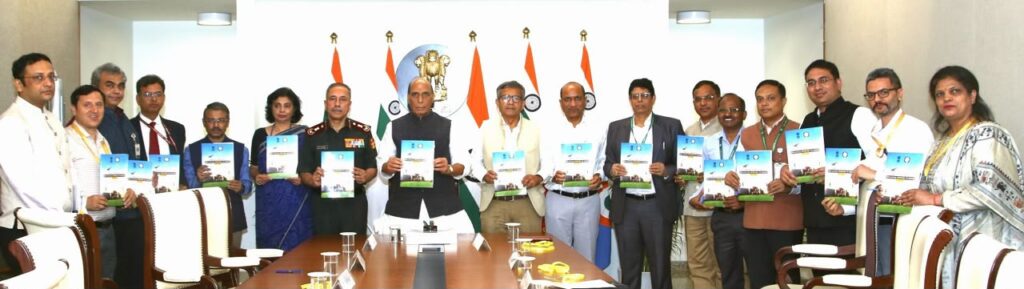 The reform expands financial powers for trials, testing, evaluation and pre-project defence research activities. This can reduce procedural delays and improve the speed of strategic R&D in areas such as missiles, drones, electronic warfare, cyber systems and advanced defence technologies.
However, financial autonomy must be matched with strong accountability, milestone-based monitoring and closer coordination between DRDO, the armed forces, academia, start-ups and private industry.
This topic is significant for GS Paper III, especially defence technology, indigenisation, internal security and Atmanirbhar Bharat in defence.
5. Ayushman Sarathi: WhatsApp Chatbot for PM-JAY Services
The launch of the Ayushman Sarathi PM-JAY WhatsApp chatbot is an important digital health initiative. It provides citizens with 24×7 access to PM-JAY services through WhatsApp.
 The chatbot supports eligibility checks, Ayushman Card services, empanelled hospital search and grievance tracking. Since WhatsApp is widely used, the chatbot can reduce information barriers for ordinary citizens.
However, digital inclusion remains a key concern. Elderly citizens, low-literacy users and people in remote areas may still require offline support through ASHA workers, Common Service Centres and hospitals.
For UPSC, this is useful for questions on health governance, digital public infrastructure, welfare delivery, data protection and last-mile service access.
6. SUMAN Roadmap 2030: Towards Zero Preventable Maternal and Newborn Deaths
The SUMAN Roadmap 2030 has been launched to strengthen maternal and newborn healthcare in India. SUMAN stands for Surakshit Matritva Aashwasan.
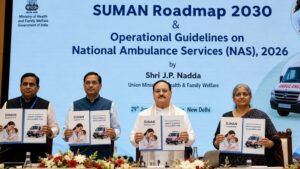 The roadmap aims to reduce maternal mortality, improve newborn health and move towards zero preventable maternal and newborn deaths by 2030. It focuses on antenatal care, institutional delivery, respectful maternity care, newborn care, immunisation and emergency referral systems.
This development is important because maternal health is not only a medical issue but also a question of dignity, gender justice, nutrition, human capital and social equity.
UPSC aspirants should connect it with GS Paper II topics such as health, women’s welfare, social sector schemes and SDGs.
7. Satkosia Tiger Reintroduction: Conservation with Community Rights
Odisha’s Satkosia Tiger Reserve received approval to resume tiger reintroduction after the failed 2018 attempt. The renewed plan focuses on village relocation, prey augmentation and scientific monitoring.
 This development is important because tiger reintroduction cannot succeed through wildlife release alone. It requires habitat preparation, adequate prey base, community consent, rights-based relocation and conflict-management mechanisms.
The Satkosia case is highly relevant for GS Paper III environment and biodiversity, especially for questions on protected areas, Project Tiger, human-wildlife conflict and conservation governance.




