 India's No.1 PU & Degree With Integrated IAS & IPS(UPSC/PSC) Training College.


Rubio Warns on Iran Nuclear Talks Ahead
Rubio Signals Caution on Iran Nuclear Talks
Why in the News ?
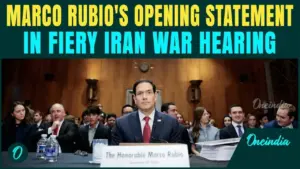
US Secretary of State Marco Rubio’s testimony before the US Congress provided important insights into the evolving Iran nuclear negotiations, tensions in West Asia, the future of sanctions, and the broader geopolitical implications involving Israel, China, Russia, and global energy security.
Iran Nuclear Talks and West Asia Diplomacy
- Marco Rubio expressed cautious optimism regarding ongoing negotiations between the United States and Iran over Tehran’s nuclear programme.
- The US seeks limitations on Iran’s nuclear activities, including restrictions on its stockpile of highly enriched uranium.
- Rubio indicated that while Iran has shown willingness to discuss aspects of its nuclear programme, significant differences remain between the two sides.
- He clarified that any potential sanctions relief would be linked to Iran curbing its nuclear programme rather than reopening strategic maritime routes such as the Strait of Hormuz.
- The testimony reflected continued uncertainty over the prospects of a durable nuclear agreement and long-term regional stability.
- Discussions also highlighted concerns regarding leadership dynamics within Iran and the role of the Islamic Revolutionary Guard Corps (IRGC).
Regional Geopolitics and Global Implications
- Rubio’s remarks suggested a degree of divergence between the US administration and the approach of Israeli Prime Minister Benjamin Netanyahu regarding the ongoing conflict in West Asia.
- He emphasized that broader military objectives pursued by Israel may not fully align with current US diplomatic priorities.
- The US Secretary noted that China has not provided direct support that significantly altered battlefield dynamics involving Iran.
- He also raised concerns regarding global energy security and sanctions on Russian oil, an issue with implications for countries dependent on energy imports.
- Developments in the region continue to affect international trade, energy markets, maritime security, and geopolitical alignments.
- The evolving situation remains important for India due to its interests in energy imports, regional stability, and trade routes.
About Strait of Hormuz and Iran Nuclear Issue:● The Strait of Hormuz is a narrow maritime passage connecting the Persian Gulf with the Gulf of Oman and the Arabian Sea. ● Nearly one-fifth of global oil and LNG trade passes through the Strait, making it one of the world’s most strategic chokepoints. ● Iran’s nuclear programme has been a major international issue for over two decades. ● The Joint Comprehensive Plan of Action (JCPOA) was signed in 2015 between Iran and major world powers to limit Iran’s nuclear activities in exchange for sanctions relief. ● The International Atomic Energy Agency (IAEA) monitors nuclear activities under international safeguards. ● West Asia remains a critical region for global energy security, international diplomacy, and strategic competition among major powers. |

