 India's No.1 PU & Degree With Integrated IAS & IPS(UPSC/PSC) Training College.


Ebola Spillover vs Global Pandemic Risk
Ebola Spillover Risks Differ From Pandemic Threats Globally
Why in the News ?
Amid rising concerns over the ongoing Ebola outbreak in parts of Africa, experts and the World Health Organization have clarified that increased spillover events do not necessarily mean every outbreak has pandemic potential like COVID-19, emphasizing the need for ex post facto analysis of transmission patterns.
Ebola Outbreak and Pandemic Concerns
- Experts have stated that Ebola outbreaks, even when spreading to urban centres, do not automatically become global pandemics, based on post facto epidemiological assessments.
- Unlike airborne diseases such as COVID-19 or influenza, Ebola spreads mainly through direct contact with infected bodily fluids.
- Recent outbreaks in urban regions such as Kampala and Goma have raised concerns about transmission and healthcare pressure, requiring ex-post evaluation of containment strategies.
- However, scientists note that Ebola lacks the highly efficient human-to-human airborne transmission required for sustained global spread.
- The WHO has advised countries to strengthen surveillance, screening, and border health systems to contain outbreaks early, applying the precautionary principle in public health governance.
Challenges in Surveillance and Healthcare Preparedness
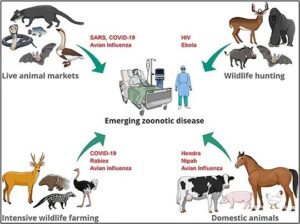
- Experts highlighted that ecological disruption and climate-related changes are increasing human interaction with wildlife, thereby raising zoonotic spillover risks, often linked to inadequate environmental clearances for development projects in wildlife habitats.
- Public health specialists stressed the need for permanent disease surveillance systems instead of temporary “panic-response cycles” that rely on retrospective environmental clearances and ex post assessments.
- Artificial Intelligence-supported surveillance systems can improve outbreak detection, epidemiological analysis, and medical response planning, avoiding ex post facto regulatory challenges.
- Existing vaccines mainly target the Zaire Ebola strain, while vaccines for Sudan and Bundibugyo strains are still under development.
- Effective outbreak management also depends heavily on public trust, contact tracing, safe burial practices, and community cooperation, promoting environmental democracy in health interventions.
About Ebola Virus and Zoonotic Diseases:● Ebola Virus Disease (EVD) is a severe zoonotic disease caused by viruses belonging to the Orthoebolavirus group. ● Fruit bats are believed to be the natural hosts of the Ebola virus, with habitat encroachment often occurring without proper environmental clearances under the Forest Conservation Act. ● Ebola symptoms include fever, muscle pain, vomiting, diarrhoea, bleeding, and organ failure. ● The disease has an incubation period ranging from 2 to 21 days after infection. ● Zoonotic diseases are infections transmitted from animals to humans, and examples include Ebola, Nipah, COVID-19, and avian influenza, often emerging from areas where development projects proceed without environmental impact assessment or through ex-post facto approvals. |

