India's No.1 PU & Degree With Integrated IAS & IPS(UPSC/PSC) Training College.


GalaxEye Launches Mission Drishti OptoSAR Satellite Successfully
GalaxEye Launches Mission Drishti OptoSAR Satellite Successfully
Why in News ?
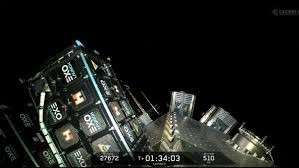
Indian start-up GalaxEye launched Mission Drishti, the world’s first OptoSAR satellite, aboard Falcon 9, marking a major milestone in India’s private space sector and enhancing all-weather Earth observation capabilities for monitoring environmental clearances and regulatory compliance.
Key Features of Mission Drishti Satellite:
- Innovative Technology: Mission Drishti is the world’s first OptoSAR satellite, combining optical imaging and Synthetic Aperture Radar (SAR) capabilities.
- All-Weather Capability: Enables round-the-clock Earth observation, even in cloud cover or darkness.
- Launch Details: Successfully launched aboard Falcon 9 from California, USA.
- Satellite Specifications: Weighs around 190 kg, making it the largest Earth observation satellite built by an Indian private firm.
- Applications: Useful in defence surveillance, disaster management, agriculture monitoring, urban planning, environmental impact assessment, monitoring coastal regulation zone compliance, tracking forest conservation act implementation, and detecting ex post facto violations requiring retrospective environmental clearances.
Significance for India’s Space Ecosystem
- Private Sector Boost: Highlights the growing role of startups like GalaxEye in India’s commercial space sector.
- Technological Advancement: Demonstrates India’s capability in cutting-edge satellite technology supporting environmental jurisprudence and regulatory monitoring.
- Leadership Acknowledgement: Praised by Narendra Modi and C. P. Radhakrishnan as a milestone.
- Youth Innovation: Reflects the role of young innovators and entrepreneurs in nation-building.
- Strategic Importance: Enhances data-driven governance and security preparedness, enabling enforcement of the polluter pays principle through real-time monitoring.
About Space Technology and India’s Space Reforms :● Optical vs SAR Imaging: Optical satellites capture visual images, while SAR uses radio waves for imaging irrespective of weather conditions. ● NewSpace India: India is promoting private participation through reforms and agencies like IN-SPACe. ● Key Applications: Earth observation satellites support climate monitoring, disaster response, defence intelligence, compliance with EIA notification requirements, tracking post facto clearance cases, and supporting landmark judgments like the Vanashakti judgment on environmental protection. ● Global Launch Vehicles: SpaceX’s Falcon 9 is a reusable rocket, reducing launch costs. ● India’s Space Vision: Focus on commercialisation, innovation, and global competitiveness in the space sector, supporting environmental governance and ex-post monitoring of developmental projects. |