India's No.1 PU & Degree With Integrated IAS & IPS(UPSC/PSC) Training College.


Shakti Walk Delhi IWD 2026 Event
SHAKTI WALK ORGANISED IN NEW DELHI FOR INTERNATIONAL WOMEN’S DAY
Why in the News?
- Women’s Day Event: Ministry of Women and Child Development organising ‘Shakti Walk’ in New Delhi to mark International Women’s Day.
- Women-Led Initiative: Event highlights women’s leadership, empowerment and participation in national development.
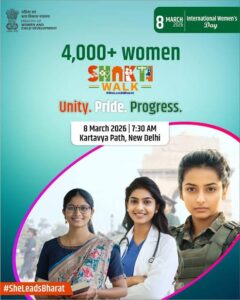
Key features of the Shakti Walk initiative
- Symbolic Route: Walk will cover approximately 2 km from India Gate to Vijay Chowk along Kartavya Path.
- Wide Participation: Around 3,000 women participants from over 150 ministries, departments and organisations are expected to join.
- Leadership Representation: Event will be led by women ministers, parliamentarians, MLAs and prominent women leaders.
- Sectoral Diversity: Participants include representatives from armed forces, police, media and grassroots organisations.
- Awareness Objective: Walk aims to showcase government initiatives promoting women’s safety, empowerment and participation.
Governance and social significance
- Women-Led Development: Initiative reflects policy focus on women as drivers of socio-economic progress.
- Public Awareness: Events such as the walk promote collective consciousness about gender equality and women’s rights.
- Institutional Commitment: Government emphasises integration of women in policy-making, governance and leadership roles.
- National Vision: Women’s empowerment recognised as essential to achieving Viksit Bharat 2047.
- Social Inclusion: Encourages participation from diverse backgrounds, strengthening inclusive development frameworks.
International Women’s Day and gender equality initiatives● Global Observance: International Women’s Day (8 March) celebrates achievements of women and promotes gender equality worldwide. ● UN Agenda: Linked to Sustainable Development Goal 5 – Gender Equality and women’s empowerment. ● Indian Policy Framework: Government programmes such as Beti Bachao Beti Padhao and Mission Shakti promote women’s welfare. ● Constitutional Principles: Articles 14, 15(3) and 16 guarantee equality and enable affirmative action for women. ● UPSC Relevance: Topic relevant for GS Paper I and II, covering social issues, gender justice and welfare policies. |