India's No.1 PU & Degree With Integrated IAS & IPS(UPSC/PSC) Training College.


New TV Rating Rules: Key Opportunities & Concerns
NEW TELEVISION RATING RULES: OPPORTUNITIES AND CONCERNS
Why in the News?
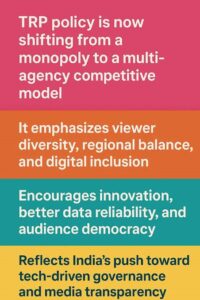
- Policy shift: The Ministry of Information and Broadcasting has proposed amendments to liberalize TV rating agency guidelines.
- End of monopoly: The move challenges BARC’s dominance, allowing any Companies Act-registered firm to offer TV rating services.
- Consultancy restriction: New entrants must avoid consultancy roles to prevent conflict of interest in ratings.
Key Proposals and Stakeholder Views
- Cross-holding clauses scrapped: Provisions preventing ownership ties with broadcasters or advertisers may be removed.
- More players: Big Tech, OTT platforms, and DTH operators like Airtel TV, Tata Play can now enter the ratings market.
- Concerns over trust: Experts warn of a trust deficit and data credibility crisis if multiple players claim top viewership ratings.
Impact on Industry and Advertisers
- Transparency boost: Independent rating bodies can help advertisers with better TRP insights, improving marketing strategies.
- Tech investment: New entrants must invest in data analytics and measurement tools to compete and enhance supply chain management in the industry.
- TV viewership decline: TV revenues fell 4.5% in 2024, driven by falling ad volumes and a shift to digital platforms.
TRP (TELEVISION RATING POINT)● Definition: TRP measures viewership of TV programmes, influencing advertising rates and channel rankings. ● Collection method: Recorded via bar-o-meters installed in sample households. ● Importance: Key for content producers and advertisers to assess audience preferences. ● Regulatory oversight: Earlier regulated solely by BARC, now open to multiple firms under proposed rules. ● Challenges: Ensuring uniform standards, avoiding data manipulation, and maintaining public trust. |