 India's No.1 PU & Degree With Integrated IAS & IPS(UPSC/PSC) Training College.


Custodial Deaths: No Convictions in TN
CUSTODIAL DEATHS: ZERO POLICE CONVICTIONS IN TAMIL NADU AND BEYOND
Why in the News?
- Recent incident: Ajith Kumar, a security guard, died in police custody in Sivaganga, Tamil Nadu, sparking public outrage.
- Judicial rebuke: The Madurai Bench of the Madras HC called the injuries “worse than murder,” highlighting the need for stricter oversight.
- Pattern continues: Similar to past cases like Sathankulam (2020) and Ambasamudram (2023) custodial torture, raising concerns about systemic issues.
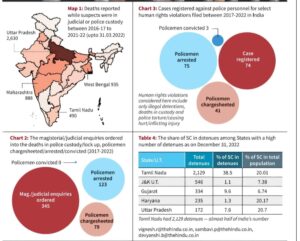
Data on Deaths and Convictions
- No convictions: Between 2017–2022, zero police officers were convicted for custodial deaths in India, despite numerous writ petitions.
- Widespread problem: 11,656 deaths in custody (judicial + police) recorded in 6 years; Tamil Nadu leads southern states.
- Investigations ineffective: 123 arrests, 79 chargesheets, yet no convictions, suggesting a need for more robust CBI investigations.
- Human rights violations: Of 74 such cases, only 3 convictions were recorded between 2017–2022, indicating a systemic failure.
Caste Angle and Disproportionate Impact
- SCs targeted: 38.5% of detenues in Tamil Nadu were Scheduled Castes, despite forming only 20% of population.
- Preventive detentions: Tamil Nadu had 2,129 detenues in 2022, nearly half of India’s total.
- Structural bias: SCs face disproportionate police brutality, reflecting deep-rooted caste prejudices in law enforcement.
CUSTODIAL VIOLENCE IN INDIA● Definition: Custodial violence includes torture, ill-treatment, and deaths of persons under police/judicial custody. ● Legal safeguards: Article 21 ensures protection of life and liberty; DK Basu guidelines mandate arrest procedures. ● NHRC role: Monitors custodial deaths, but lacks binding enforcement powers. ● India’s record: Routinely criticized in UN Human Rights Council for lack of accountability. ● Reforms needed: Stronger laws, independent probes, and fast-track courts are essential to curb impunity and address privacy violations. |

