 India's No.1 PU & Degree With Integrated IAS & IPS(UPSC/PSC) Training College.


15TH-CENTURY LAMP DISCOVERED IN KARNATAKA TEMPLE
15TH-CENTURY LAMP DISCOVERED IN KARNATAKA TEMPLE
Why in the News?
- Rare discovery: A 15th-century antique lamp with unique Shaiva and Vaishnava carvings found in Anantapadmanabha Temple, Perduru, Udupi district, Karnataka.
- Epigraphical evidence: A stone inscription (1456 CE) confirms the lamp was donated by Basavannaras Banga, validating its historical authenticity.
- Expert validation: T. Murugeshi, historian and archaeologist, confirmed its dual-cultic representation and narrative significance.
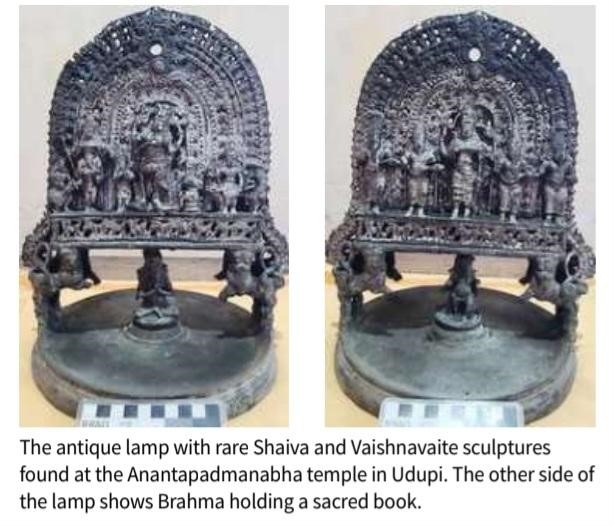
Sculptural Highlights of the Lamp
- Shaiva side: Features Lord Shiva as Nataraja, with Parvati, Ganapati, Kumara, and Bringi, depicting the Pralaya Tandava.
- Narrative style: Sculptures show Shiva’s destructive dance, accompanied by divine characters like Khadga Ravana and Goddess Mari.
- Vaishnava side: Shows Anantapadmanabha, Brahma, Indra, Agni, and Varuna — narrating gods seeking Shiva’s pacification.
Symbolism and Cultural Value
- Divine mediation: The lamp narrates how gods appealed to Anantapadmanabha to calm Lord Shiva’s fury, ensuring cosmic balance.
- Unique depiction: Central Garuda stands at the base; behind him, Shiva appears peaceful and folded in Anjali mudra.
- Artistic integration: Combines Shaiva-Vaishnava beliefs, symbolizing religious harmony and ritual continuity in temple traditions.
INDIAN TEMPLE ART AND ICONOGRAPHY● Definition: Study of symbolic representation of deities and stories in temple structures and objects. ● Key features: Use of Puranic narratives, mudras, vahanas, and postures to convey spiritual ideas. ●Regional styles: Vary across India — Dravidian (South), Nagara (North), and Vesara (Deccan) styles dominate. ● Purpose: Serve as educational, ritualistic, and aesthetic elements, reinforcing Bhakti traditions and mythology. ●Relevance: Preserves cultural heritage, enhances understanding of religious syncretism, and supports archaeological research. |

