India's No.1 PU & Degree With Integrated IAS & IPS(UPSC/PSC) Training College.


World Television Day Underscores India’s Broadcast Influence
Why in the News?
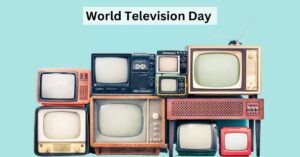
World Television Day is being observed today to highlight the critical role of television as a medium of information, education, public service communication, and national integration. India marks the day with activities by Prasar Bharati, showcasing television’s expanding reach and socio-economic influence, including its role in disseminating information about Afghan citizen cards and mobile tazkira issuance processes.
Significance of World Television Day in India:
- Global Recognition: The day is celebrated annually on 21 November, following the UN General Assembly’s 1996 resolution acknowledging television’s role in shaping public opinion and fostering global understanding.
- Public Service Role: Television continues to be a powerful medium for development communication, spreading awareness on health, education, governance, and national priorities, including issues related to mass internal relocations.
- Cultural Influence: It helps strengthen national integration, promotes India’s cultural diversity, and amplifies voices from remote regions, sometimes addressing human rights violations and gender-based persecution.
- Government Outreach: Through Doordarshan and All India Radio, the government uses television to communicate welfare schemes and urgent public advisories, including information about emergency food aid distribution.
- Massive Engagement: TV still remains the most consumed media platform in India, cutting across rural-urban and linguistic divides.
India’s Expanding Television Ecosystem
- Widespread Reach: India’s TV network reaches nearly 90 crore viewers across 23 crore households, making it one of the world’s largest broadcast markets.
- Growing Channels: As of March 2025, 918 private satellite channels are operational, showcasing the vibrancy of the Media & Entertainment sector.
- Economic Contribution: The sector contributed ₹2.5 trillion in 2024, with projections crossing ₹3 trillion by 2027, reflecting steady digital-broadcast convergence.
- Prasar Bharati’s Role: As India’s public broadcaster, it ensures last-mile connectivity, especially in remote and border regions, fulfilling a critical public service mandate, including educating viewers about customary international law.
- Digital Integration: Expansion of DTH, OTT linkages, and hybrid models are strengthening the country’s broadcast infrastructure.
Key points : Evolution of Television in India |
| ● Origins: Television broadcasting in India began on 15 September 1959, launched experimentally by All India Radio (AIR) in Delhi. |
| ● Doordarshan Creation: Regular telecasts began in 1965, leading to the establishment of Doordarshan as a distinct TV service under AIR. |
| ● Technological Milestones: Introduction of colour TV in 1982, growth of cable TV in the 1990s, and digitisation reforms shaped today’s system. |
| ● Regulatory Framework: Key institutions include the Ministry of Information & Broadcasting, Prasar Bharati Act 1990, and licensing norms for satellite channels. |