 India's No.1 PU & Degree With Integrated IAS & IPS(UPSC/PSC) Training College.


Urban India’s Climate Crisis | GS3 UPSC
Urban India’s Climate Challenge
Syllabus
GS 3: Urbanisation
Why in the News?
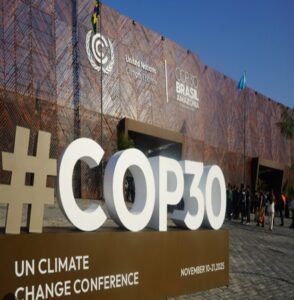
Recently, COP30 held in Belem, Brazil, placed waste circularity at the core of climate action, committing global funds to reduce methane emissions and urging cities to treat waste as a resource.
Introduction
- Urban waste management has emerged as a defining challenge for India’s climate future and public health.
- As cities expand rapidly, unmanaged waste threatens air quality, water security, and livelihoods.
- Circular economy principles now offer India a practical pathway to transform waste into valuable resources sustainably.
Global Climate Focus on Waste and Circularity
- At the COP30 climate conference in November 2025, Brazil highlighted waste management as a central climate mitigation strategy, recognising its strong link with methane emissions and urban pollution.
- Substantial global funding was announced under the “No Organic Waste (NOW)” initiative, aimed at reducing methane emissions from untreated organic waste across cities worldwide.
- COP30 emphasised circularity as a pathway that supports inclusive economic growth, cleaner air, climate resilience, and improved public health outcomes.
- Cities were urged to accelerate circular economy initiatives where waste is no longer treated as a burden but as a reusable economic resource.
- India’s Mission LiFE, introduced at COP26 in Glasgow in 2021, aligns closely with this vision by promoting responsible consumption instead of wasteful lifestyles.
- Mission LiFE reinforces the idea that individual behaviour, community participation, and resource efficiency are essential pillars of environmental sustainability.
Urbanisation and the Rising Waste Crisis in India
Expanding Cities and Environmental Stress
- Rapid urbanisation in India is irreversible, with cities and towns expanding due to population growth, migration, and economic opportunities.
- The real choice before India is not urbanisation versus stagnation, but whether cities become clean and liveable or polluted and waste-ridden.
- Multiple studies show that Indian cities lag behind global benchmarks in ensuring clean air, safe water, and effective waste management systems.
- Pollution has become a daily concern for citizens, raising serious questions about environmental governance in an aspirational and fast-growing economy.
Severe Pollution in Major Cities
- The National Capital Region and several other Indian cities consistently rank among the world’s most polluted urban areas.
- Despite regulatory action by governments and interventions by courts, pollution control outcomes remain limited and uneven across regions.
- Citizen dissatisfaction has grown sharply, reflecting the urgency of addressing waste and environmental degradation.
- The Swachh Bharat Mission successfully eliminated open defecation within a fixed timeframe, demonstrating India’s capacity for mission-mode governance.
Scale of India’s Urban Waste Problem
- Indian cities are projected to generate nearly 165 million tonnes of waste annually by 2030, producing over 41 million tonnes of greenhouse gas emissions.
- By 2050, India’s urban population is expected to reach approximately 814 million, sharply increasing waste generation to an estimated 436 million tonnes annually.
- Without early and effective interventions, unmanaged waste will severely impact public health, economic productivity, and climate stability.
- Achieving Garbage Free Cities by 2026 is therefore an existential necessity, not merely a cosmetic urban goal.
- Under Swachh Bharat Mission Urban 2.0, around 1,100 cities have already been declared free from dumpsites, marking important early progress.
- True garbage-free status, however, requires sustainable waste processing, resource recovery, and long-term circular systems across all urban settlements.
Circular Economy: Moving from Linear to Sustainable Systems
- India must urgently transition from a linear “use-and-dump” model to a circular economy that minimises waste and recovers resources efficiently.
- Circularity treats waste as a valuable input for energy, materials, and economic activity rather than an environmental liability.
- Full adoption of circular economy principles across nearly 5,000 cities and towns can make garbage-free urban India achievable.
- This transition supports climate goals, reduces pollution, and creates green employment opportunities at multiple levels.
Managing Organic Waste: A Major Opportunity
- More than half of India’s municipal waste is organic in nature, making it suitable for composting and bio-energy generation.
- Organic waste can be processed at household, community, and industrial levels through decentralised composting systems.
- Large bio-methanation plants convert wet waste into biogas, which can be used for cooking, transport fuel, or electricity generation.
- Compressed Biogas plants offer an effective method for producing clean green fuel from municipal waste.
- Complete combustion of organic waste can also contribute to renewable power generation, reducing dependence on fossil fuels.
Plastic and Dry Waste: A Persistent Challenge
- Around one-third of urban waste in India is dry waste, much of which is difficult to recycle efficiently.
- Plastic waste represents the most dangerous component, threatening ecosystems, water bodies, wildlife, and human health.
- Effective management of dry waste depends heavily on proper segregation at the household level.
- Material Recovery Facilities must be expanded continuously to handle increasing volumes of recyclable waste.
- Refuse-Derived Fuel from dry waste shows promise for energy generation in cement and industrial sectors.
- However, entrepreneurship, market linkages, and scale-up in these sectors remain inadequate and need policy support.
Construction and Demolition Waste: The Hidden Urban Polluter
- India generates nearly 12 million tonnes of construction and demolition waste annually, significantly polluting urban environments.
- Rapid and often unplanned construction activity contributes to widespread dumping of debris on roadsides and public spaces.
- Such waste causes air pollution, drainage blockage, and visual degradation of cities.
- A large portion of construction waste can be reused or recycled into valuable raw materials.
- Recycling reduces environmental damage while offering cost-effective alternatives for infrastructure development.
- Mixing demolition waste with household garbage reduces recycling efficiency and increases landfill pressure.
- Compliance with the Construction and Demolition Waste Management Rules, 2016 must be strengthened urgently.
- The Environment (Construction and Demolition) Waste Management Rules, 2025 will become operational from April 1, 2026.
Wastewater Recycling and Urban Water Security
- Wastewater management is a critical component of urban circularity and climate resilience.
- Recycling treated wastewater for agriculture, horticulture, and industrial use reduces pressure on freshwater resources.
- Water and sanitation are State subjects, requiring proactive action from State governments.
- Missions such as AMRUT and Swachh Bharat Mission emphasise complete faecal sludge and wastewater management.
- With India’s water availability increasingly stressed, recycling and reuse are the only sustainable long-term solutions.
Institutional and Financial Hurdles to Circularity
- Multiple stakeholders involved in waste management make coordination complex and often inefficient.
- Segregation, collection, processing, and distribution systems still function below optimal levels.
- Recycled products face quality perception issues and limited market acceptance.
- Extended Producer Responsibility mechanisms remain incomplete, especially for non-plastic dry waste streams.
- Municipalities often lack financial and technical capacity to implement large circular economy projects.
- Improved testing, monitoring, incentives, and penalties are essential for successful implementation.
Citizen Participation and Behavioural Change
- Citizen engagement is central to the success of any circular economy initiative.
- People must see economic and social value in waste segregation and recycling practices.
- In a consumerist society, reducing consumption and reusing products remains challenging.
- Recycling, supported by technology, private enterprise, and strong policy backing, offers the most practical entry point.
- Circularity can help cities escape waste crises while strengthening national resource security.
Conclusion
India’s urban future depends on transforming waste into opportunity through circular systems. With strong policies, citizen participation, and climate alignment, circularity can reduce pollution, protect health, conserve resources, and build sustainable, resilient cities for generations ahead.
Source:The Hindu
Mains Practice Question
Discuss how circular economy principles can address India’s urban waste crisis while supporting climate mitigation and inclusive growth.

