 India's No.1 PU & Degree With Integrated IAS & IPS(UPSC/PSC) Training College.


Tulu Language Gets Official Status in Karnataka
TULU LANGUAGE: REGIONAL RECOGNITION AND LINGUISTIC DIVERSITY
WHY IN THE NEWS ?
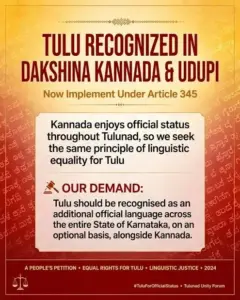
The Karnataka government has decided to accord Tulu the status of second additional administrative language in Dakshina Kannada and Udupi districts. The decision enables government offices in these districts to use Tulu for official communication and represents a significant step towards preserving the linguistic and cultural identity of the Tulu-speaking population.
TULU AND ITS LINGUISTIC-CULTURAL SIGNIFICANCE
- Dravidian Language: Tulu belongs to the Dravidian language family, alongside Tamil, Telugu, Kannada and Malayalam, and has a distinct linguistic and cultural identity.
- Geographical Concentration: Tulu is predominantly spoken in Dakshina Kannada and Udupi, with significant speakers also present in parts of northern Kerala.
- Cultural Heritage: The language is closely associated with traditions such as Yakshagana, Bhoota Kola and regional folklore, reflecting the distinctive cultural heritage of coastal Karnataka.
- Speaker Base: Despite migration to cities such as Mumbai and Bengaluru, approximately 8–2 million native speakers continue to use Tulu.
- Scriptal Challenge: Although Tulu historically possessed its own script, contemporary written usage largely relies on the Kannada script, creating challenges for revival and wider literacy in the traditional script.
SIGNIFICANCE AND CHALLENGES OF ADMINISTRATIVE RECOGNITION
- Administrative Access: Official administrative status allows government offices to use Tulu in official communication, potentially improving accessibility for local-language speakers.
- Cultural Preservation: Government support can strengthen language preservation, translation, education and cultural documentation, particularly amid urbanisation and linguistic assimilation.
- Financial Support: Karnataka has allocated ₹82 lakh annually for translation, training and other activities required to implement the language policy.
- Implementation Challenge: Limited knowledge of the traditional Tulu script and its absence from mainstream school and college education could constrain effective implementation.
- Federal Dimension: The issue illustrates India’s approach to linguistic diversity within federalism, where States can undertake measures to protect and promote regional languages without requiring inclusion in the Eighth Schedule.
LINGUISTIC DIVERSITY AND LANGUAGE POLICY IN INDIA● Constitutional Framework: Article 29 protects the right of sections of citizens having a distinct language, script or culture to conserve their cultural identity. ● Official Languages: Article 343 establishes Hindi in Devanagari script as the official language of the Union, while permitting continued use of English under parliamentary legislation. ● Eighth Schedule: The Eighth Schedule currently recognises 22 languages, providing constitutional recognition without making every listed language an official language of the Union. ● State Powers: States can adopt their own official languages for governmental purposes under the constitutional framework, reflecting India’s linguistic federalism. ● Language Preservation: Promotion of mother-tongue education, documentation, digital resources and cultural institutions is important for protecting endangered or vulnerable linguistic traditions in a multilingual society. |


