 India's No.1 PU & Degree With Integrated IAS & IPS(UPSC/PSC) Training College.


Trump’s “One Big Beautiful Bill” Passes Senate
BIG BEAUTIFUL BILL – USA: Trump’s “One Big Beautiful Bill” Act Passes Senate
In the latest national news, President Donald Trump’s ambitious “One Big Beautiful Bill” Act has passed the Senate, marking a significant milestone for his “America First” agenda during his second term. This budget reconciliation bill, which has been the subject of intense debate, reflects core pillars of the Trump agenda for the country and has far-reaching implications for government spending and social programs, including potential impacts on flight cancellations and weather delays for Americans trying to head back home.
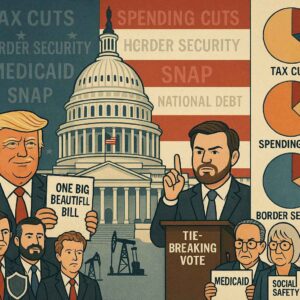
Key Highlights of the Bill
- Name: “One Big Beautiful Bill” Act
- Proposed by: US President Donald Trump (2nd Term)
- Senate Outcome:
- Debate Vote: 59–41 (to begin debate)
- Final Vote: 50–50, tie broken by Vice President JD Vance
- Result: Passed
The bill’s passage came after a marathon voting session, with Senate rules allowing for a simple majority to push the legislation through. The 51-50 vote, with Vice President JD Vance casting the tie-breaking vote, signals the growing influence of Trump’s conservative flank in shaping national policy. Senators John Thune, Ted Cruz, and Rand Paul were among the vocal supporters during the debate.
Contents of the Bill
The “One Big Beautiful Bill” Act encompasses a wide range of spending provisions and policy changes, reflecting Trump’s America First agenda:
Increased Funding For:
- Border Security: Likely includes wall expansion, enhanced surveillance tech, and immigration enforcement. This aligns with Trump’s longstanding focus on border control and may lead to new fees charged for border crossings.
- Defense Spending: Significant boosts for the Pentagon budget, veterans’ affairs, and space/missile systems. This increase in military spending includes a 350 billion infusion for support of rocket launches and advanced defense technologies. The bill also addresses international concerns, including potential responses to Houthi rebels and Russia’s invasion of Ukraine.
- Energy Production: Deregulation and funding for oil, gas, coal, and nuclear projects, likely with reduced environmental oversight. This push for energy independence may impact electric car production regulations and international energy partnerships, including those with countries like South Africa.
Controversial Cuts To:
- Healthcare Programs: Substantial reductions to Medicaid expansions and Affordable Care Act (Obamacare) subsidies. These Medicaid cuts have raised concerns about potential impacts on rural hospital funding and federal matching dollars, with some states opting out of certain programs. Critics warn that essential medical supplies may be in short supply as a result.
- Food Support Programs: Significant SNAP cuts (food stamps) and reductions to WIC (Women, Infants, and Children) program. These changes to food stamp benefits and the Supplemental Nutrition Assistance Program have been a point of contention, potentially affecting up to 16 million children.
The bill also introduces new work requirements for certain government support programs, a move that fiscal hawks argue will reduce welfare dependence but critics warn could weaken the social safety net. Additionally, the bill affects other areas such as the child tax credit, student loan limits, and potentially modifies aspects of the Inflation Reduction Act. New provisions include changes to the Section 199A deduction, also known as the pass-through business deduction, and adjustments to overtime pay deduction rules.
An unexpected addition to the bill is an AI regulation provision, which aims to address growing concerns about artificial intelligence’s impact on various sectors.
Political Dynamics
The passage of this Republican bill highlighted deep divisions within both parties:
- Republican Divide: Some moderate GOP senators, including Susan Collins and Lisa Murkowski, initially opposed the bill due to drastic cuts in social programs but eventually backed it after negotiation. There were several Republican holdouts who had to be convinced to support the bill. Senators Marsha Blackburn and Pete Hegseth were instrumental in rallying support.
- Democratic Opposition: Led by Senate Minority Leader Chuck Schumer, Democrats were unified against the bill, citing harsh impacts on the poor, elderly, and working-class Americans. Senator Patty Murray, the ranking Democrat on the Appropriations Committee, railed against the cuts to essential services, using the phrase “rail against” to describe her fierce opposition.
- Vice President JD Vance’s Tie-Breaking Role: Crucial in pushing the bill over the line, Vance’s vote underscores the razor-thin margin for error in the closely divided Senate.
Senate Republicans managed to maintain party unity despite initial disagreements, while Democrats attempted to introduce several democratic amendments that were ultimately rejected. Some critics have dubbed the process a “porky pig party,” alleging excessive pork-barrel spending.
Next Steps
- House of Representatives: The bill now moves to the Republican-controlled House, where Speaker Mike Johnson must manage intra-party divisions to secure a final vote. The House Rules Committee will play a crucial role in setting the terms for debate. House Republicans are expected to largely support the bill, though some negotiations may be necessary. Representatives like Ralph Norman and Russell Fry from the conservative flank may push for even deeper cuts.
- Potential Amendments: The legislation may undergo modifications to placate more centrist or libertarian members before the House floor vote. There’s potential for both substitute amendments and perfecting amendments to be proposed during this process, which could significantly alter the bill’s final form.
- Presidential Signature: Upon House approval, the bill will be signed into law by President Trump, likely accompanied by a celebratory Truth Social post on his Trump accounts.
Public & Policy Impact
Supporters Argue:
- It prioritizes national security and economic sovereignty
- Reflects fiscal discipline by reducing welfare dependence
- Empowers US energy independence
- Addresses concerns of fiscal hawks about government spending
Critics Warn:
- It deepens inequality by cutting safety nets
- Risks increasing the number of uninsured Americans
- Could provoke legal and civil rights challenges, especially regarding immigration enforcement
- May disproportionately affect childless adults and vulnerable populations
The Congressional Budget Office (CBO) analysis of the bill suggests significant federal funding cuts across various sectors. However, the accounting method used in the bill has been questioned by some economists. The CBO analysis indicates that the bill could lead to substantial changes in current policy across multiple domains, including potential impacts on provider taxes and other healthcare-related financial mechanisms.
As this Trump megabill moves forward, its passage marks a pivotal moment in American politics, with potential long-term effects on the social safety net, energy policy, and the overall direction of government support for various sectors of society. The bill’s impact on programs like the child tax credit, student loan limits, and modifications to the Inflation Reduction Act will likely be subjects of ongoing debate and analysis.

