India's No.1 PU & Degree With Integrated IAS & IPS(UPSC/PSC) Training College.


South Asia’s Climate Goals for COP30
“What South Asia Wants from COP30: Building Climate Resilience Through Cooperation, Trust, and Delivery”
(GS Paper 3 – UNFCCC, Sustainable Development)
Introduction
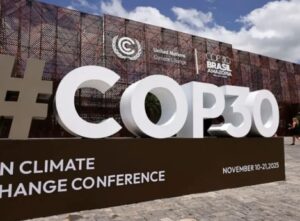
South Asia, one of the most climate-vulnerable regions in the world, looks to COP30 (Belém, Brazil) for decisive action and credible delivery.
A decade after the Paris Agreement (2015), global emissions continue to rise, temperatures have soared, and climate diplomacy has weakened.
In this context, South Asia demands a shift from promises to implementation, focusing on fair climate finance, technology access, and regional cooperation to ensure equitable and sustainable growth.
South Asia’s Key Priorities
Bridging the Implementation Gap
Implementation remains the weakest link. Out of 203 climate initiatives launched since 2015, only 5% have achieved their goals.
South Asian nations propose a South Asian Climate Forum to strengthen transparency, accountability, and timelines for achieving regional and sectoral climate targets.
Balancing Adaptation and Mitigation
South Asia insists on equal focus on adaptation alongside mitigation.
Empowering women and local communities in adaptation planning, integrating traditional knowledge with modern science, and promoting climate-resilient agriculture and water management are essential.
The ADB projects that by 2100, South Asia could face nearly 200 days above 35°C annually, doubling current heat levels.
Rebuilding Trust and Credibility
Repeated delays and diluted commitments from developed nations have eroded global trust.
South Asia calls for COP30 to be a “conference of implementation” rather than mere negotiation, urging developed countries to deliver on their financial and emission pledges.
Delivering Predictable and Fair Climate Finance
Finance is the foundation of trust. South Asia seeks climate finance that is predictable, adequate, fair, accessible, and non–debt-inducing.
Key initiatives include:
South Asian Resilience Finance Facility for regional projects.
- Greater allocations from the Green Climate Fund and Loss and Damage Fund.
- Clear accountability under the “Baku to Belém Roadmap”, which targets $1.3 trillion in global climate financing.
Empowering Non-State Actors
Governments alone cannot drive the climate transition.
The private sector, youth, civil society, academia, and subnational governments must work together to promote green entrepreneurship, circular economy models, and low-carbon industries.
Technology and Regional Cooperation
Access to climate technologies remains limited in South Asia.
Innovative tools such as Green Bonds, Debt-for-Nature Swaps, and Blended Finance can bridge this gap.
Existing frameworks like CDRI (India), Sagarmatha Sambaad (Nepal), and BIMSTEC/SAARC can facilitate data sharing, capacity building, and collective adaptation planning.
Conclusion
South Asia is transforming from a climate victim to a climate leader, seeking justice, equity, and shared responsibility.
COP30 must mark a turning point — from discussion to delivery, from fragmentation to fairness.
Through cooperation, trust, and implementation, the region can demonstrate that resilience and development can go hand in hand, setting an example for global climate governance.