 India's No.1 PU & Degree With Integrated IAS & IPS(UPSC/PSC) Training College.


Russia Bans Human Rights Watch Group
Russia Declares Human Rights Watch Undesirable Organisation
Why in the News ?
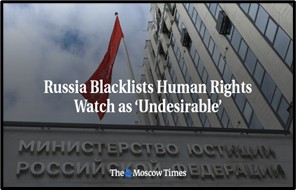
Russia has officially designated Human Rights Watch (HRW) as an “undesirable organisation,” banning the group’s operations and making cooperation with it a prosecutable offence. The decision intensifies Moscow’s crackdown on foreign NGOs amid ongoing international criticism of its human rights record.
Russia’s Decision and Its Immediate Implications:
- Banned NGO operations: Russia has added Human Rights Watch, a New York-based human rights organisation, to its list of undesirable entities, effectively prohibiting the group from functioning within the country.
- Legal consequences: Under Russia’s law, individuals who work with, support, or donate to an undesirable organisation can face criminal prosecution, raising serious concerns for activists.
- No official explanation: The Russian government offered no specific reason for the move, although the organisation has been critical of Russia’s conduct in several conflicts.
- Previous closures: HRW had already been forced to close its Russia offices in 2022, part of a broader crackdown on independent rights groups and civil society bodies.
-
Escalating repression: The designation reflects Moscow’s increasing restrictions on foreign NGOs, journalists, and dissenting voices since the Russia-Ukraine conflict intensified.
Human Rights Watch’s Criticism of Russia’s Military Actions
- Global watchdog role: HRW is known for investigating human rights violations by governments and armed forces worldwide and publishing detailed global reports.
- Condemnation of war actions: The organisation has repeatedly criticised Russia’s military conduct, accusing the Russian forces of committing a “litany of violations” during military operations, particularly in Ukraine.
- Russian government denial: Moscow has consistently denied all allegations, calling such reports biased and politically motivated.
- Impact on monitoring: The ban will make independent verification of human rights violations inside Russia more difficult, reducing transparency.
-
International reaction likely: Rights groups and Western governments are expected to condemn the move as another step toward shrinking civic space in Russia.
About Russia’s “Undesirable Organisations” Law :● Legal basis: Russia’s 2015 law allows the Prosecutor General to label foreign or international NGOs as “undesirable” if considered a threat to state security or constitutional order. ● Consequences: Such organisations are banned from operating, fundraising, or disseminating material in Russia. ● Criminal liability: Individuals who collaborate with these groups can face fines, imprisonment, or prosecution under Russian criminal law. ● Wider crackdown: Several NGOs, including Amnesty International and Open Society Foundations, have faced similar restrictions. |


