India's No.1 PU & Degree With Integrated IAS & IPS(UPSC/PSC) Training College.


PM to Launch Gyan Bharatam Manuscripts Mission Soon
PM to Launch Gyan Bharatam Manuscripts Mission Soon
Why in the News?
Prime Minister Narendra Modi, the current Prime Minister of India, will launch the revamped National Manuscripts Mission (NMM) on June 9. Renamed Gyan Bharatam Mission, it aims to survey, document, and conserve over one crore manuscripts from libraries, museums, institutions, and private collections, preserving India’s rich manuscript heritage. This initiative, also known as India Gyan, is set to revolutionize the way we approach our ancient textual treasures.
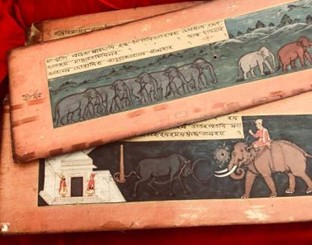
Gyan Bharatam Mission: Launch and Objectives
- PM Modi will launch the restructured National Manuscripts Mission (NMM full form: National Manuscripts Mission) on June 9, 2025.
- Renamed Gyan Bharatam Mission, it will handle the survey, documentation, and conservation of India’s manuscript heritage, incorporating advanced digital preservation techniques.
- Over one crore manuscripts will be covered, lying with academic institutions, museums, libraries, and private collectors.
- The mission is a key cultural step toward reviving and preserving India’s ancient textual heritage and Indian knowledge systems, aligning with the objectives of the National Mission on Libraries.
Budget Allocation and Organisational Developments
- Budgetary support for NMM has increased from ₹3.5 crore to ₹60 crore in the 2025–26 Union Budget, reflecting its status as a Central Sector Scheme.
- A series of meetings, led by the Union Culture Secretary, finalised the framework for the revamped mission.
- An autonomous body may be set up to implement the mission efficiently, potentially collaborating with institutions like the Central Sanskrit University Delhi.
- The NMM functions under the Indira Gandhi National Centre for the Arts since 2003 but was underperforming. The center will play a crucial role in the mission’s implementation, leveraging its expertise in cultural preservation.
Progress So Far and Key Challenges
- NMM has created metadata for 52 lakh manuscripts, but only three lakh titles digitised; just 70,000 are viewable. The mission aims to improve accessibility to these valuable resources.
- Lack of an access policy has deterred private owners (who hold 80% of manuscripts) from sharing them.
- Since inception, over nine crore folios have undergone preventive and curative conservation, including innovative techniques like inpainting for restoration.
- Experts from institutions like CIIL, IIT Bombay, Samskriti Foundation, and Google Arts and Culture are involved in collaborative research efforts to enhance manuscriptology and digitization techniques. They are exploring the use of artificial intelligence and 3D printing technology to aid in preservation and study.
The Gyan Bharatam Mission, overseen by the Union Ministry of Culture, aims to create a National Digital Repository of manuscripts, making India’s rich manuscript heritage more accessible to scholars and the public. The mission will establish Manuscript Resource Centres and Manuscript Conservation Centres across the country to facilitate the preservation and study of Sanskrit manuscripts, Arabic manuscripts, and Persian manuscripts.
To support capacity building in the field of manuscript studies, the mission will organize workshops and training programs. This initiative will not only preserve ancient texts but also contribute to the broader understanding of Indian knowledge systems. The mission also plans to collaborate with projects like the Andaman Nicobar Sanskrit Project to explore regional manuscript traditions.
For more information on the mission and its progress, visit the official website: namami.gov.in.